
Captive Labour: Exploring Shoe Making within Canadian Penitentiaries
By Sephra Lamothe & Camilla Leonelli Calzado
DOI: https://doi.org/10.38055/UFN050206
MLA: Lamothe, Sephra Annika, and Camilla Leonelli Calzado. “Captive Labour: Exploring Shoe Making within Canadian Penitentiaries.” Unravelling Fashion Narratives, special issue of Fashion Studies, vol. 5, no. 2, 2026, pp. 1-25. https://doi.org/10.38055/UFN050206
APA: Lamothe, S. A., & Calzado, C. L. (2026). Captive Labour: Exploring Shoe Making within Canadian Penitentiaries. Unravelling Fashion Narratives, special issue of Fashion Studies, 5(2), 1-25. https://doi.org/10.38055/UFN050206
Chicago: Lamothe, Sephra Annika, and Camilla Leonelli Calzado. “Captive Labour: Exploring Shoe Making within Canadian Penitentiaries.” Unravelling Fashion Narratives, special issue of Fashion Studies 5, no. 2 (2026): 1-25. https://doi.org/10.38055/UFN050206
Volume 5, Issue 2, Article 6
Keywords
Prison Labour
Prison Reform
Uniform Embodiment
Reconciliation
Gendered Labour
Abstract
Prison labour still exists. Captive labour, defined within the article as the labour completed by incarcerated people within the Penitentiary System, continues to be a pillar of the Canadian Penitentiary system. This research, displayed as an exhibition in November 2022 co-curated by Camilla Leonelli Calzado and Sephra Lamothe, highlights the historical and contemporary impacts of incarcerated labour within North America. Analysis of the ideological drive to implement labour programs within the Canadian Penitentiary system, and the implementation of labour programs through a case study comparison of the shoe workshops in the Kingston Penitentiary—a federal prison in Ontario that operated from 1835 to 2012—and contemporary moccasins made at Warkworth Institution, uncovers parallels in the experiences of historical and contemporary incarcerated workers. Although labour programs for incarcerated individuals were developed with the intention to reform and educate incarcerated workers, findings highlight how captive labour continues to reinforce colonial ideologies, benefiting those already in a position of power, while disempowering marginalized populations. Through exploring the evolution of captive labour within Canada, the article unveils parallels between the systemic inequalities, racism, and classism that continue to manifest within both incarcerated settings and broader Canadian society. The historical experiences of convicts in North America, who produced shoes and clothing, vividly illustrate the ongoing exploitation faced by their present-day counterparts.
Introduction
Within Canada, shoes represent a complex history intimately intertwined with colonial settlement and economic growth, as well as national development and success, which relied on the exploitation of vulnerable labourers. The footwear industry in Canada was one of the earliest manufacturing industries to hold a crucial position in the economy (Ramesh 4). Shoemaking’s economic significance was recognized and quickly integrated into the Canadian Penitentiary labour programs, supporting Canada’s transition to industrial capitalism (McCoy 6). Throughout the development of the Canadian Penitentiary system, prison labour has consistently served as a pillar of the system's operations. Historically, captive labour was intended as a form of penance, but in the 20th century, labour programs shifted to focus on reform. Today, prison labour is marketed as vocational training—programming that builds skills for incarcerated individuals to find employment after their release. Although Canadian incarcerated workers often work long hours, five days a week, their compensation remains drastically lower than the Canadian minimum wage—the 2025 Canadian minimum wage is $17.75/hour, but most prisoners in the Canadian system make between $5.25 to $6.90/day (CSC, CD730). This compensation pales in comparison to the significant revenue and savings generated by the goods and services produced by captive labour. For example, from 2023 to 2024, incarcerated individuals generated over $62 million from various goods and services (Correctional Service Canada, Departmental Results Report).
[1] The concern does not necessarily lie in the expenditure to employ incarcerated individuals, but within the millions in products and services saved by employing incarcerated individuals.
Prompting critical examination from ethical and socioeconomic perspectives, this body of work highlights the historical and contemporary impacts of captive labour, specifically incarcerated shoemaking within North America. While the government’s intention for prison labour programs was to reform and educate incarcerated individuals, these programs have consistently benefited those already in positions of power, while simultaneously disempowering marginalized populations. The historical experiences of incarcerated individuals in North America mirror the continued exploitation of their contemporary counterparts. The current article explores the evolution of captive labour within the Canadian Penitentiary system, focusing on the evolution of the ideology and structure of labour programs in the Kingston Penitentiary, a federal facility in Ontario that operated between 1835 and 2012, revealing foundational cracks within the framework of 20th-century reform programs that persist in today's vocational training. Through exploring the historical evolution of captive labour within Canada, the article unveils parallels between the systemic inequalities, racism, and classism that continue to manifest within both incarcerated settings and broader Canadian society.
Origins of Reform Ideology in Prison Labour
Prison work programs, including trade education, repetitive labour, and maintenance, originated in part from the Industrial Revolution, urbanization, colonial ideologies, and religious thought (McCoy 129). Industrialist ideologies dating back to the early 18th century viewed hard or repetitive labour as a means of penance, through which incarcerated workers could atone for their crimes. Prison labour evolved alongside a belief in its redemptive potential; it was intended to restore “criminals” who had violated societal moral norms to productive citizenship upon release (10).
Between 1820 and 1850, prison labour played a central role in Canada’s transition to industrial capitalism, both offsetting the costs of incarceration and generating surplus revenue (McCoy 6, 19). These institutions became pillars of class control, reinforcing racism and gender inequality within prison populations (3). The programming revealed the isolating and oppressive nature of incarceration for minority groups, including Black, Chinese, and Indigenous people.
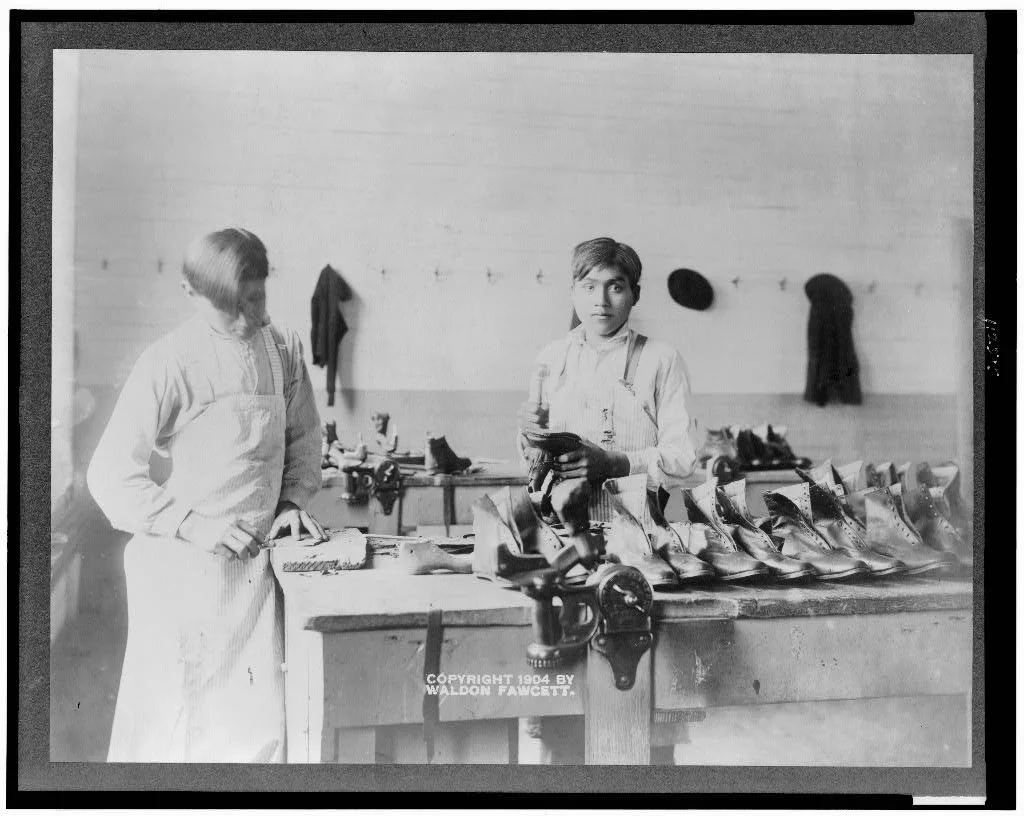
Figure 1
Fawcett, Waldon. Two Indigenous boys making and/or repairing shoes, 1904, Photograph, Carlisle Indian School, Pennsylvania, Library of Congress.
Figure 13 illustrates the racially motivated efforts to assimilate Indigenous individuals into settler-colonial society: the boys wear mandated industrial uniforms, forcibly adopt Eurocentric haircuts, and engage in cobbling European work boots (Miller 195, 297-298). Egerton Ryerson’s half-day system, implemented in residential and industrial schools from the 1840s to the 1950s, divided students’ days between academic studies and vocational training, including farming, shoemaking, blacksmithing, and other skills deemed valuable to the settler-colonial economy. While the stated goal was to balance a “practical English education” with the school's self-sufficiency through strict management (“Half-Day System”), in practice, labour was prioritized. Meaningful trades education was severely limited, particularly for Indigenous students. Ryerson’s educational model closely parallels the framework that has been and continues to be misappropriated within the Canadian penitentiary system. By framing labour as a tool for moral and economic reform, these programs trained Indigenous youth to adopt Eurocentric work habits, reflecting a broader ideology that equated industriousness with moral correction, a logic echoed in the emergence of reform-oriented prison labour programs.
Kingston Penitentiary Shoe Workshop
The Kingston Penitentiary, operating from 1833 to 2012, is Canada’s oldest standing federal correctional institution. From its very construction, the facility was designed with external industrial and trade influences in mind; workshops, including the shoe shop, were integrated into the building’s layout to facilitate captive labour as a central feature of operations. Beginning in 1835 and continuing until the penitentiary’s conversion to a maximum-security facility in the late 1980s, the prison operated a shoe workshop that reflected the broader reform ideology, framing labour as a tool for moral correction and skill development.
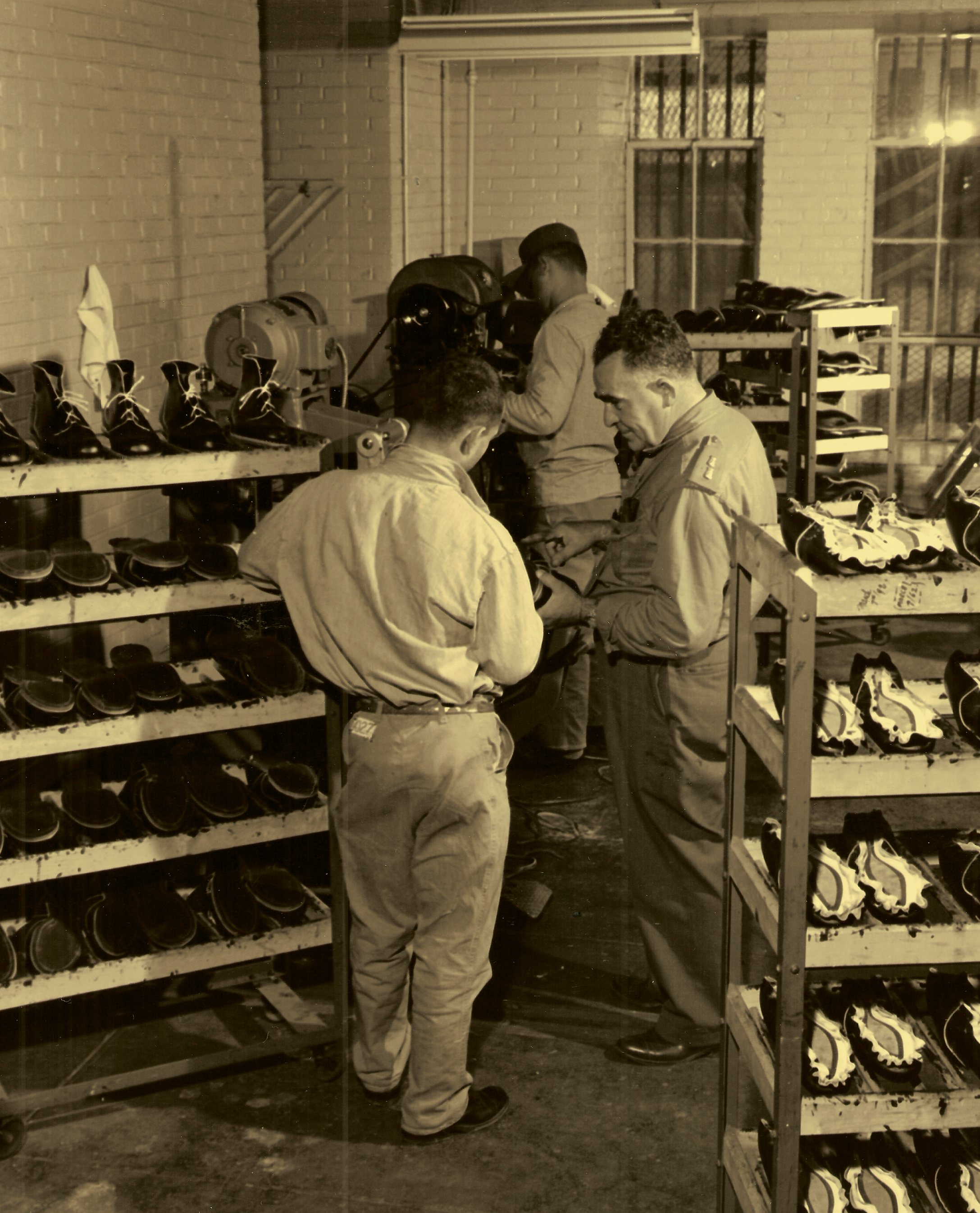
Shoemaking was a prominent trade in late 19th- to early 20th-century Canada, valued for both its practical utility and its potential for industrial production and profit. Training began as soon as the workshop construction was completed in 1839, with shoes quickly becoming the penitentiary’s primary commercial product (Palmer 17). Warden Smith actively solicited contracts, placed advertisements, and petitioned for employment opportunities; the earliest documented contracts date to 1849, just ten years after construction was completed (17). While these early contracts generated modest profit, the primary goal was to create a self-sustaining prison industry rather than maximize revenue. By 1880, contractual prison labour was effectively banned, prohibiting the commercial sale of prison-made goods. Production continued for internal use and government agencies, including the Royal Canadian Mounted Police (RCMP), with the workshop functioning as a cost-saving mechanism for the institution rather than a profit-generating enterprise (McCoy 59).
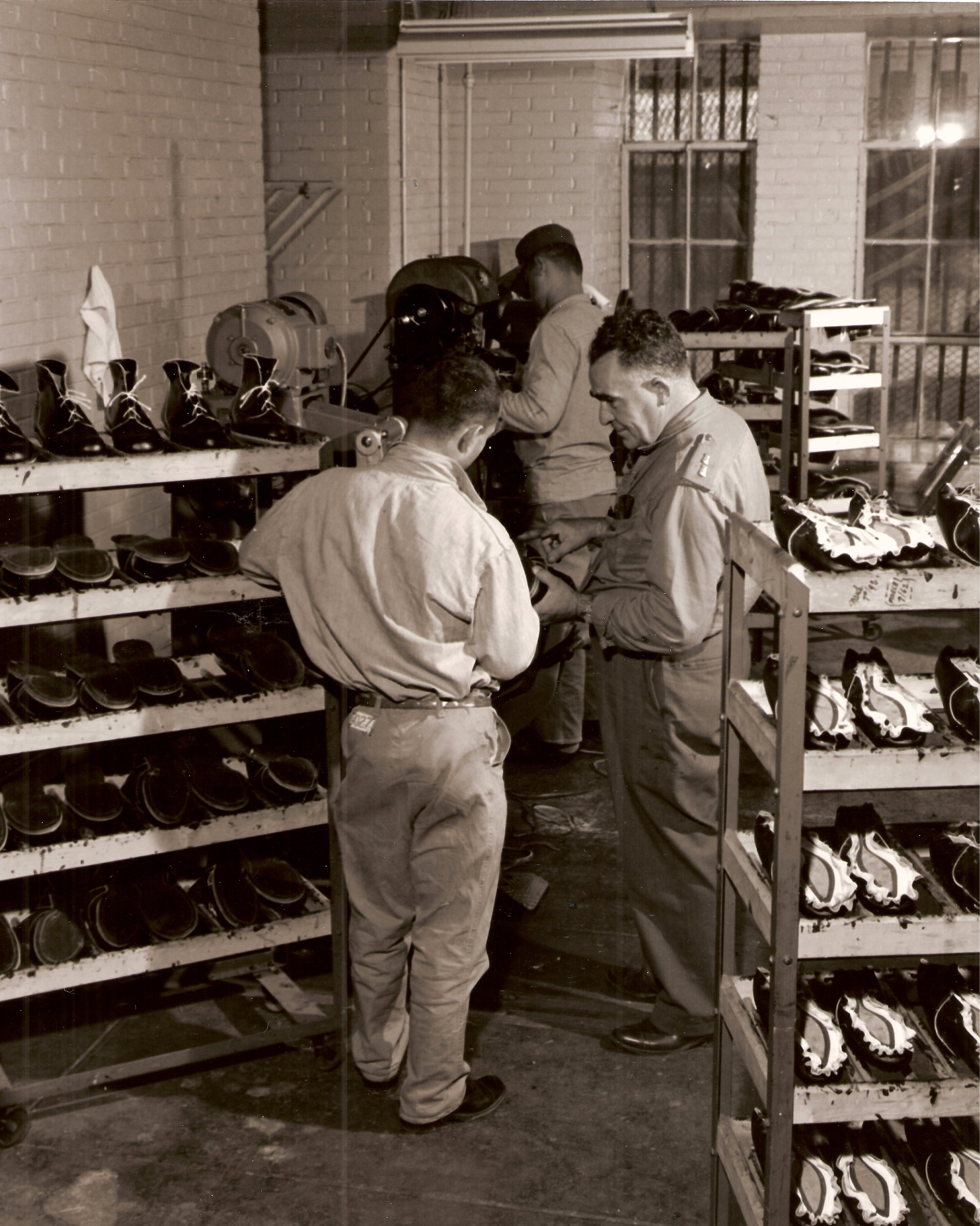
figure 2
Workers in the Kingston Penitentiary Shoe Workshop, 1950s. Photograph, Courtesy of Canada’s Penitentiary Museum.
Trades assignments reflected racial and hierarchical stratification: white first-time offenders often held prestigious positions, such as the print shop, while minority prisoners were assigned physically demanding work, including stone breaking or maintenance (The K.P. Telescope 24). The shoe workshop was considered a mid-level assignment, better than yard labour but less prestigious than the print shop, reinforcing broader hierarchies within prison labour.
Pay acted as both incentive and control. Wages were modest and based on perceived ability rather than effort, with 50¢ per completed workday set in 1935, withheld during punishment or hospitalization, creating systematic favouritism (“Sixth Annual Report” 23; “Royal Commission” 139; Hickey 6-7). Gendered disparities persisted: in the 1950s–60s, incarcerated women earned 25¢–55¢ per day, assessed by staff based on education and work quality (McNeill 84). These economic, moral, and hierarchical dynamics set the stage for understanding how the Kingston Penitentiary shoe workshop reinforced discipline, efficiency, and surveillance, principles that extended into the organization of tools, tasks, and uniforms within the workshop.
Uniform Discipline: Tools, Bodies, and Production
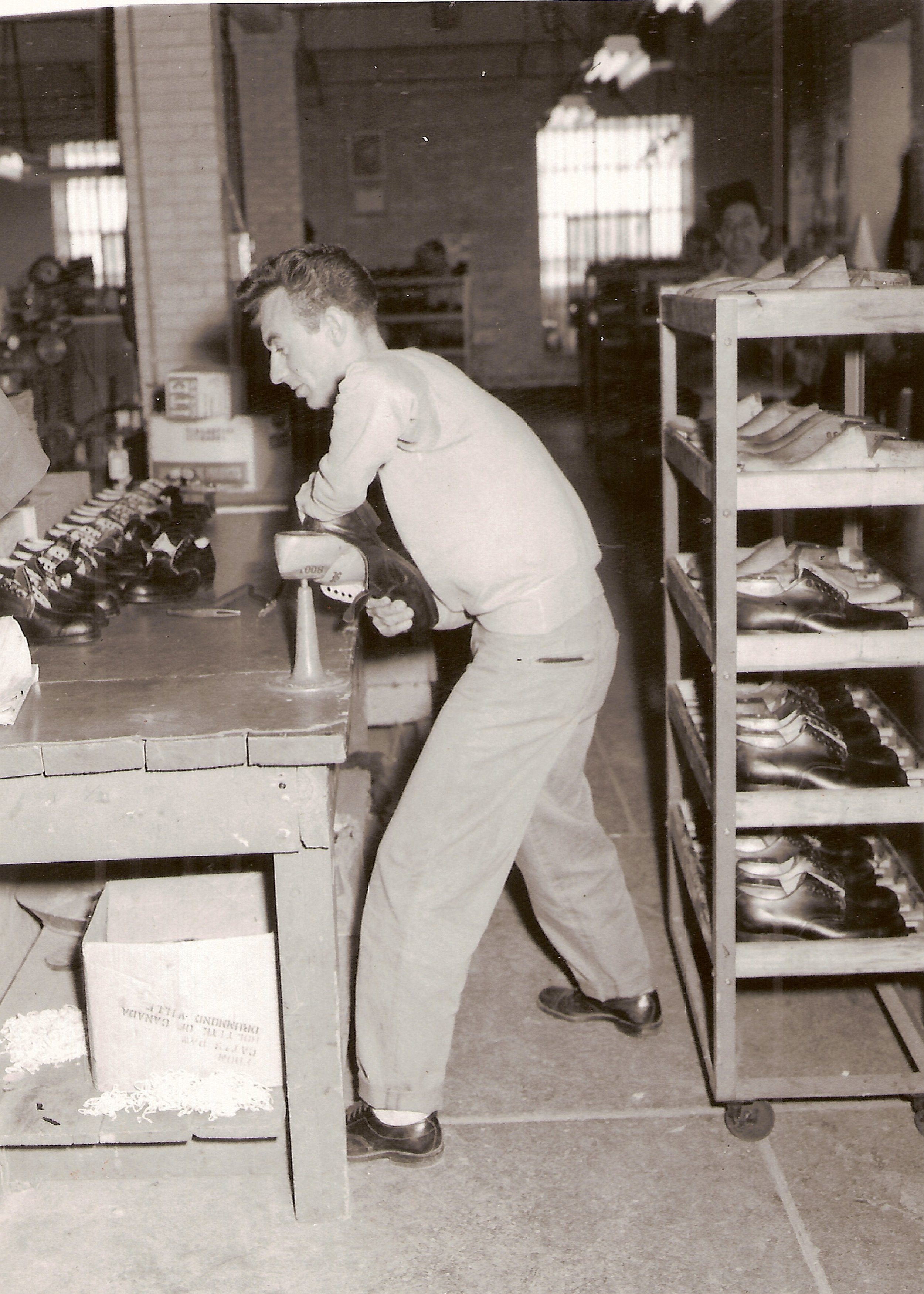
Figure 3
Actively Making Shoes in the Kingston Penitentiary Shoe Workshop, 1960s. Photograph, Courtesy of Canada’s Penitentiary Museum.
Figure 3 shows an incarcerated individual working within the Kingston Penitentiary shoe workshop. The individual's contorted posture conveys the focused and arduous nature required in the craft. The shoes on his feet match those behind him, the orderly arrangement of shoes and lasts on the rack and work bench draws a poignant parallel to the cells within the prison, symbolizing the connection between the disciplined bodies of the incarcerated individuals and the obedient nature of the shoes they painstakingly produce. The shoes were made by incarcerated labourers and later fitted on their peers. They not only carried labourers throughout their incarceration but were also commonly the shoes they took their first steps of freedom in.
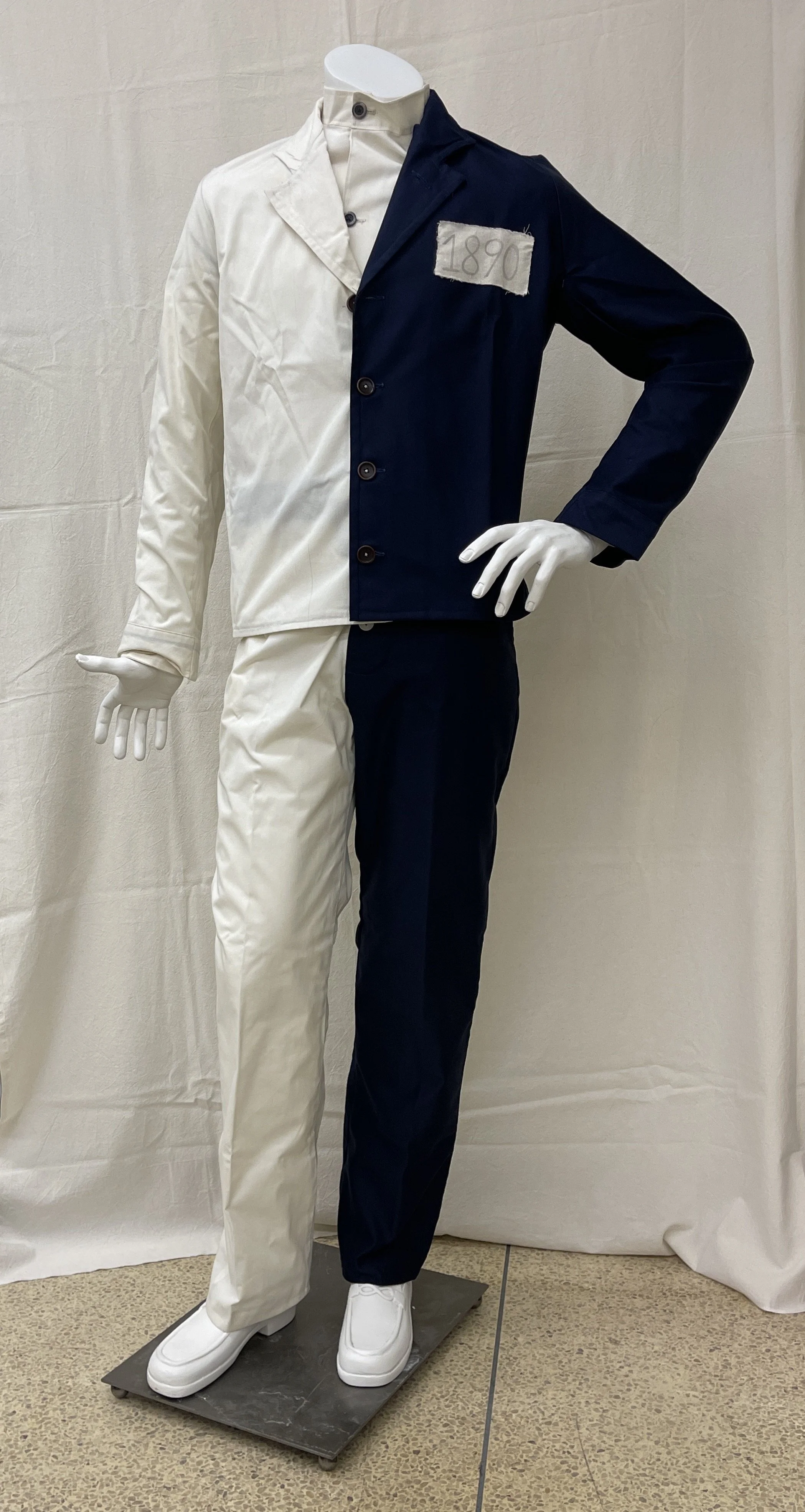
figure 4
Leonelli Calzado, Camilla, 1890s Replica Magpie Uniform, 100% Cotton Twill. Toronto Metropolitan University’s Fashion Research Collection.
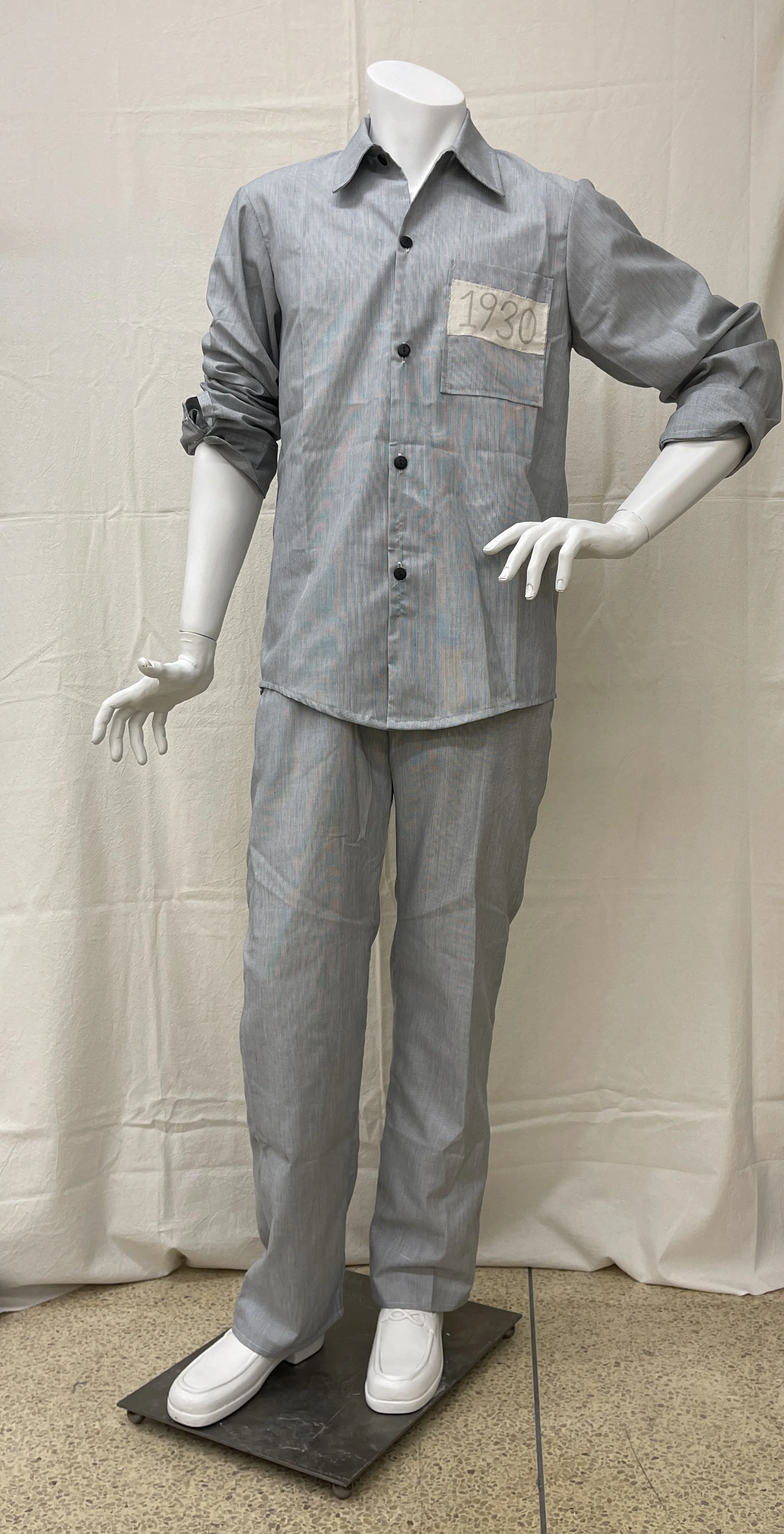
figure 5
Leonelli Calzado, Camilla, 1930s Pinstripe Replica Uniform, 100% Cotton. Toronto Metropolitan University’s Fashion Research Collection.
Based on multiple archival photographs, patterns, and written accounts, Camilla Leonelli Calzado undertook practice-based research to replicate Canadian prison uniforms from the 1890s and 1930s. Reconstructing the garments revealed how a uniform’s materiality may have shaped the embodied experience of incarceration alongside the psychological dimensions. The stiff cotton twill and wool fabrics used in the 1890s (figure 4) and 1930s (figure 5) designs prioritized durability and visibility over comfort. Bulky seams, rigid waistbands, and coarse textiles created friction where the fabric repeatedly met the body—at the joints (elbows, knees, and underarms), particularly during prolonged periods of physical labour.
These material qualities reinforced the disciplinary nature of prison clothing: the uniform did not simply identify the body but shaped how that body moved, laboured, and endured daily routines.
Distinct visual markers, such as the colour-blocked “magpie” design of the 1890s uniform and the pinstripes of the 1930s version, served as easily identifiable indicators of incarceration. From the mid-nineteenth century through the 1970s, Canadian prison uniform design remained relatively stable, closely resembling industrial workwear, reinforcing ideals of labour discipline. Although prison uniforms were originally introduced during reform as a civilizing mechanism, as highly recognizable garments, uniforms communicate social roles and status while carrying cultural meanings associated with authority, danger, and criminality (Ash 189). Design elements such as colour and pattern, seen historically in black-and-white stripes and more recently in orange jumpsuits, have become embedded with symbolic associations that mark the wearer as incarcerated. As Michel Foucault argued, the categorization of bodies within institutions renders them politically and economically useful, reflecting broader systems of social control (Foucault 25–26). Within the prison system, where incarceration functions through the confinement and subjugation of the body (Smoyer et al. 174), uniforms act as a visible extension of this disciplinary framework. By standardizing appearance and suppressing individuality, the uniform often supersedes the wearer's identity, reinforcing institutional cohesion and control (Van Veeren 122).
An additional layer of control existed in the production of the uniforms themselves. At the Kingston Penitentiary, incarcerated workers manufactured and repaired prison garments, which were then distributed to the prison population. Much like the footwear produced in prison workshops, this process created another closed loop of production within the penitentiary system: incarcerated individuals produced the very garments that would later regulate their bodies and those of their peers.
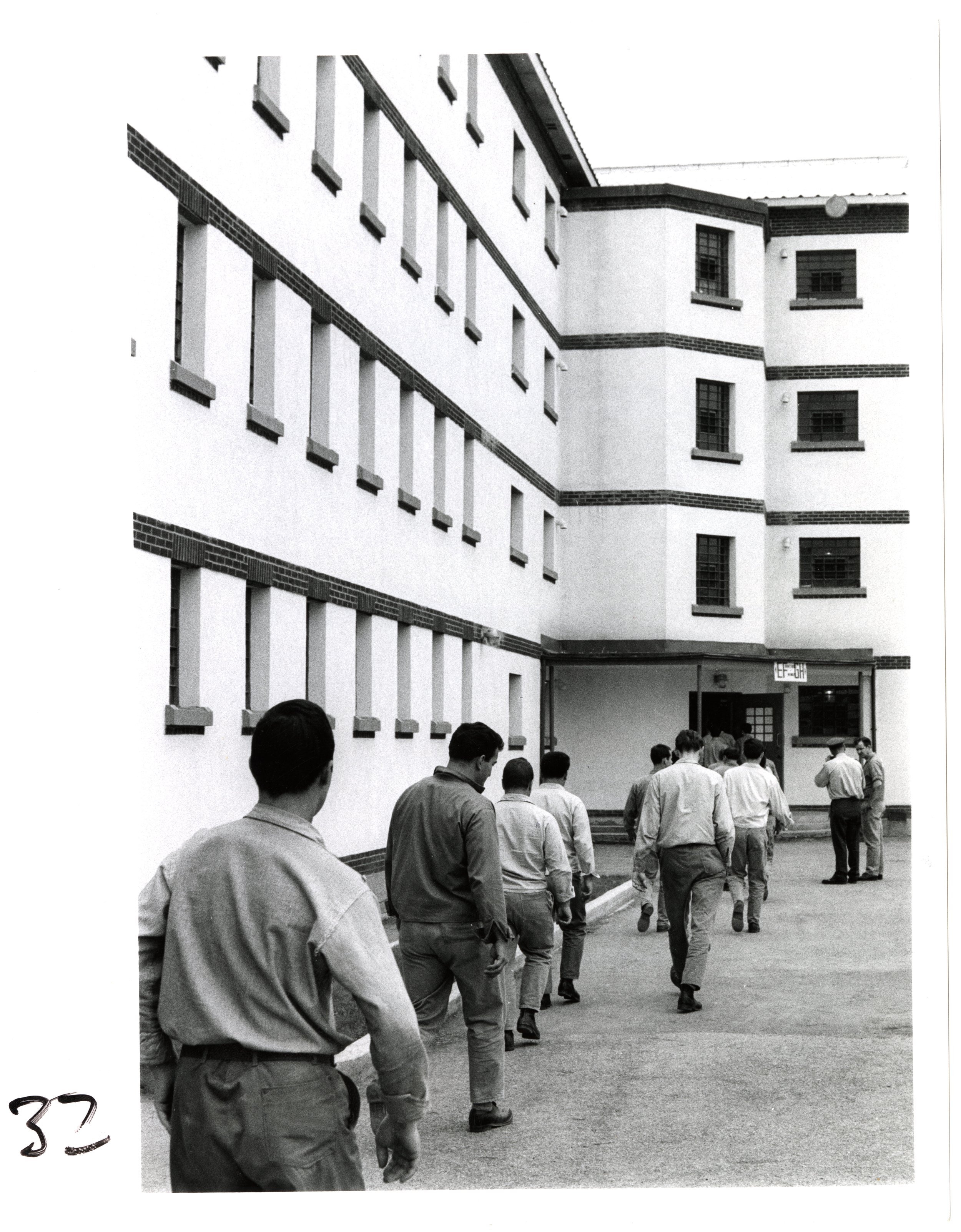
Figure 6
Prisoners in uniform walking back to their cell blocks, 1962, Photograph, Joyceville. Courtesy of Canada’s Penitentiary Museum
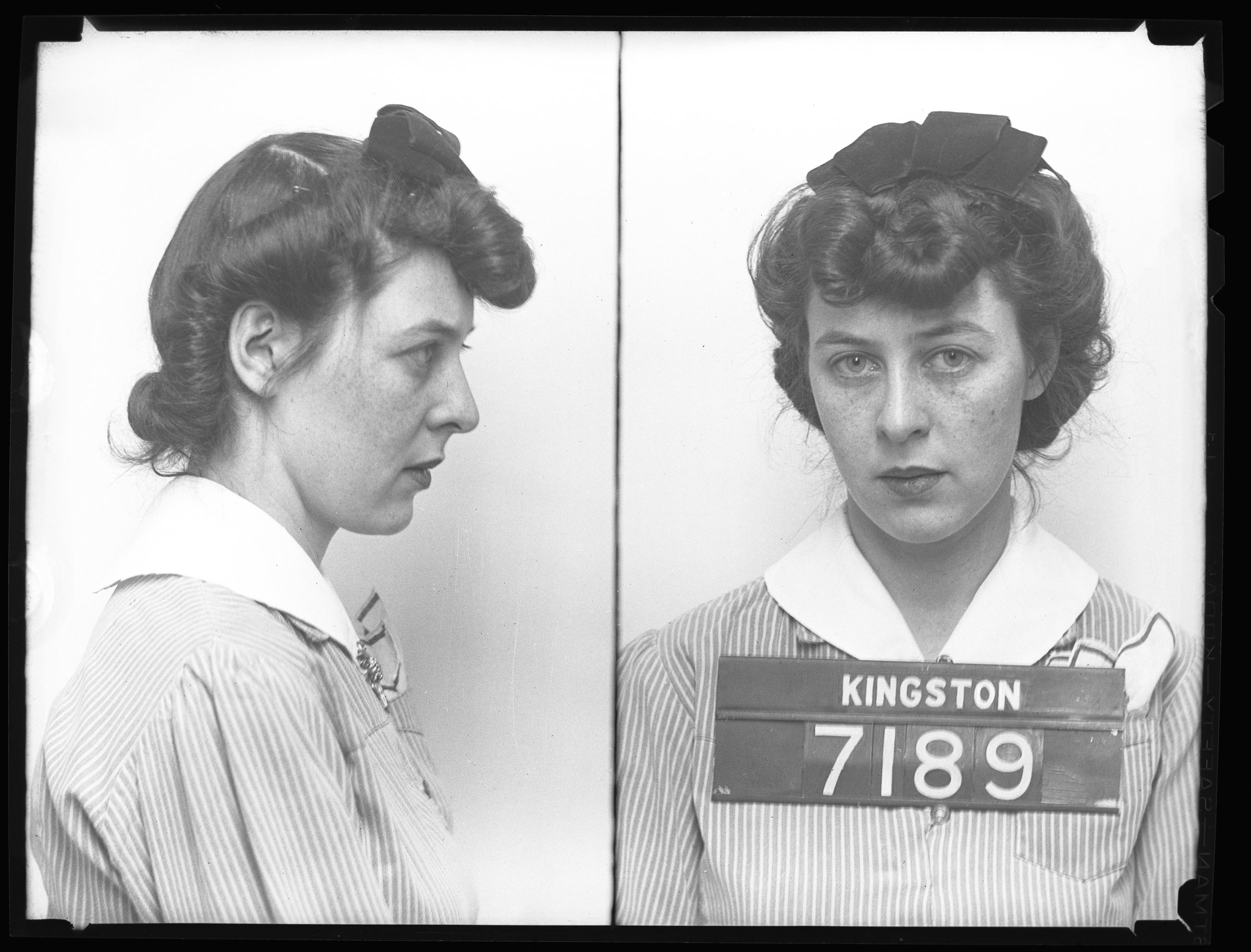
figure 7
Female Inmate #7189, Wearing an Intake Uniform, Arrival Identification Photo, 1943, Kingston, Canada. Courtesy of Canada's Penitentiary Museum.
These systems shaped not only behaviour within the institution but also individuals' self-perceptions regarding their carceral identity (Hajo & Galinsky 922).
The effects of these material markers often extended beyond the prison walls. Although some individuals shed their uniforms upon release, traces of incarceration could remain visible through other penitentiary-issued items. Poor quality prison-made shoes, often worn out within a week, became a visible marker of someone recently released, compounding the challenges of reintegration (KP Shoe Shop Testimonies & Interviews 12). Contemporary interviews with previously incarcerated people conducted by Lonny Carter and Kate Annett-Hitchcock found that removing prison uniforms upon release created the sense of becoming a different person (Carter & Annett-Hitchcock 2). Participants reported that reclaiming personal clothing enabled them to shed the criminal image imposed by the institution and to begin fitting back into society (2). Historically, significant financial barriers often prevented individuals from fully replacing or discarding state-issued uniforms, forcing them to carry physical reminders of incarceration with them. These accounts highlight how the design and circulation of prison garments and footwear shaped not only the experience of incarceration but also the ongoing process of negotiating identity and stigma after release (“Transcribed from Kingston Penitentiary”).
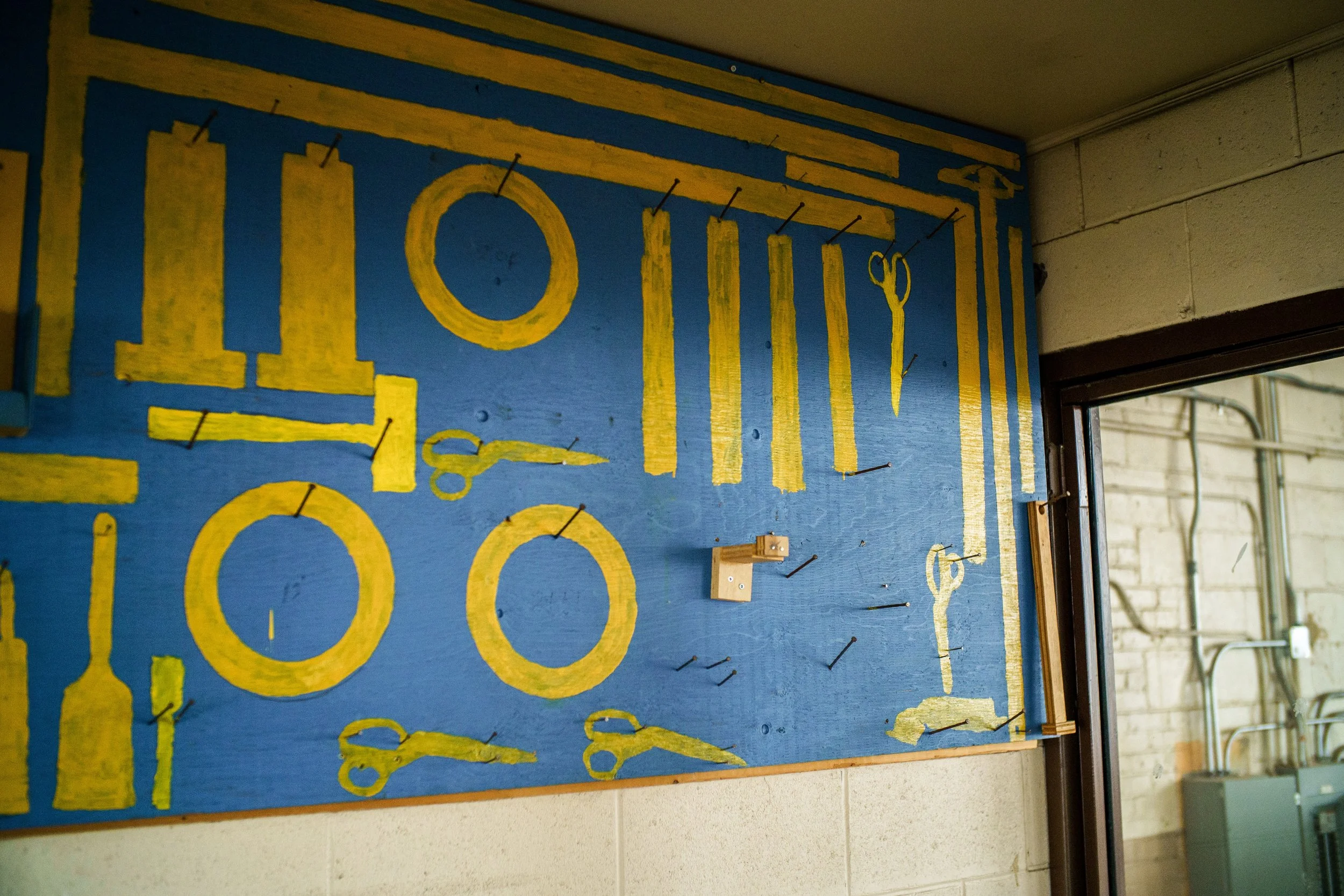
Figure 8
Yellow and Blue Organizational Tool Board in the Kingston Penitentiary, Photo courtesy of Ben Harley.
The principles of uniformity and bodily discipline embedded in prison clothing extend to the organization of prison workshops themselves.
Order was enforced through carefully structured workspaces, colour-coded equipment, and rigidly defined tasks that limited individual autonomy. These systems emphasized surveillance, accountability, and efficiency, ensuring that incarcerated workers remained visible and controllable at all times.

figure 9
Cobbler’s Wrenches used to Maintain Machinery, 1950s-1960s, Canada’s Penitentiary Museum. Photo courtesy of Ben Harley.
Bright yellow stripes marked the rusted metal tool handles in the shoe workshop at Kingston Penitentiary. Colour coding identified the workshop each tool belonged to; yellow denoted the shoe workshop. Tools were stored on a pegboard, with each item assigned a designated outline, so missing items were immediately visible. While controlling access to potentially dangerous tools was a legitimate safety concern, the pegboard also functioned as a mechanism of surveillance, reflecting an institutional assumption that incarcerated individuals would misuse tools given the opportunity. In this environment, regulating bodies took precedence over cultivating craft.
Although prison workshops were framed as sites of trades training, institutional records suggest that instruction was limited. A Royal Commission to Investigate the Penal System of Canada reported that workshop instructors spent much of their time performing administrative duties rather than teaching skills, while low wages deterred qualified tradespeople from taking positions in penitentiary shops (Royal Commission 126, 291). Workers were often assigned only one or two repetitive tasks within a larger production chain, limiting opportunities to develop comprehensive skills or exercise independent judgment. In this context, labour functioned less as a rehabilitative program and more as an extension of the disciplinary logic already embedded in prison uniforms and institutional routines (Merkley 9).
The resulting products reflected these priorities. Comparisons between shoes made at Kingston Penitentiary in the 1950s and those produced commercially during the same period reveal significant differences in quality. Archival records document frequent dissatisfaction and rejection of penitentiary-made goods; in 1938, for example, 76% of a shipment of boots sent to the Royal Canadian Mounted Police was returned due to faulty manufacturing (Superintendent to Royal Commission Investigation, Kingston Penitentiary, 1938).
The combination of rigid oversight, repetitive labour, and minimal skill development ensured that both bodies and products were standardized, reflecting a system that valued institutional control over craftsmanship or personal growth.
Colonial Enforcement and the Contemporary Carceral System
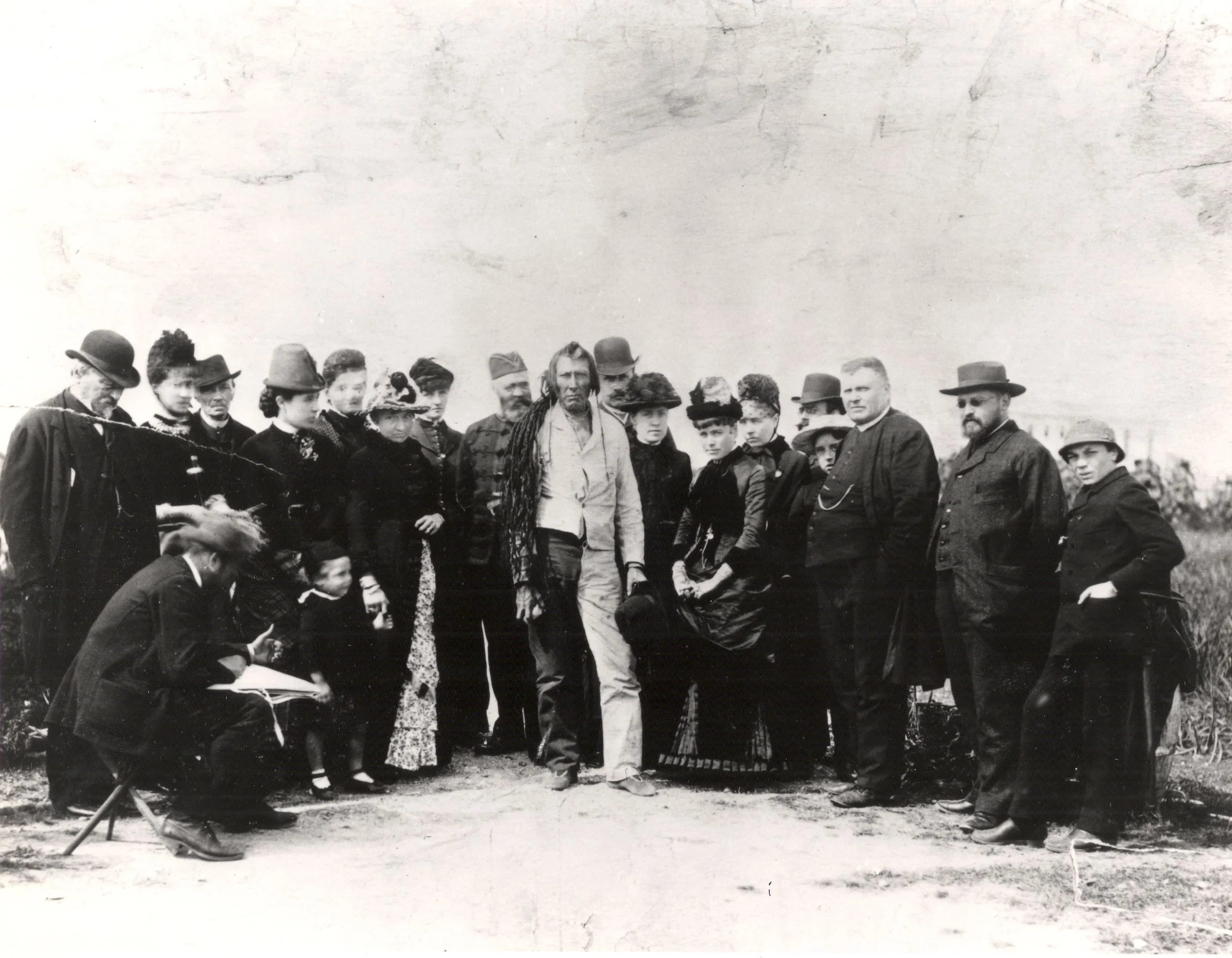
Figure 10
Stony Mountain Penitentiary, Poundmaker Glenbow, 1890. Courtesy of Canada’s Penitentiary Museum.
The colonial project of residential schools was deeply embedded in the systems of control that structure Canadian prisons. Indigenous peoples and other racialized communities are incarcerated at higher rates and subjected to harsher conditions than their white counterparts. This disparity reflects the enduring legacy of residential schools, where systems like the half-day model and vocational trades training enforced Eurocentric work habits and moral discipline. Just as Indigenous youth were trained to internalize discipline and productivity within a controlled environment, prison labour programs continue to regiment bodies. The cycle of colonial power, enforced through policies such as the Indian Act and the discriminatory enforcement of liquor and public order laws, created systemic pathways into prison for Indigenous people (Seymour 1983).
Furthermore, the penitentiary system reinforced cycles of harm through punitive labour, surveillance, and institutional control. These mechanisms are not incidental but integral to broader colonial governance.
The persistence of these patterns reveals that the structures of control established under colonial policy have not disappeared. For example, a 1983 report, Anicinabe Debtors' Prison Final Report to the Ontario Native Council on Justice, by Joseph Peter Seymour, documents how Indigenous over-incarceration was driven by discriminatory policing under the Indian Act and the Liquor Licence and Control Act. Even after the 1951 amendment to the Indian Act, public intoxication laws were enforced against Indigenous people at five times the rate of non-Indigenous people (Seymour 58-87). Defaulting on fines for liquor offences became a primary pathway to incarceration; by 1983, fine defaulters accounted for 75% of the Canadian prison population, and 96% of those sentenced had previously been incarcerated multiple times for the same offence. Rather than functioning as rehabilitation, these patterns demonstrate how incarceration reproduces systemic racial disparities.
While the language surrounding discriminatory policy has evolved, the persistence of these patterns today demonstrates that the underlying framework that produces these disparities endures. Today, Indigenous people constitute 28% of federally sentenced individuals and 32% of those in custody despite representing only 5% of Canada’s adult population (Parliamentary Committee Notes 2023). Indigenous women account for nearly half of all federally incarcerated women, while in regions such as Thunder Bay and Kenora, Indigenous incarceration rates reach 80–90% in provincial institutions (Perreault par. 38).
Within this system, prison labour continues to mirror earlier structures of discipline and control (Ling par. 11). More than fifty years after the closure of prison shoe workshops, footwear is still produced in Canadian institutions. At Warkworth Institution, incarcerated Indigenous artisans produce fur-trimmed moccasins sold for $55 while earning $5.25–$6.90 per day through CORCAN, a labour program administered by the Correctional Service of Canada.
Karl Lech designed the Warkworth program in 2008 with the intention of providing a space for Indigenous incarcerated individuals to express themselves and reintegrate cultural skills. The hope was that the individuals participating in these workshops would be able to transfer the skills learned into their own business models once released (Correctional Service Canada, Creating a New Future with Leather and Textiles). Although the program's mission appears positive, the language used to describe its benefits raises questions. Primarily, the Indigenous cultural objects are regarded as products and are created within a Eurocentric capitalist framework. The priority with the objects made in these workshops mirrors that of the Kingston shoe workshops: maintaining low costs and production efficiency through an assembly-line system.
John-Philippe Crete, a former employee of CSC, investigated the roots of this program and traced it back to the Supreme Court of Canada’s 1999 Gladue decision (Barrera 2016). This decision outlined systemic impacts that lead to the overrepresentation of Indigenous individuals within federal prisons. Programs such as the one at Warkworth were then subsequently made with the idea that if Indigenous peoples had access to their own “culture” while incarcerated, it would remedy recidivism and promote healing.
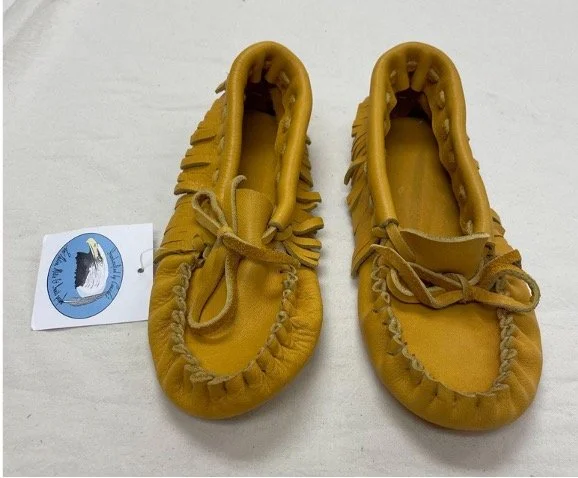
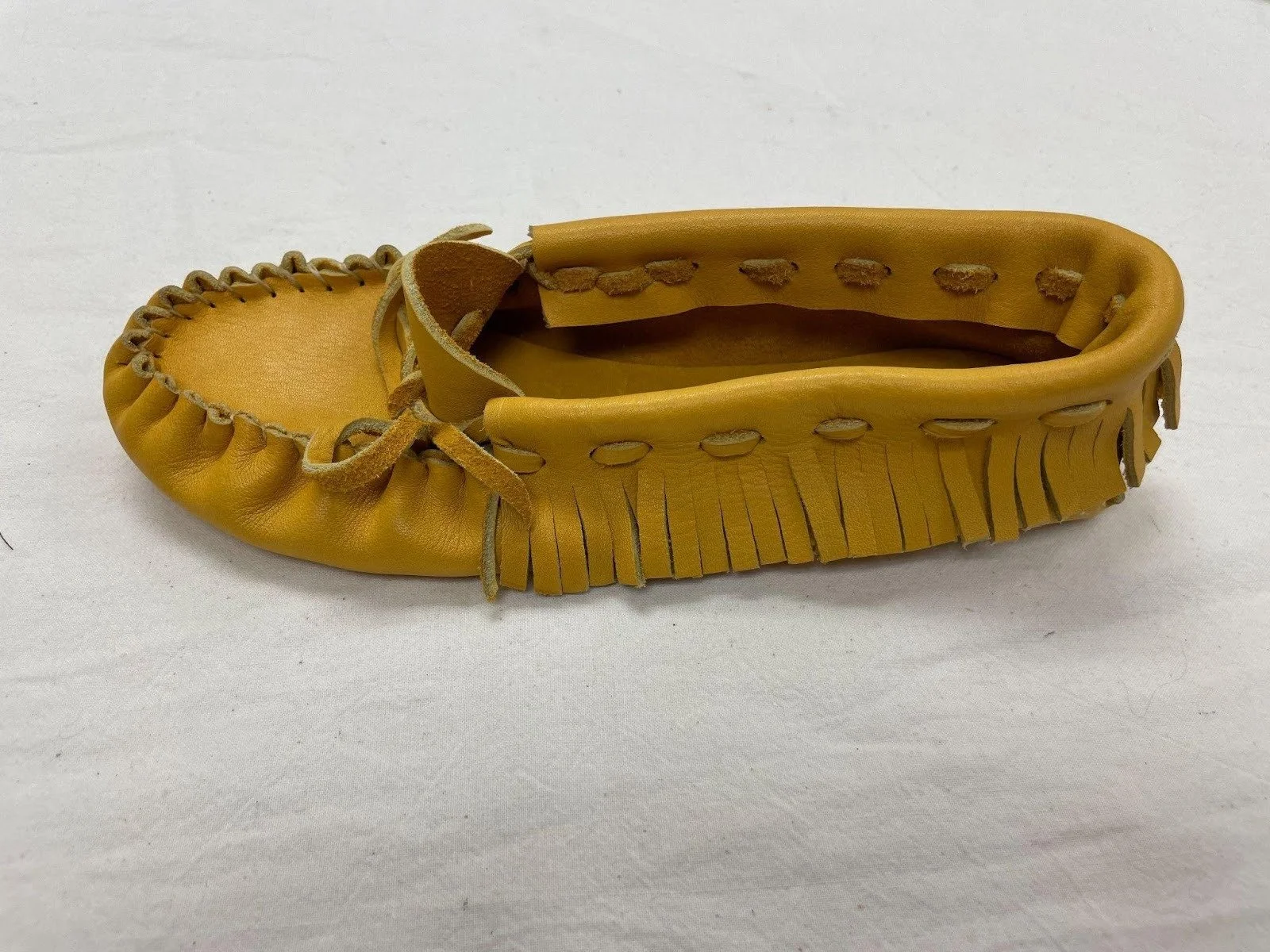
figures 11-12
Women’s Moccasins made by Indigenous incarcerated individuals, 2022, Leather, Correctional Service of Canada (CSC), CORCAN, Warkworth Institution.
figures 13-14
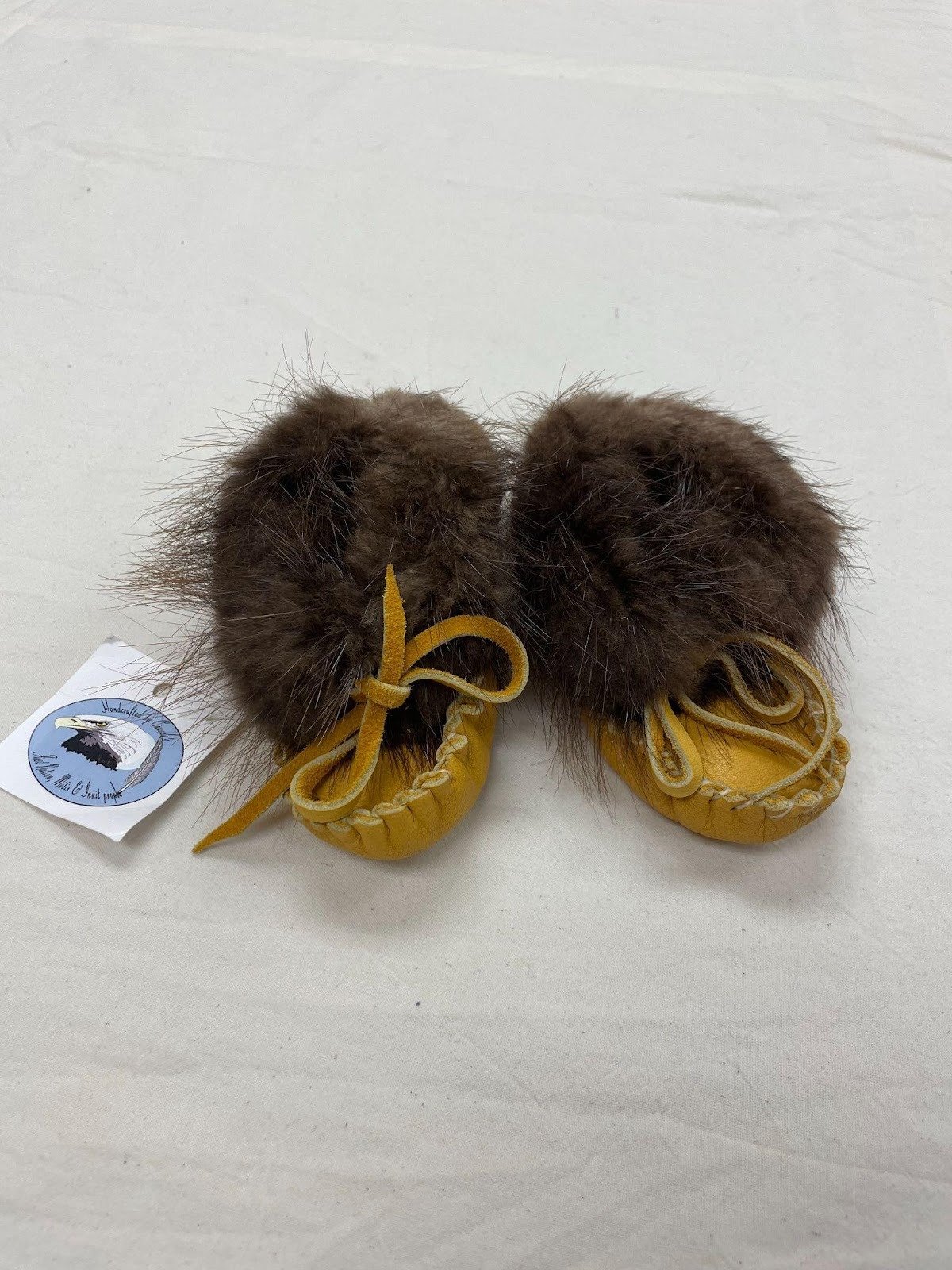
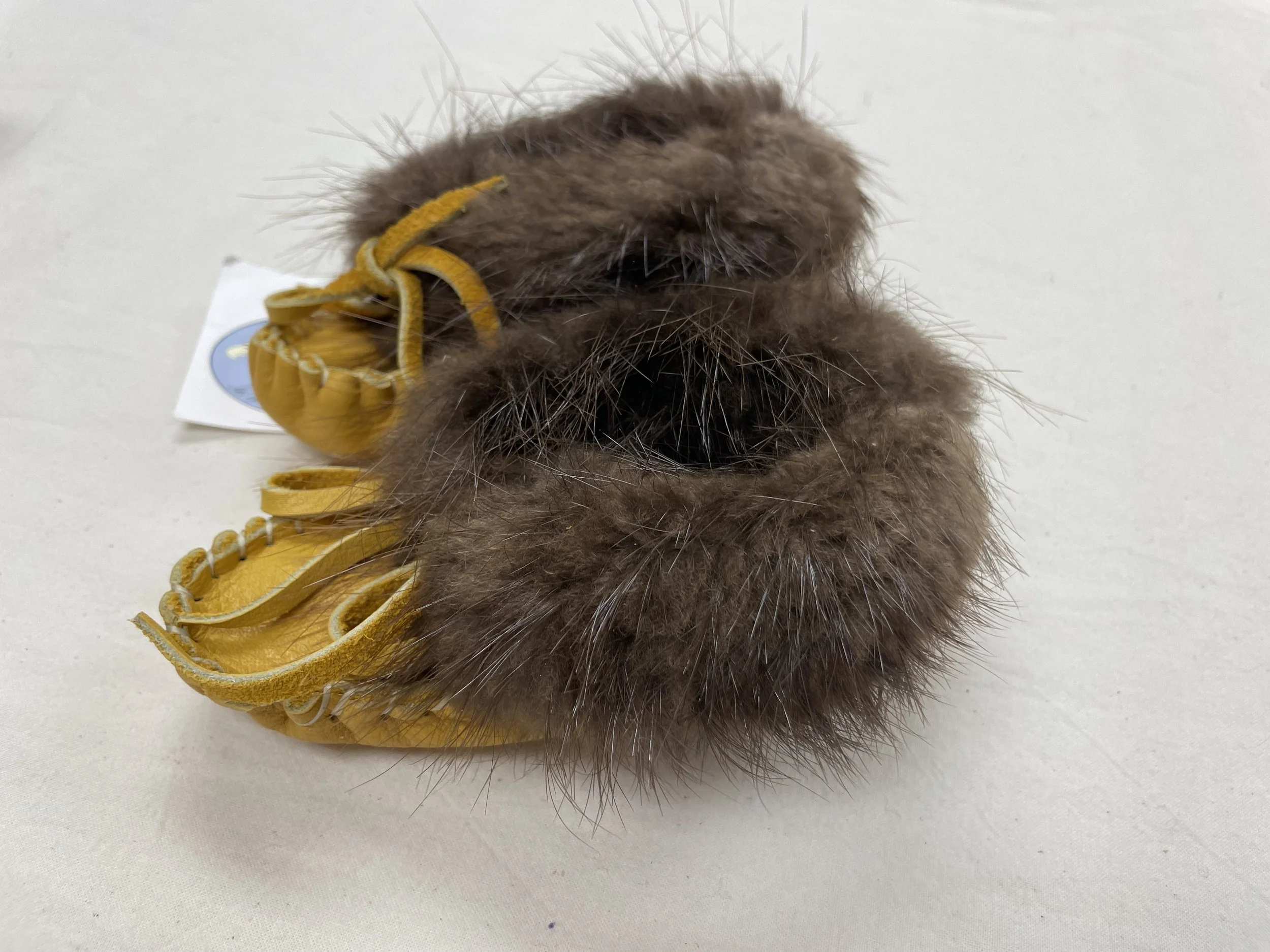
Children's Beaver Fur Trim Moccasins made by Indigenous incarcerated individuals, 2022, Leather and Beaver Fur, Correctional Service of Canada (CSC), CORCAN, Warkworth Institution.
Figures 11-14 are examples of contemporary shoes made through captive labour today. At first glance, the moccasins are simple, modest; their lack of decoration and embellishment is almost utilitarian. The lack of ornamentation communicates their disconnection from Indigenous creative practice; they are unadorned in the love, care, connection, and support that are intimately imprinted in every stitch of traditional making. Their unassuming design conceals a story of colonialism through non-traditional methods used within their productions. The beaver fur signifies one of the driving motivations of colonial expansion of Canada: the fur trade. Commercially tanned leather reflects environmental and cultural extraction, and the inclusion of a bald eagle on tags raises questions about appropriation while evoking resilience and spiritual symbolism within several Indigenous cultures across Canada.
In Justine Woods's article, “I Love You as Much as all the Beads in the Universe,” the decolonial praxis of love engages in intentional creative practice that “bears witness to the past but looks towards a transformative future” (Yomaira qtd. in Woods 7). Within Indigenous creative practice, each garment prioritizes aspects of care through embedded intention and attention to craft and detail (Woods 15). Woods highlights how each garment is carefully designed and technically considered to support, enhance, cherish, celebrate, hug, and love the wearer's body (15). These principles stand in contrast to the highly regulated, commercially driven production of moccasins in contemporary carceral settings.
Figures 15-16
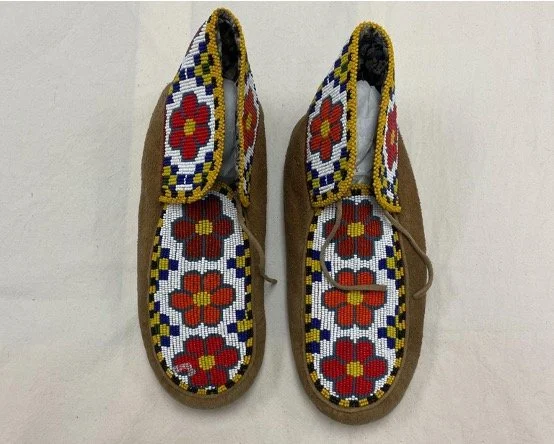
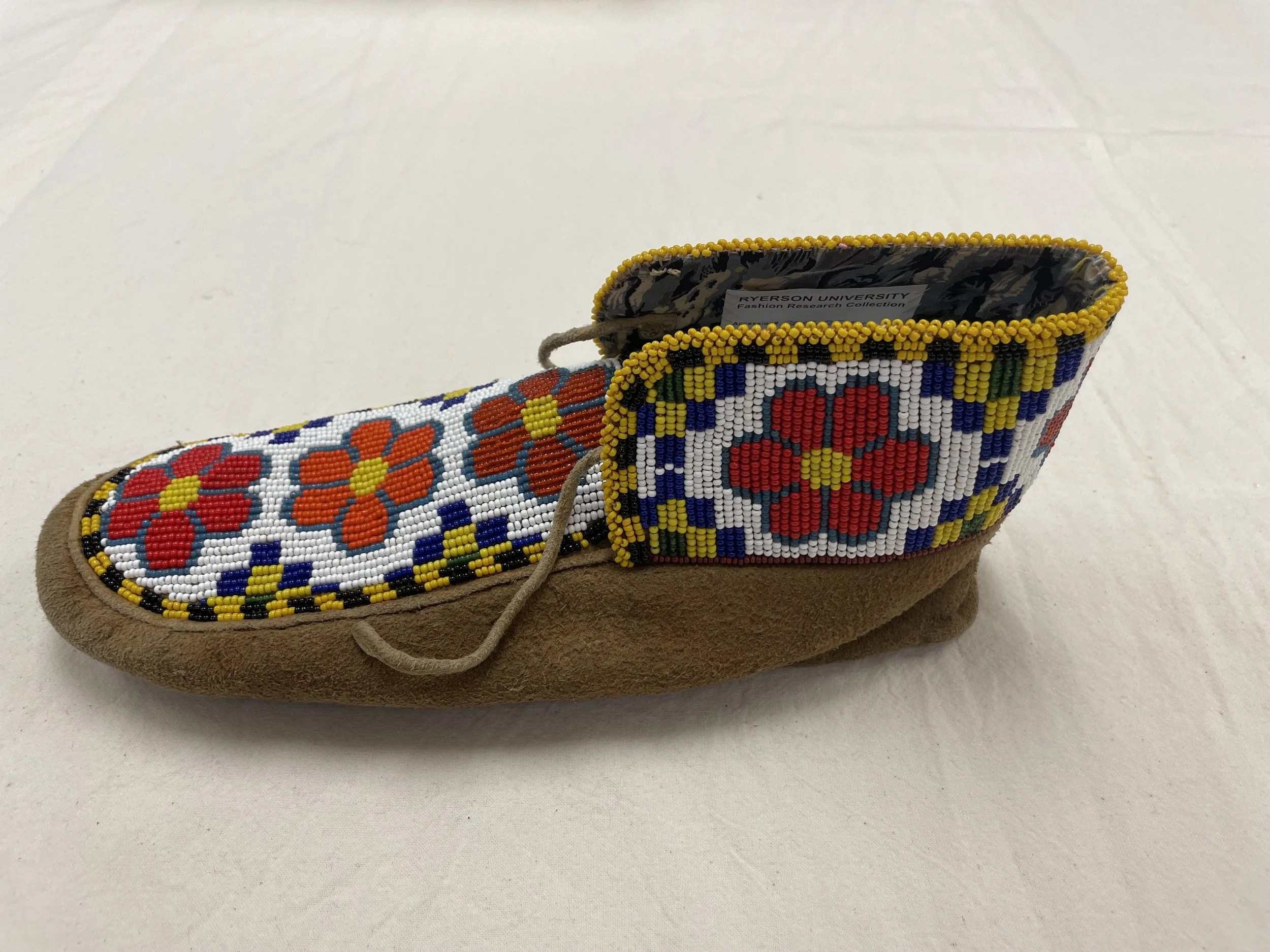
Beaded Moccasins in a Floral Pattern in Red and Orange, 1950. Courtesy of Toronto Metropolitan University’s Fashion Research Collection.
Figures 15-16 show beaded moccasins from circa 1950 housed in the Fashion Research Collection. The beadwork, styled in a floral pattern of red and orange, highlights the individuality and skill of the maker. Traditional moccasins are made by an individual for a specific wearer, and the “imperfections” in stitching and beadwork signify the maker’s originality and care. A skilled craftsperson might spend a week producing a pair, which today could sell for $600-$700. By contrast, CORCAN moccasins are made from commercially tanned cow leather, with infant styles trimmed with beaver or rabbit fur (CORCAN Specialty Products). Traditional tanning, using wild moose or deer hide, is a slow, multistep process, whereas commercial tanning is quicker and cost-effective but environmentally impactful (Hansen et al. 1, Mwinyihija 2).
Warkworth supplies the Indigenous objects primarily to stores in Ontario, including Curve Lake, Rama, Six Nations, Gananoque, and North Bay, as well as to the Correctional Service Museum in Kingston and The Canadian Canoe Museum in Peterborough (Barrera 2016). The CORCAN moccasins label features the text: “Handcrafted by Canada’s First Nation, Metis & Inuit people.” There is no clear connection between the moccasins, Warkworth Institution, and/or CORCAN.
The correctional service article notes that workshop participants have cited the program as a source of financial support and personal healing, while also emphasizing its broader success. The program is further framed through the involvement of Elders, who are described as regularly visiting the institution to oversee operations and provide cultural guidance. Lech notes that the moccasins are set at $55 to offset material and tool costs within the workshop. While the materials used may have been considered an oversight in the early years of this program, their continued use despite the program's “success” raises questions about why quality has not been improved to align with its stated mission. Additionally, there are also accounts from community members who consider the program exploitative and unethical (Barrera). The concerns are not so much focused on the creation of the objects as on their marketing and sale. Dawn Marie Marchand, a Cold Lake First Nation and Métis artist, raises concerns about the quality of objects created at Warkworth and their impact on local artisans. Marchand argues that the impact of the objects created leads to broader misconceptions revolving around Pan-Indianism, which lumps Indigenous nations and their various practices together (Barrera). The mass production of objects, many of which belong to specific communities, undermines the work of local artisans.
The use of non-traditional materials and processes of commercial tanning and an assembly-line system suggests that CORCANS’ production of Indigenous materials remains rooted in production and cost efficiency, not skill building or cultural connection. Moreover, policies governing Indigenous labour programs are often treated as check-box mandates; the systems find loopholes that protect institutional interests rather than supporting the individuals most directly affected.
Rather than focusing on completing moccasins as finished products for sale, the workshop could prioritize teaching individual steps, including beading, tanning, and design, so that participants engage deeply with the process. This approach emphasizes the education, skill-building, artistic expression, and personal connection, resulting in pieces that are meaningful, distinctive, and a source of pride for the maker, rather than merely commodities produced for profit.
Conclusion
This body of work aimed to uncover the historical and contemporary impacts of captive labour and the experiences of incarcerated labourers within Canada. Throughout the shifting ideologies of incarceration and labour programs of the 19th and 20th centuries, the Kingston Penitentiary's shoe workshops' prioritization of production, lack of proper management and instruction, and outdated machinery and tools inhibited the ability of incarcerated individuals to properly learn the trade while forcing them to work within unsafe conditions. Penitentiary labour programs were developed with the intention to reform and educate incarcerated workers, but our findings demonstrate how their design and implementation did not develop hireable skills or knowledge. Instead, the labour programs served to reinforce colonial ideologies and benefited those already in a position of power while disempowering marginalized populations.
Systemic discrimination seen throughout residential schools mirrored conditions of reform programming and prison life. Discriminatory laws, biased stereotypes, and overrepresentation of Indigenous people incarcerated remain prevalent issues. The current production of Indigenous culture objects through an assembly line system underscores the attempts to reintegrate culture within prison labour programs.
There are many people working to improve the current conditions for incarcerated workers, including Jordan House and Asaf Rashid, experts with extensive experience in the field of labour law and activism have advocated for the rights of marginalized populations, particularly incarcerated workers. Their collective body of work highlights the systemic exploitation prevalent within the Canadian prison industrial complex, offering a critical perspective that challenges prevailing norms and calls for transformative change.
The path towards ethical labour programs remains uncertain, offering no single solution but a myriad of opportunities for improvement. While we do not have a complete solution, the first steps towards addressing the challenges in modern prison labour programs are education and transparency, which can help initiate informed social change. Meaningful pathways must recognize that these systems are interconnected, and that ethical programming can only be achieved by addressing them from the ground up. Our research demonstrates that the potential for enacting positive change in Canadian Penitentiary shoe workshops is significant. Understanding captive labour as a product of ongoing colonial structures forces us to deliberate on the broader societal investments in punishment, productivity, and inequality that make such exploitation possible.
Works Cited
“2020-21 Departmental Results Report.” Government of Canada, Correctional Services Canada, 2020-2021 Departmental Results Report - Canada.ca. Accessed August 2022.
Ash, Juliet. “The Prison Uniforms Collection at the Galleries of Justice Museum, Nottingham, UK.” Journal of Design History, vol. 24, no. 2, 2011, pp. 187–93. JSTOR, http://www.jstor.org.proxy.library.cornell.edu/stable/23020371.
Barrera, Jorge. “Federal prison corporation’s selling of moccasins, drums for revenue ‘exploitative,’ says Cree-Metis artist.” APTN News National, 16 Nov. 2016, https://www.aptnnews.ca/national-news/federal-prison-corporations-selling-of-moccasins-drums-for-revenue-exploitative-says-cree-metis-artist/. Accessed November 2022.
Carter, Lonny, and Katherine Annett-Hitchcock. "The impact of imprisonment on the relationship between clothing and identity of incarcerated people." International Textile and Apparel Association Annual Conference Proceedings. vol. 78. no. 1. Iowa State University Digital Press, 2022, pp. 1-3.
“Commissioner's Directive 730: Offender program assignments and inmate payments.” Correctional Service Canada, Government of Canada, 9 July 2025. https://www.canada.ca/en/correctional-service/corporate/acts-regulations-policy/commissioners-directives/730.html
“CORCAN Specialty Products.” Government of Canada, https://www.corcan.ca/specialty-products/. Accessed August 2022.
“Creating a New Future with Leather and Textiles.” Correctional Service Canada, Government of Canada, 23 Aug. 2024, https://www.canada.ca/en/correctional-service/lets-talk/read/2024/08-23-indigneous-products.html
Foucault, Michel. Discipline and Punish: The Birth of the Prison. Translated by Alan Sheridan, Vintage-Random House, 1977.
Hajo, Adam, and Adam D. Galinsky, "Enclothed cognition." Journal of Experimental Social Psychology, vol. 48, no. 4, 2012, pp. 918-925.
Hansen, Everton, Patrice Monteiro de Aquim, and Mariliz Gutterres. "Environmental assessment of water, chemicals and effluents in leather post-tanning process: A review." Environmental Impact Assessment Review, vol. 89, 2021, pp. 106597.
“Half-Day System and the Exploitation of Student Labour.” Gladue Rights Research Database, https://gladue.usask.ca/node/2468
Hickey, Chas. “Adequate Pay for Useful Labour.” The K.P. Telescope, 5th Anniversary, September 1955. pp. 6-7.
“History and overview of CORCAN.” Government of Canada, Correctional Services Canada, https://www.canada.ca/en/correctional-service/programs/corcan/about-corcan.html#1. Accessed September 2022.
House, Jordan, and Asaf Rashid. Solidarity beyond bars: Unionizing prison labour. Fernwood Publishing, 2022.
Ling, Justin. “Prison Labour.” The National, The Canadian Bar Association. 16 Sept. 2019, https://nationalmagazine.ca/en-ca/articles/law/in-depth/2019/all-work-and-low-pay
McCoy, Ted. Hard Time: Reforming the Penitentiary in Nineteenth-Century Canada. AU Press, 2012.
McNeill, Katie-Marie. "A Re-education on How to Work: Vocational Programs in Kingston Area Prisons, 1950–1965." Labour, vol.89, 2022, pp. 61-88.
Merkley, A.D. “Employment And The Ex Convict.” The K.P. Telescope. vol. 1, no. VII, February 1951. 9.
Miller, James Rodger. Shingwauk’s Vision: A History of Native Residential Schools. University of Toronto Press, Toronto, 1996, 2000.
Mwinyihija, Mwinyikione. Ecotoxicological Diagnosis in the Tanning Industry. Springer, 2010.
Perreault, Samuel. “The incarceration of Aboriginal people in adult correctional services.” Juristat. Statistics Canada, July 2009. https://www.statcan.gc.ca/pub/85-002-x/2009003/article/10903-eng.htm. Accessed 2022.
Palmer, D. Bryan. “Kingston Mechanics and the Rise of the Penitentiary, 1833-1836.” Histoire Sociale/Social History, vol. 13, no. 25, 1980. pp. 7-32
Ramesh, M. The politics of industrial adjustment in Canada: the case of the footwear industry. Diss. University of British Columbia, 1988.
“Royal Commission on the Penal System.” Report of the Royal Commission to Investigate the Penal System of Canada. Printer to the King, Ontario, 1938.
Seymour, J. P. “Anicinabe Debtors Prison Final Report to the Ontario Native Council on Justice.” Public Safety Canada, no. 1985-51, March 1983.
“Sixth Annual Report of the Directors of Penitentiaries of the Dominion of Canada for the year 1873.” Dominion of Canada (1874), Printed by IB. Taylor.
The K.P. Telescope. “Symposium on Rehabilitation.” vol.5, August 1955, pp. 24-25.
“Transcribed From Kingston Penitentiary Reception & Discharge Cards.” National Library of Canada, LAC RG73 Acc. 1980-1981/253, vol. 58, file no. 20-2, Pt. 1. Accessed August 2022.
Van Veeren, Elspeth. "Orange prison jumpsuit." Making Things International, vol. 2, Catalysts and Reactions, 2016, pp. 122-136.
Author Bios
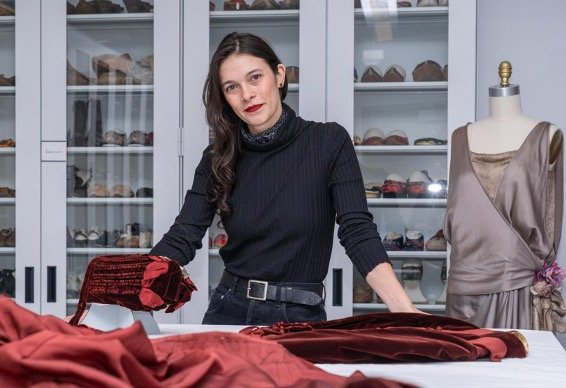
Sephra Lamothe is a second-year PhD student in Apparel Design at Cornell University. As an interdisciplinary researcher and curator, Sephra examines the impact of traumatic experiences and environments on material culture, with particular emphasis on uncovering historically underrepresented experiences in fashion. Recent exhibitions include Captive Labour: Exploring Labour Within Canadian Penitentiaries, featured in Exhibit A: Investigating Crime and Footwear at the Bata Shoe Museum in Toronto, Home Making: Artists and the Domestic displayed at the Herbert F. Johnson Museum of Art in Ithaca, NY, and Threads of Progress: 100 Years of Fashion & Innovation, in celebration of Cornell University’s College of Human Ecology’s centennial. Sephra’s current research explores North American material culture of death from 1860 to 1925.

Camilla Leonelli Calzado is a multidisciplinary artist, researcher, and designer based in Toronto. Her practice engages archival absence, transculturation, and the role of textiles in shaping diasporic histories. Camilla recently completed her MA in Fashion Studies at Toronto Metropolitan University, where her research-creation project, Threads Lead Home, explored Afro-Cuban diasporic memory through textile practice, archival research, and embodied making. As a research assistant to Alison Matthews David on the Fabric of Crime project, Camilla co-curated Captive Labour: Exploring Labour Within Canadian Penitentiaries, a physical and digital exhibition examining labour and incarceration through material culture. This work has been featured in Exhibit A: Investigating Crime and Footwear at the Bata Shoe Museum.
Article Citation
Lamothe, Sephra Annika, and Camilla Leonelli Calzado. “Captive Labour: Exploring Shoe Making within Canadian Penitentiaries.” Unravelling Fashion Narratives, special issue of Fashion Studies, vol. 5, no. 2, 2026, pp. 1-25. https://doi.org/10.38055/UFN050206
Copyright © 2026 Fashion Studies - All Rights Reserved
Creative Commons Attribution-NonCommercial-NoDerivatives 4.0 International (CC BY-NC-ND 4.0) license (see: https://creativecommons.org/licenses/by-nc-nd/4.0/)