
Making Material Intimacies: Theorizing Research-Creation Through Embodied Practice
By Charlotte Little and Kirsten Mann

DOI: https://doi.org/10.38055/UFN050202
MLA: Little, Charlotte, and Kirsten Mann. “Making Material Intimacies: Theorizing Research-Creation Through Embodied Practice.” Unravelling Fashion Narratives, special issue of Fashion Studies, vol. 5, no. 2, 2026, pp. 1-21. https://doi.org/10.38055/UFN050202
APA: Little, C., & Mann, K. (2026). Making Material Intimacies: Theorizing Research-Creation Through Embodied Practice. Unravelling Fashion Narratives, special issue of Fashion Studies, 5(2), 1-21. https://doi.org/10.38055/UFN050202
Chicago: Little, Charlotte, and Kirsten Mann. “Making Material Intimacies: Theorizing Research-Creation Through Embodied Practice.” Unravelling Fashion Narratives, special issue of Fashion Studies 5, no. 2 (2026): 1-21. https://doi.org/10.38055/UFN050202
Volume 5, Issue 2, Article 2
Keywords
Research-creation
Embodied practice
Photography
Materiality
Making
Collaboration
Abstract
This project consists of Material Intimacies, a research-creation project by Kirsten Mann and an accompanying paper written in collaboration with Charlotte Little, a subject/participant of Mann’s creative research. Material Intimacies consists of a series of editorial photographs representing specific materials used by designers from the TMU MA Fashion class of 2025. The goal of this creative research was to use materiality as inspiration through visual storytelling to harvest a deeper understanding of the relationship between the made and maker. Acknowledging the collaborative nature of Material Intimacies, the authors engage in a qualitative examination of the relationship between the maker and their work, citing research-creation as an increasingly valid and valuable form of knowledge generation. Collaboration is considered as a method of knowledge generation from artist to artist, artist to material, and researcher to participant. The authors investigate the embodied knowledge created through making and the more-than-human intimacies created between the maker and their material, including Little’s chosen medium of wool and Mann’s chosen medium of photography, the primary medium used within the creative project. The aim of this written addition to Material Intimacies is to explore the embodied connection created between maker and material while simultaneously reflecting on the collaborative relationships created during the making process of Material Intimacies.
An exploration in research-creation and embodied practice in fashion, this paper explores the making of Kirsten Mann’s Material Intimacies, a creative photography project documenting the intimate relationship between garment makers and their chosen medium. Charlotte Little, a participant in the project, joins Mann in examining the collaborative nature of the project and the wider implications of collaboration within the methodology of research-creation.
Material Intimacies consists of a series of nine editorial photographs, taken on DSLR, each depicting a maker wearing their own creation in their chosen medium. The designers were asked how their chosen material is personal to them, which allowed for deep introspective insight into the relationship between the made and the maker. The first photoshoot commenced in a casual group setting, and over the next two years a series of photoshoots took place across the province of Ontario. The photographer selected a variety of locations drawing inspiration from both the garment and the individual being photographed.
Photographing these garments and speaking to the garment makers allowed for a thorough understanding of the materials used and a further appreciation of the history of the materials and craftsmanship.
Each design carries a story unique to each designer as an extension of who they are as artists, and each material carries a solitary story of its complex origins, being reimagined within the designs captured by the photographer. The goal of this creative-research project was to use materiality as inspiration through visual storytelling to harvest a deeper understanding of the relationship between the made and maker.
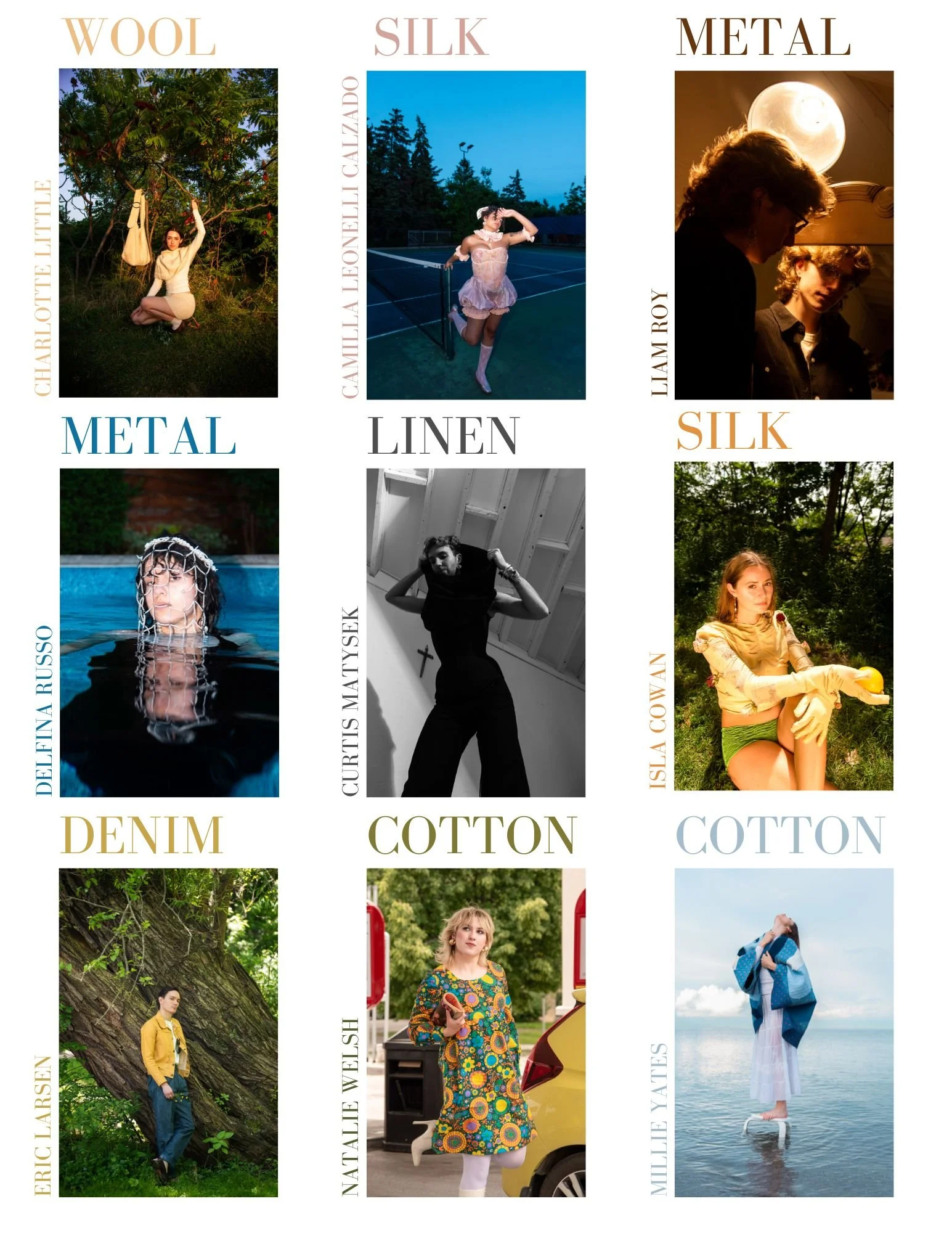
figure 1
Mann, Kirsten. “Material Intimacies.” 2023-2025.
The creation of Material Intimacies spanned over a couple years and many photoshoots; the initial photoshoot took place at a friend’s studio in the form of a casual gathering, lasting around four hours.
In this way, “just hanging out” became a potent practice of alternative knowledge generation. Pyyry (2022) explores the potential of “hanging out” for research-creation, finding that spending time within a certain space allows for new areas of thought to open up, feeling the world and letting it pose questions to us (77). Taking the time to “dwell with our landscapes of research-creation” helps us to mitigate feelings of indifference towards our work, amplifying joy in, through, and with practice (76).
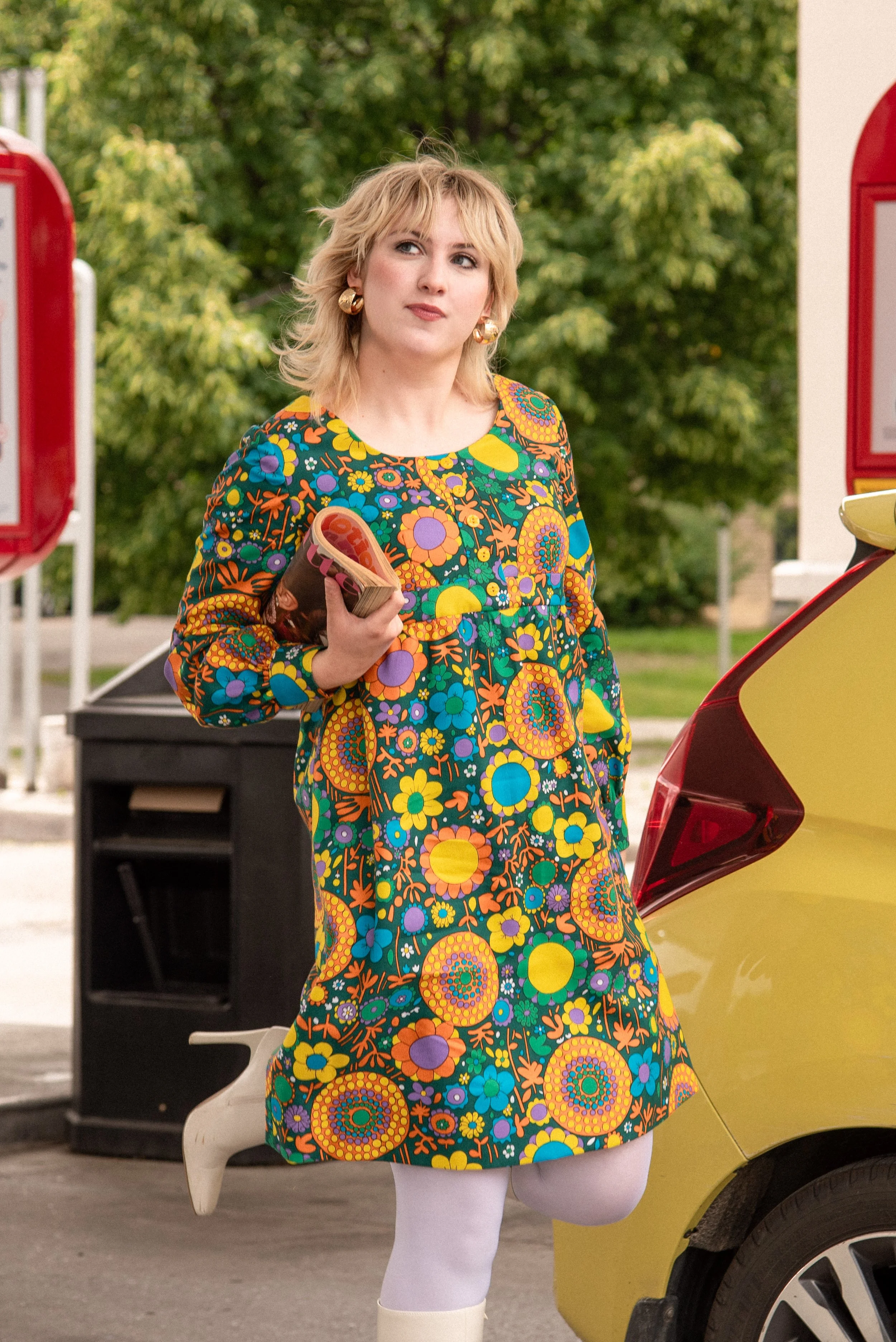
Throughout the duration of the photoshoots, Mann asked the designers questions of their practice in a form of casual conversation. This allowed for the artists to bond and build trust amongst one another, creating a sense of community within a comfortable and inviting atmosphere to ease any potential feeling of vulnerability while being photographed. At the end of each photoshoot, Mann asked the designers to ponder and reflect on what the significance of their chosen material meant to them and their practice (see fig. 2-10).
Within this research-creation project, the methodology of visiting and collaboration was crucial. Spending time with one another relieved us from Western capitalist associations between time and productivity (Miner 2018).
Miner (2018) explains that “time is precious, not because it is fleeting or because our human-to-human and human-to-non-human relationships are essential; rather, time is precious because it has become monetized” (131). This project allowed us to dedicate time to one another, to appreciate the art that has been created and that was being created.
Research-creation positions this project outside of the hierarchy of conventional research methods, acknowledging that which could be considered “un-scientific,” intuitive forms of knowledge may be the basis of all discovery (Chapman and Sawchuk 2012: 12). The majority of the findings from this project were compiled through the making process, while supporting the creative components with informal qualitative research. As research-creation operates under “new materialist" ontologies, calling for a renewed emphasis on materiality in research (Rotas and Springgay 2015: 552), it was integral to the project to research the history of each material to formulate a further appreciation of the physicality and the “intimacies” of the craftsmanship.
Springgay (2019) introduces the concept of “more-than-human” intimacies, describing the tactile process of felting as a metaphor for alternative forms of writing (58). On “more-than-human” intimacies, Springgay emphasizes the opportunity for re-configuring bodily imaginaries created through touch (59). Making intimacy with material is an exercise in invention and creation, with intimacy being closely tied to knowledge generation (66-67). The title for the photography project, Material Intimacies, was inspired by Springgay’s concept of “more-than-human” intimacies.
Ingold (2022) postulates on the habitus—or muscle memory—of makers, finding that habitual practice involves feeling the material, but also feeling the material feeling you (232). He denotes habitual practice as not tacit—meaning quiet or hidden—but haptic, as an animated or enlivened quality (232). “Haptic” is also preferred by Deleuze and Guattari (1987, cited in Power 2023: 116), as a term promoting multi-sensory experience as an aspect of creative practice. The makers featured in Material Intimacies each experience their own unique haptic relationship with their chosen medium, relationships that are expanded upon further by donning the garments/accessories, bringing Ingold’s (2022) idea of “feeling the material feeling you” to new implications in the context of fashion as craft.
Ultimately examining craft as a way of telling, Ingold (2022) finds that concerning the two ways of telling—recounting stories and paying attention—craft does both, revealing truths by joining with materials through haptic practice (233). In her own practice, Little finds the articulation of haptic knowledge to be somewhat perilous, stating that “crossing the boundary from making to made seems to diminish the role of the haptic in creative practice.” Ingold addresses the semantic gap between “making” and “doing,” with “doing” focusing on tasks and working with materials while “making” focuses on final outcomes and intentions (223). When thinking of “doing with wool” rather than “making with wool,” Little acknowledges that doing with wool more readily evokes the haptic and intimate partnership she has with her preferred material. As a step in closing this gap, Ingold proposes placing making within the field of doing, therefore redirecting making as the launching of a new beginning, rather than bringing an idea to completion (224).
Duff and Sumartojo (2017) explore the role of non-human actors in the creative economy, citing creativity not as an attribute of specific individuals but an assemblage of affective, social, and material forces (419). Such transformative understandings of how creative practice is understood might allow for further protection and extension of diversity in creative work (431).
The consideration of material as an actor in creative labour is especially interesting as it pertains to Little’s chosen medium of wool, given the implication of both animals and land in procuring the material. The qualities of any given wool sample are inherently tied to the genetics of individual sheep, as well as the land they graze on (Robson and Ekarius 2013: 8), holding memory and denoting a “more-than-human” materiality. Little is from Nova Scotia and associates the material wool with a sense of memory from home while honouring the land on which the sheep once grazed. The bag created by Little is made of boiled wool while her shawl is made of Nova Scotian Cotswold wool (see fig. 2).
Through the bonds created through materiality, we, as artists, learn more about ourselves, our practice, and the chosen material. Artists can gain profound wisdom through their chosen medium and material. An artist, or maker, creates not only to make something potentially beautiful, daunting, emotional, or to bring imagination into the physical realm, but to constantly challenge themselves to uncover deeper insight about their material and medium through the bond created with materiality.
Knowledge generation, formed as a result of materiality, blossoms when the artist pushes outside their boundaries of comfort. Knowledge fostered through the making process can then be visually translated as a valid methodology outside of traditional Western academic thinking through research-creation (Loveless 2019: 17).
In opposition to wool’s highly physical materiality, Mann’s chosen medium of photography, and the primary medium of Material Intimacies, presents entirely different material implications (see fig. 1). Although the medium of photography is a different sensual embodied experience from textile makers, Mann still shares an intimate relationship to her gear, and the final image, while acknowledging the history of photography and the many creatives who fought through their art-making to allow photography to live in the realm of fine art (Ostrow 2007).
To understand photography completely, there must be recognition of its object capacity through the material form of photographs as both a thing and object (Taylor 2021). The image-maker embeds their own meaning into the photograph, and through the material form, the audience both consumes and embeds their own meaning. Batchen (2000) mentions, “The photograph itself—the actual object being examined—is usually left out of the analysis…All of us tend to look at photographs as if we were simply gazing through a two-dimensional window onto some outside world. This is almost a perceptual necessity” (59-60). A photograph is a window, and when finding meaning, one should not look only at the surface, but rather through it, treating the image as transparent, in order to see the content (Taylor 2021).
Photography as a medium is interesting in its relationship to both representation and creation; it works simultaneously as a mimetic tool and a material actor in the assemblage of creative practice.
Inherently reflexive in its methodology, this project engages in an active interrogation and re-thinking of creative practice—by both its subjects/participants and its primary investigator. O’Donoghue (2009) outlines the need for arts-based researchers to consider and engage with the practices of artists and the contexts in which they work (353). Additionally acknowledged is a gap that exists in the research in finding commonality and resonance with artists (354). This project is a step towards closing this gap, in that it blurs the boundaries between explicit research-creation methodologies and traditional artistic practice at multiple levels of participation.
Mann and Little both view their independent work as ongoing and often never ending. With Material Intimacies, there is no finish line. As Shields (2019) mentions, “making art allows something new to appear and come into existence as you move from what you know to what you don’t know” (660). Being artists, we are constantly attempting to innovate and invent a vision in our imagination to bring it into physical existence. Ingold’s proposition of redirecting making as the launching of a new beginning (224) speaks to both the doing process and the making process, where Material Intimacies is a never-ending doing (being focusing on tasks) and making (being the intentions). One of the intentions of the project is to embrace uncertainty with few expectations from what emerges through art and collaboration. As this project continues, the following questions persist: could art and education exist if not for collaboration? Could art and education exist without intimacy?
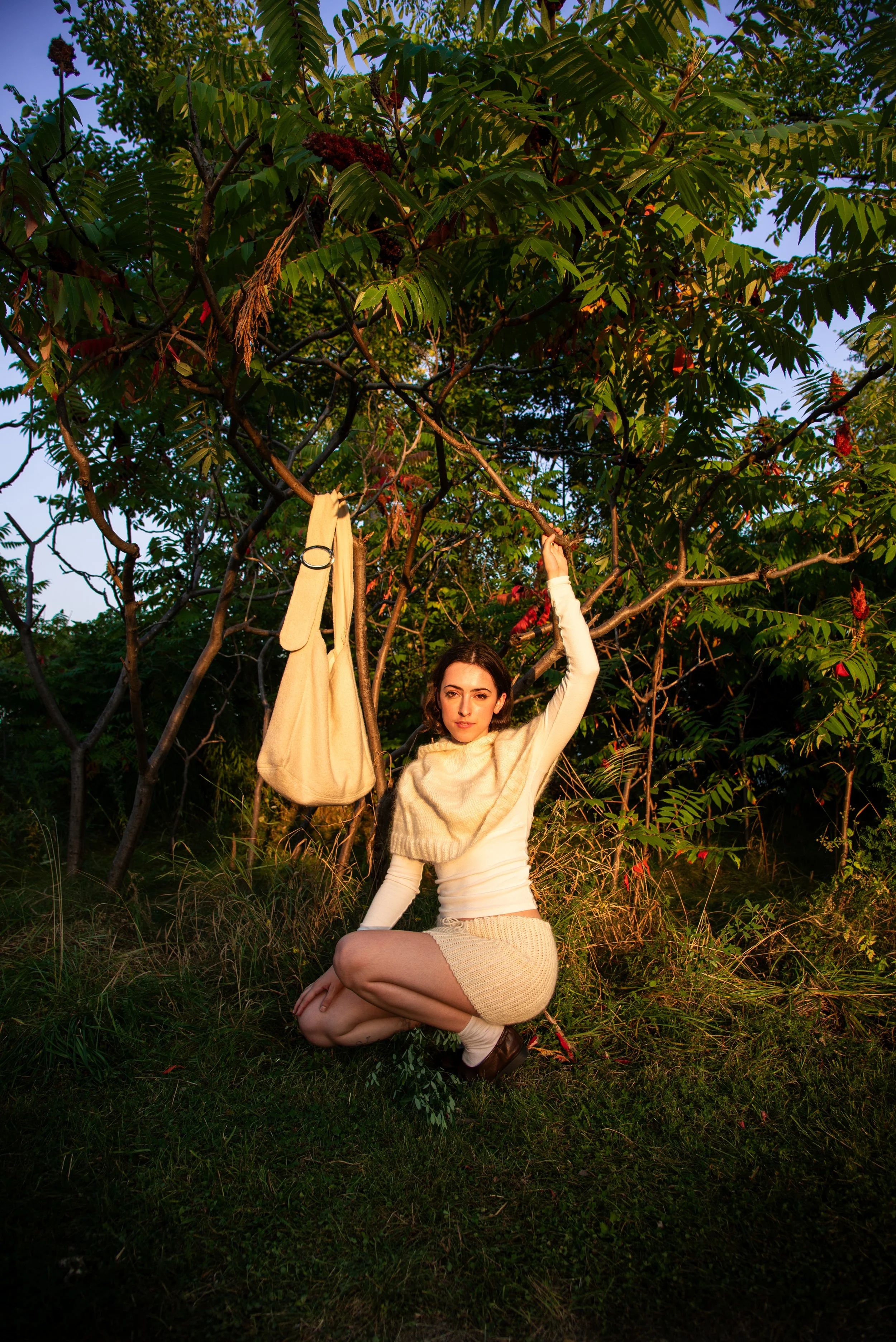
Figure 2
Mann, Kirsten. “Charlotte Little – Wool.”August 26th, 2024.

Figure 3
Mann, Kirsten. “Liam Roy – Metal.” December 7th, 2023.
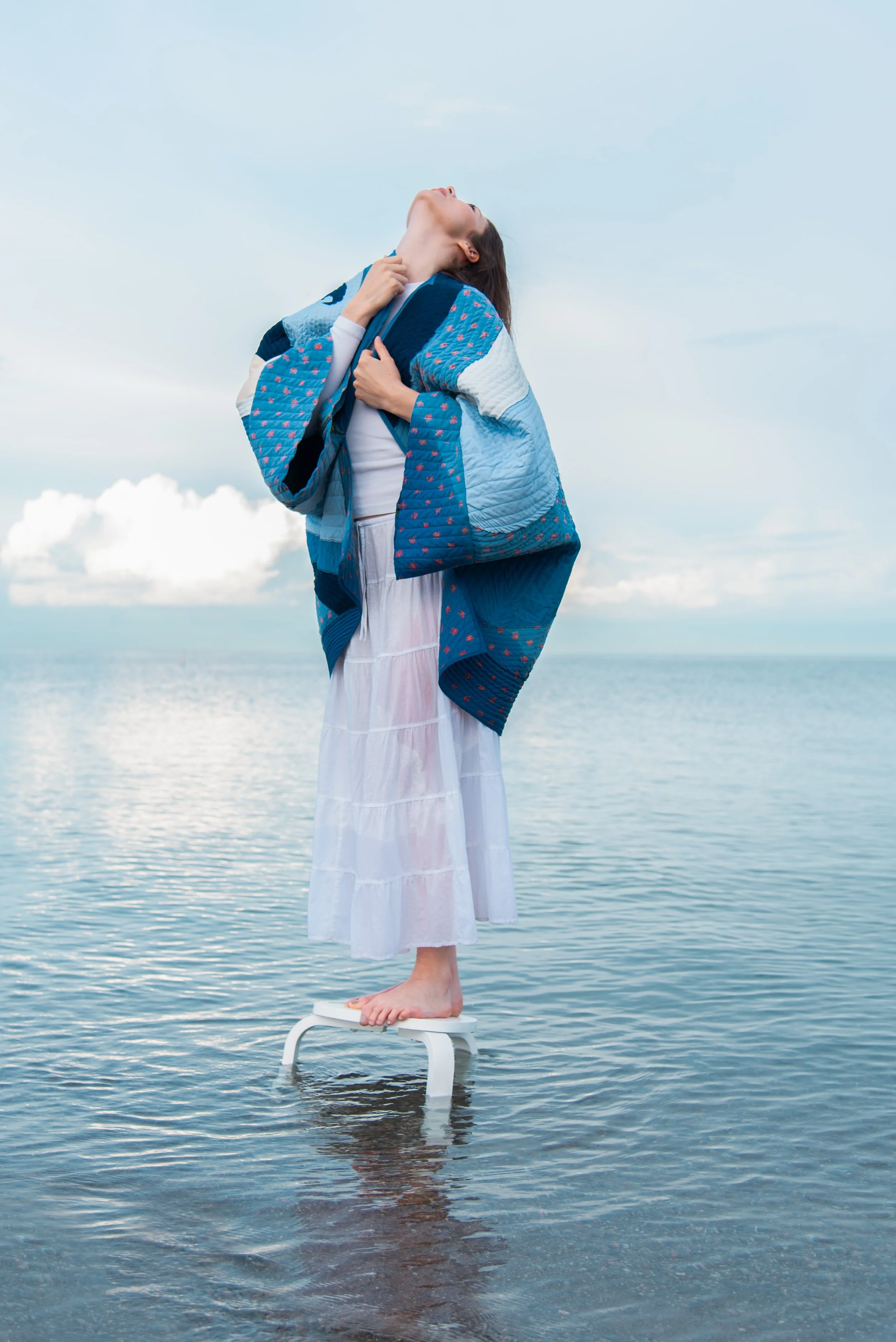
Figure 4
Mann, Kirsten. “Millie Yates – Cotton.” May 28th, 2024.
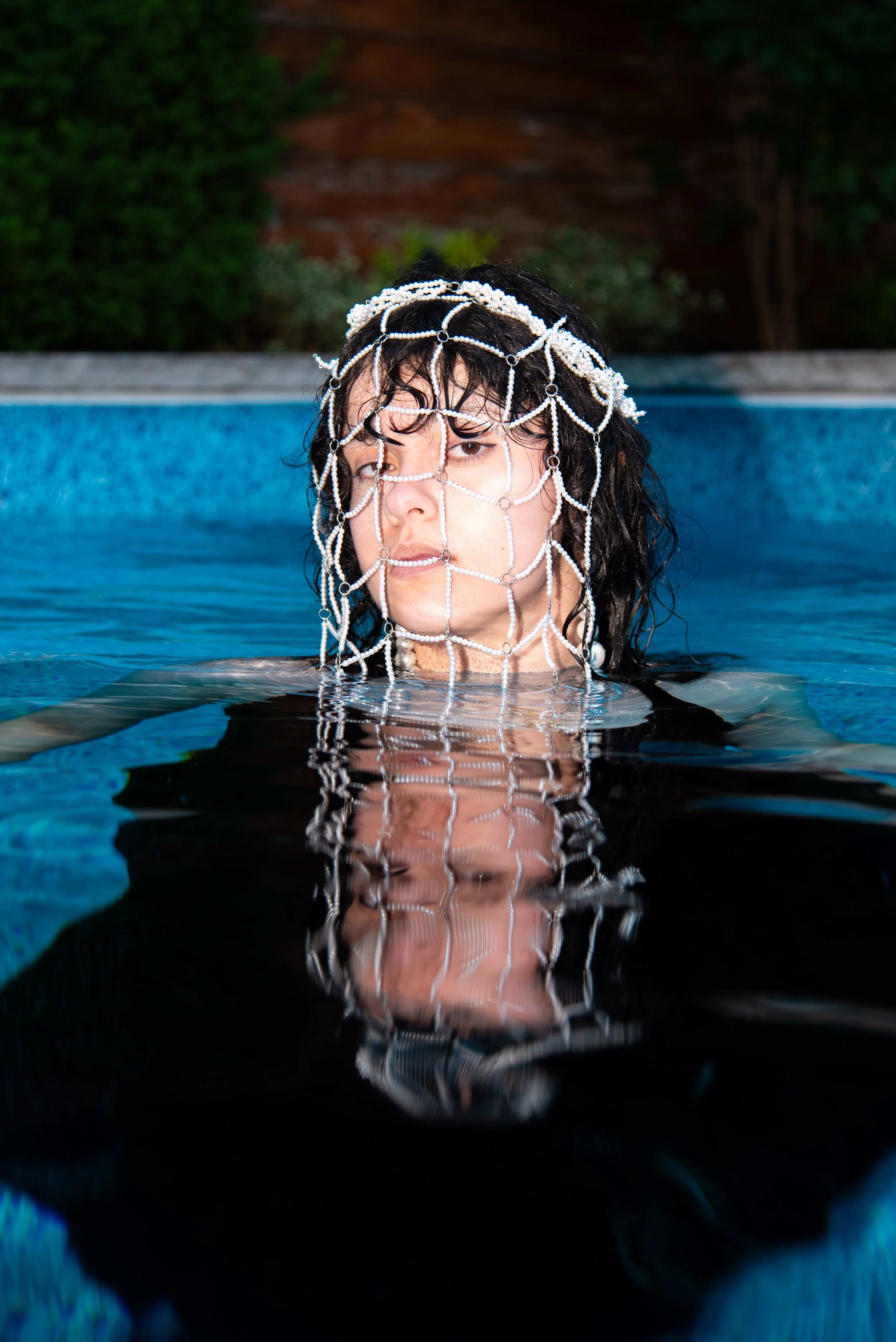
Figure 5
Mann, Kirsten. “Delfina Russo – Metal.” June 4th, 2024.
Figures 6
Mann, Kirsten. “Natalie Welsh – Cotton.” May 29th, 2024.

figure 7
Mann, Kirsten. “Eric Larsen – Denim.” May 31st, 2024.
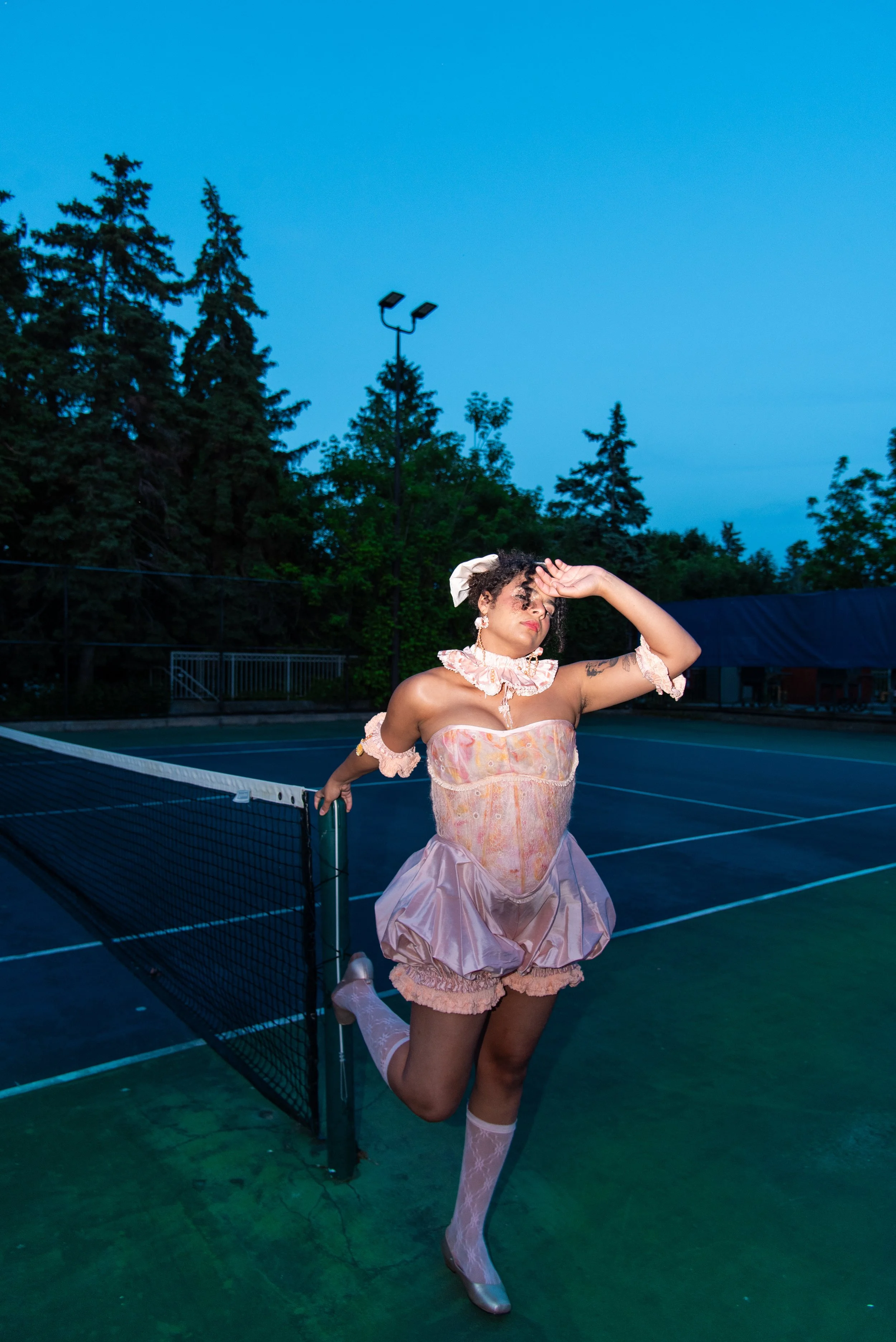
figure 8
Mann, Kirsten. “Camilla Leonelli Calzado – Silk.” June 4th, 2024.

Figure 9
Mann, Kirsten. “Curtis Matysek – Linen.” December 7th, 2023.
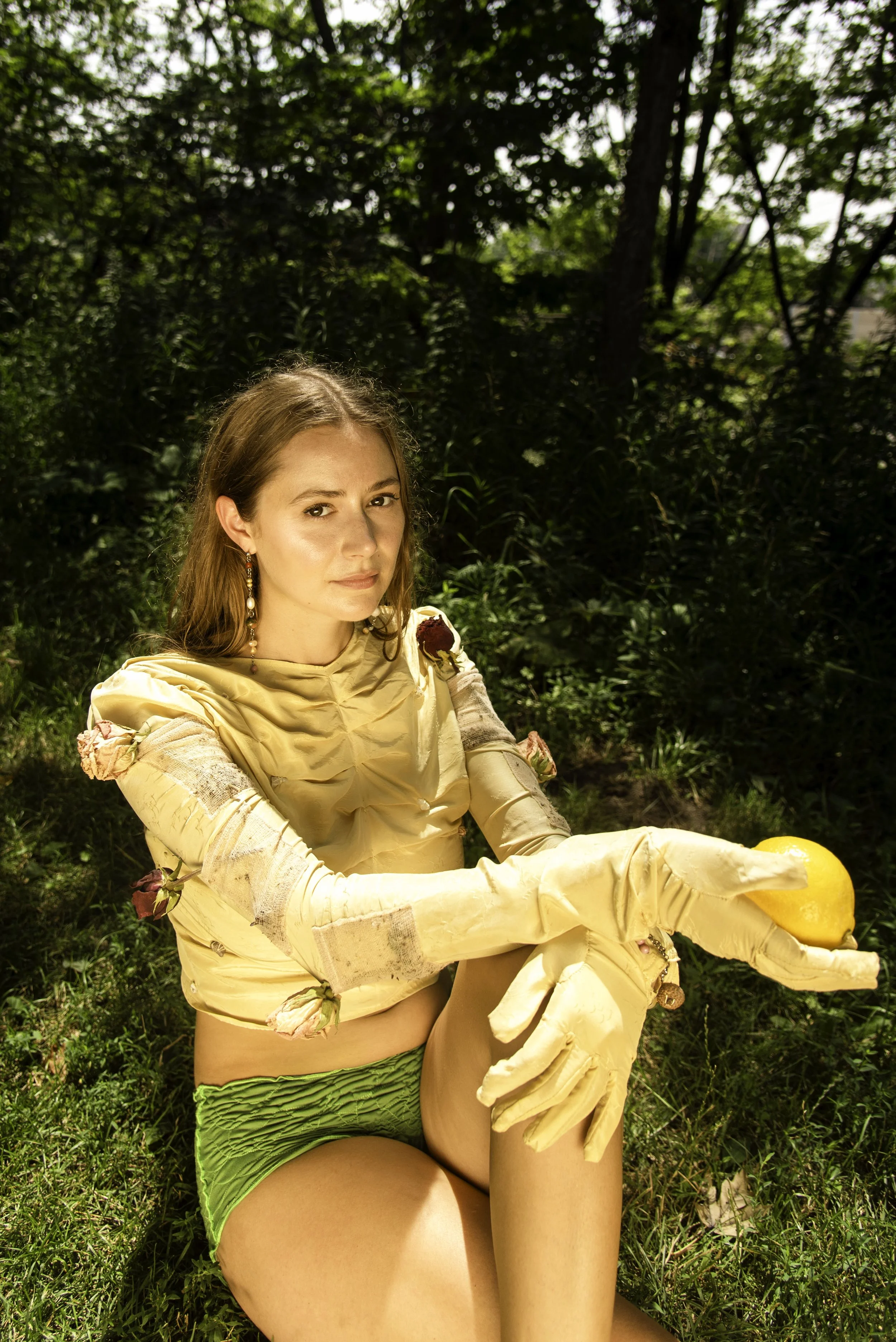
Figure 10
Mann, Kirsten. “Isla Cowan – Silk.” October 12th, 2025.
Works Referenced
Batchen, Geoffrey. Each Wild Idea: Writing, Photography, History. MIT Press, 2000.
Chapman, Owen, and Kim Sawchuk. “Research-Creation: Intervention, Analysis and ‘Family Resemblances.’” Canadian Journal of Communication. vol. 37, no. 1, 2012, pp. 5–26. DOI: 10.22230/cjc.2012v37n1a2489
Deleuze, Gilles, and Felix Guattari. A Thousand Plateaus: Capitalism and Schizophrenia. University of Minnesota Press, 1987.
Duff, Cameron, and Sumartojo, Shanti. “Assemblages of Creativity: Material Practices in the Creative Economy.” Organization, vol. 24, no. 3, 2017, pp. 418–432. DOI: 10.1177/1350508416687765
Ingold, Tim. “Material Thinking.” Imagining for Real: Essays on Creation, Attention and Correspondence. Routledge, 2022, pp. 223-284. DOI: 10.4324/9781003171713-19
Loveless, Natalie. How to Make Art at the End of the World: A Manifesto for Research-Creation. Duke University Press, 2019, pp. 1-18.
Miner, Dylan AT. “Mawadisidiwag Miinawaa Wiidanokiindiwag // They Visit and Work Together.” Makers, Crafters, Educators: Working for Cultural Change, edited by Elizabeth Garber, Lisa Hochtritt, and Manisha Sharma. Routledge, 2019, pp. 131-134.
O’Donoghue, Dónal. “Are We Asking the Wrong Questions in Arts-Based Research?” Studies in Art Education, vol. 50, no. 4, 2009, pp. 352–368. DOI: 10.1080/00393541.2009.11518781
Ostrow, Saul. “Photography, Fine Art Photography, and the Visual Arts: 1900-2000.” The Focal Encyclopedia of Photography, edited by Michael Peres. Routledge, 2007. pp. 180-187. EBSCOhost: search.ebscohost.com/login.aspx?direct=true&db=nlebk&AN=196202&site=ehost-live.
Power, Faye. “Thinking with My Hands: Embodied Cognition in Practice.” Journal of Textile Design, Research and Practice, vol. 11, no. 1-2, 2023, pp. 111–126. DOI: 10.1080/20511787.2023.2226970
Pyyry, Noora. “Hanging-out-Knowing: The Potential of Dwelling with Our Affective Landscapes of Research-Creation.” Reconceptualizing Educational Research Methodology, vol. 13, no. 3, 2022, pp. 64-80. DOI: 10.7577/rerm.5151
Robson, Deborah, and Carol Ekarius. The Field Guide to Fleece. Storey Publishing, 2013.
Rotas, N. and Springgay, S. “How Do You Make a Classroom Operate Like a Work of Art? Deleuzeguattarian Methodologies of Research-Creation.” International Journal of Qualitative Studies in Education. 28 (5), 2015, pp. 552-572, DOI: 10.1080/09518398.2014.933913
Shields, Alison Lea. “A Never‐Ending Painting: The Generosity of Time Spent Making and Learning with Others through Artistic Research.” The International Journal of Art & Design Education, vol. 38, no. 3, 2019, pp. 659–669. DOI: 10.1111/jade.12250
Springgay, Stephanie. “‘How to Write as Felt’ Touching Transmaterialities and More-Than-Human Intimacies.” Studies in Philosophy and Education, vol. 38, no. 1, 2019, pp. 57–69. DOI: 10.1007/s11217-018-9624-5
Taylor, Laurie. “This Thing Called Photography.” The Materiality of Exhibition Photography in the Modernist Era: Form, Content, Consequence. Routledge, 2021. EBSCOhost: search.ebscohost.com/login.aspx?direct=true&db=nlebk&AN=2678192&site=ehost-live.
Author Bios
Charlotte Little is a textile artist and researcher investigating fashion ecologies and localized textile production in Canada. She holds a BFA in Textiles from Concordia University (2022) and an MA in Fashion from Toronto Metropolitan University (2025) and works professionally in the textile industry. Based in Halifax and Toronto, her work blends academic research and artistic material-based practice, focusing on radical sustainability, speculative textile design, and place-based knowledge. Charlotte has exhibited publicly at venues including the Royal Ontario Museum, the Craft Ontario Gallery, the Anna Leonowens Gallery and Design TO Festival. She has held Artist in Residence positions at the Icelandic Textile Centre, NSCAD University, and the Contemporary Textile Studio Co-op.
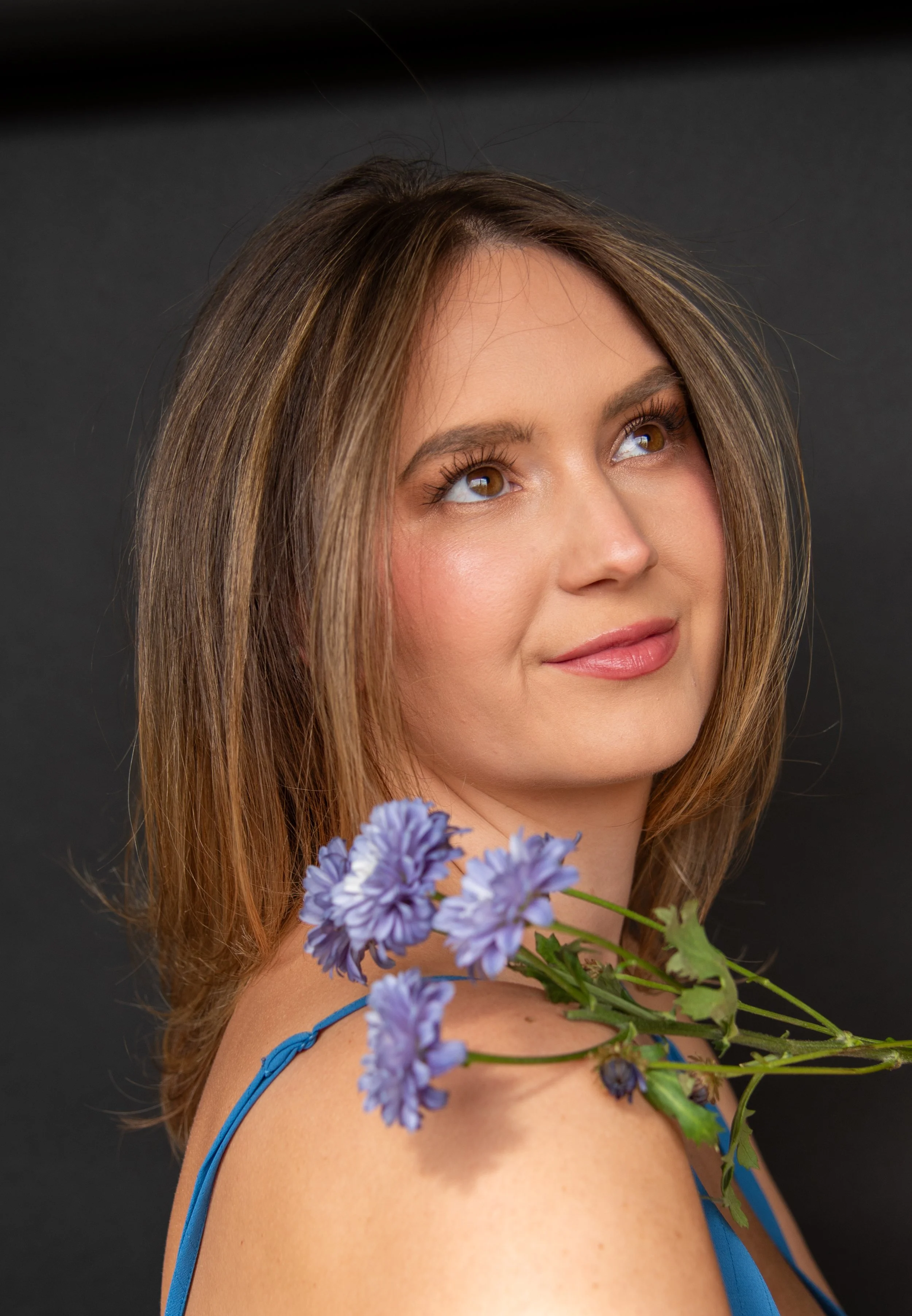
Kirsten Mann is a photographer based in Toronto, ON. She holds a double major BFA in Photography and Art History from NSCAD University (2020) and an MA in Fashion from Toronto Metropolitan University (2025). Her photography is inspired by the beauty of humans, nature, fashion, emotion and light. She has exhibited publicly at the Anna Leonowens Gallery in Halifax and Image Arts Center in Toronto. Alongside her freelance photogroahy career, Mann has worked as an e-commerce and editorial photographer for a Halifax based fashion company, was a photographer and social media manager for a Halifax based hospitality group, and worked within the film industry in Toronto.

"So Hot Your Hurting My Feelings" by Caroline Polachek
Article Citation
Little, Charlotte, and Kirsten Mann. “Making Material Intimacies: Theorizing Research-Creation Through Embodied Practice.” Unravelling Fashion Narratives, special issue of Fashion Studies, vol. 5, no. 2, 2026, pp. 1-21. https://doi.org/10.38055/UFN050202
Copyright © 2026 Fashion Studies - All Rights Reserved
Creative Commons Attribution-NonCommercial-NoDerivatives 4.0 International (CC BY-NC-ND 4.0) license (see: https://creativecommons.org/licenses/by-nc-nd/4.0/)