
Mending – A Labour of Love: An Analysis of Urban Vietnamese End-users’ General Perception & Practice on Sewing-Mending
By Thu Ngoc-Ha Le & Hieu Minh Le
DOI: https://doi.org/10.38055/UFN050204
MLA: Le, Hieu Minh, and Thu Ngoc-Ha Le. “Mending – A Labour of Love: An Analysis of Urban Vietnamese End-users’ General Perception & Practice on Sewing-Mending.” Unravelling Fashion Narratives, special issue of Fashion Studies, vol. 5, no. 2, 2026, pp. 1-27. https://doi.org/10.38055/UFN050204
APA: Le, H.M., & Le, T.N-H. (2026). Mending – A Labour of Love: An Analysis of Urban Vietnamese End-users’ General Perception & Practice on Sewing-Mending. Unravelling Fashion Narratives, special issue of Fashion Studies, 5(2), 1-27. https://doi.org/10.38055/UFN050204
Chicago: Le, Hieu Minh, and Thu Ngoc-Ha Le. “Mending – A Labour of Love: An Analysis of Urban Vietnamese End-users’ General Perception & Practice on Sewing-Mending.” Unravelling Fashion Narratives, special issue of Fashion Studies 5, no. 2 (2026): 1-27. https://doi.org/10.38055/UFN050204
Volume 5, Issue 2, Article 4
Keywords
Mending
Urban Vietnam
Compulsory education
Ethical fashion
Gender studies
Abstract
This paper places new and changing practices of mending within cultural, historical, and contemporary contexts in Vietnam. From its very origins as an economic hardship necessity under colonial rule and the subsidy economy to its current role in the global sustainability movement, mending holds a critical role in Vietnamese society. This research paper investigates the intersection of gender, education, and professional mending within a historical context while offering a new perspective on how traditional sewing and repairing have become a novel approach to facilitating sustainability and circularity in fashion.
The paper also analyzes the shift of mending from a traditional, domestic skill passed down through generations to a professional occupation organized in an urban center, using quantitative and qualitative data. The authors consider contemporary trends, such as visible mending and upcycling, that also help combat social stigma conventionally associated with wearing visibly mended clothes. The study further discusses the inclusion of mending-sewing in the public K-12 education system in Vietnam and its impact on younger generations’ awareness of sustainability and craft.
This study posits mending not just as a tool of life extension of garments, but as an indicator of resiliency, care, and cultural sustainability in the midst of eroding ecology. Mending is a labour of love.
Introduction
The Current Fashion Industry
The clothing and apparel industry is regarded as the second most environmentally polluting industry globally, with an extremely long and complicated global supply chain (Fletcher, 2014). Various stages of production often occur in different nations in a business-to-business (B2B) model, which is complicated and has potent environmental impacts.
Clothing waste, usually the product of non-biodegradable materials, are thrown directly to the environment. Once discarded, only 20% of textile waste is assembled for repurposing (Koszewska 2018), while more than half of the clothes are not re-used or recycled and end up in undifferentiated waste, to then end up in landfills or burned in incinerators.
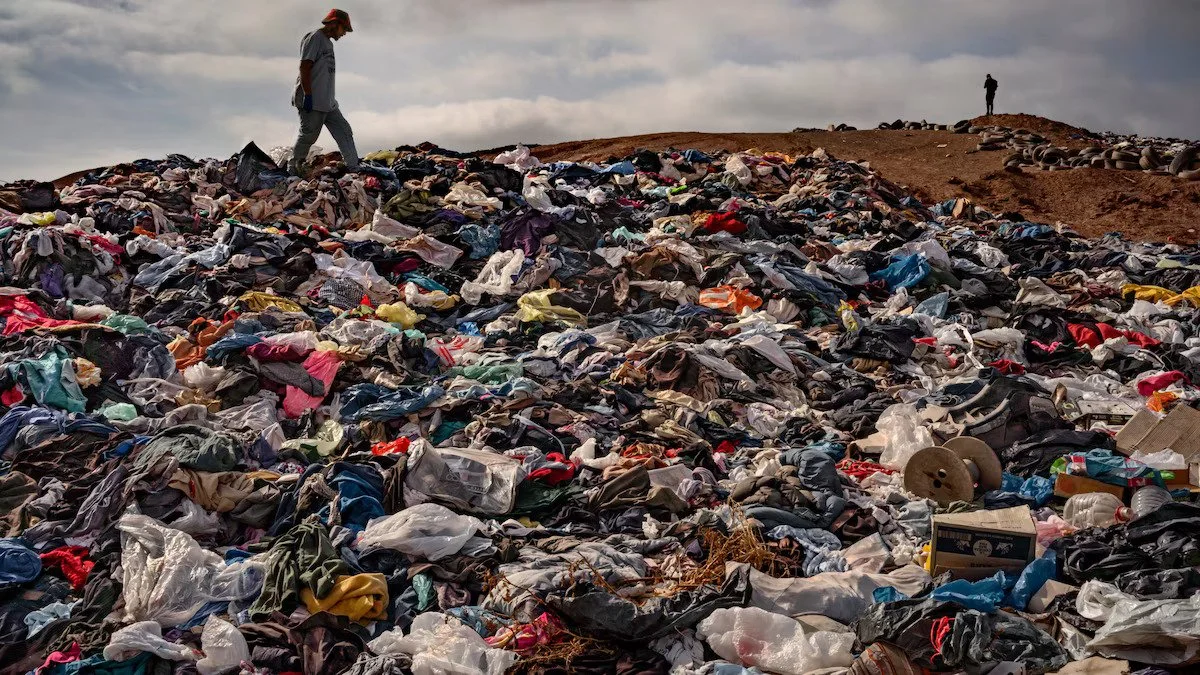
Figure 1
Figure 1 The Chilean Atacama Desert, now being the world’s largest landfill of clothing waste.
Note. Photograph by Tamara Merino, 2024, for National Geographic.

Figure 2
A pile of discarded clothes in the Atacama Desert, northern Chile, as seen by a satellite.
Note. Image by SkyFi.
In modern times, when rapid industrialization is associated with consumerism, economic growth requires incessant marketing of new, trendy products, rendering old ones as outdated. The pace of buying and discarding has significantly sped up, shortening the journey a T-shirt takes from the store to the landfill (Luz Claudio, 2007). This prompts the question of slowing down the life cycle of clothing, with consumers adopting a more eco-conscious and slower approach to clothing. One effective method of “slowing” fashion is mending clothes, which means repairing and fixing broken parts of the piece instead of throwing it away. In the context of Vietnam, mending and sewing clothes have had a long and complicated history. The practice itself still endures until today, offered at a cheap and accessible price at local services, highlighting the relevance of Vietnam’s hyper-local fashion scene within the global sustainability movement.
Mending-Sewing in Vietnam
In Vietnamese, the word for “sewing” is “may” and “mending” is “vá”. Both verbs are used separately, but they are also frequently paired together in both writings and speech as the compound word “may vá” – whose meaning encompasses the skills related to making and repairing textile products. Vietnam’s textile industry plays a crucial role in its socio-economic development, contributing about 15% of the nation’s total export turnover and ranking fourth in the global garment sector (Tran & Tran, 2018).
There is an abundance of mending/tailoring facilities—it is common to spot one on the streets of Vietnam.
Traditionally, mending has been viewed as a domestic chore and, for the most part, a woman's work. Generations of Vietnamese women were expected to be thoroughly adept at sewing and mending; such skills were a matter of family survival. In the countryside, mending was an ordinary feature of everyday home life, extending the life of their garments when money was tight, from generation to generation.
Joining the global activism towards sustainable fashion, Vietnam’s culture of mending-sewing plays a crucial role, offering a perspective into how tradition revives and intersects with modern efforts. Circularity is, indeed, inherent in Vietnamese citizens’ daily lives, yet not many have recognized this pattern to truly embrace it.
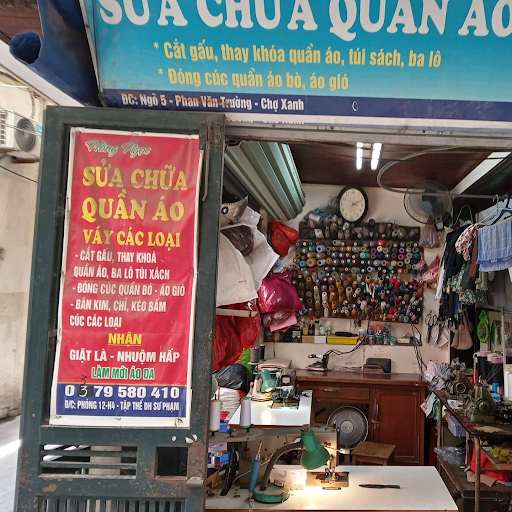
Figure 3
A small mending shop in Cau Giay District, Hanoi, Vietnam.
Literature Review
While there is considerable research and documentation on global mending practices and their role in “greening” the fashion industry, there is a lack of prior literature on sewing-mending in Vietnam. Current research often overlooks the complex ways in which gender roles, social norms, and aesthetics shape mending or repairing practices within this cultural context. The need for quantitative and qualitative study is also highlighted, offering a nuanced perspective on consumers’ behaviour of mending-sewing.
This paper homes in on Vietnam, a country that thrives with textile production and upholds a tradition of sewing-mending in everyday life, while acknowledging its close relationship with circularity and sustainability. Studying both formal (published research paper) and informal literature (folklore, proverbs, idioms/poems), this paper examines how social norms, gender stigmas, and aesthetic preferences influence user’s behaviour with repairing one’s clothes in a modern context, shaping their decision to mend their own garments or seek out external services. The linear transformation of mending practices is also emphasized: from a domestic skill to mandatory primary education to a professional vocation.
Mending-Sewing: A Cultural and Historical Context
Traditionally, imperfect textile surfaces are strongly associated with poverty (McLauren A. and McLauchlan S., 2015). The wearing of visibly worn or damaged clothes characterizes economic hardship (Kelley, 2009). These social associations still exist; academic research into clothing use behaviours found participants “avoid clothes with visible repairs in order to protect themselves and their families from stigma” (Fisher, 2008).
As such, mending grew as a reaction to scarcity. During the Resistance War Against America, which lasted between 1955 and 1975, and later during the Subsidy Period that extended from 1975 until 1986, following the Đổi Mới period, many families suffered grave shortages regarding basic supplies, including clothing. People had to be frugal and re-use as well as patch their garments. This was because of the limited availability and high cost of new fabrics. In his study, Ken Maclean commented that in the interviews conducted with a tailor of subsidy days, the most vital concerns were the usefulness and resourcefulness in situations of shortage of materials:
“During another interview, an amateur tailor described how she learned to fashion shirts out of industrial-grade flour sacks and to turn their collars inside out, as fabric for new clothes was both tightly rationed and grossly insufficient for what was needed. A single item often had to endure five to seven years of heavy use. Others, she remembered, preferred nylon shirts, which could not only be turned inside out when badly worn, but glued when ripped or torn. Trousers, she added, were also cut apart and reversed from front to back when it was no longer possible to discretely patch holes and other worn areas, much less re-dye them to match.”
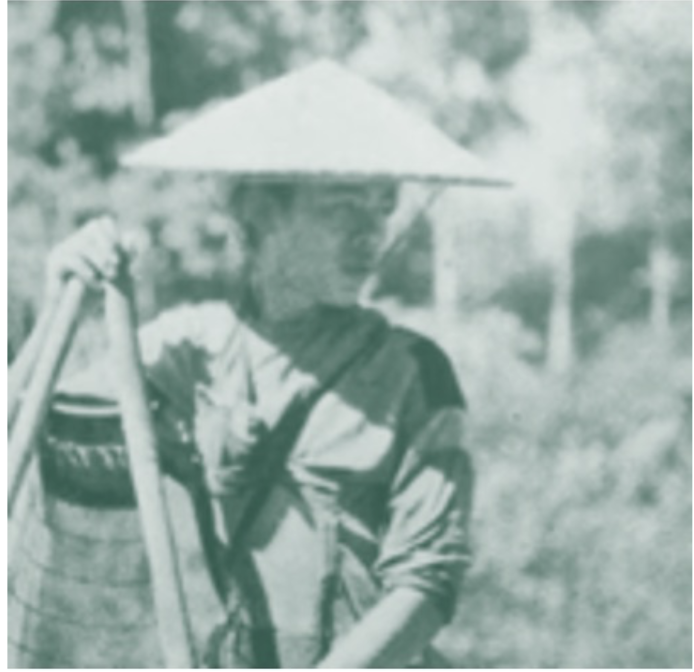
Figure 4
Fresh water fishing, Ha Dong, 1915-1916.
Note. Image shows a peasant wearing a shirt with a big, mended patch over the left shoulder.
In fact, this phenomenon is not exclusive to Vietnam and Asian countries. In the West, mended clothes are also “indicative of a lack of material resources and economic failure within a system of growth and progress.” Beyond gender stigma and social discrimination, wearing mended garments is even perceived as “fluid, sexualized, dangerously unconfined” (Pouillard & Dubé-Senécal, 2023).
Understanding the historically associated connotations of mending garments explains the resistance toward widespread applications of this technique. Yet, it also informs the rationale of contemporary mending as an art—a stark contrast to its inherently conservative implications, leaning towards activism and expressions, which is explored later in this paper.
Mending: A Women’s Work
“All Annam women must know how to sew their own skirts, bibs and pants, because it is women's clothing. No tailor is allowed, a woman who does not know how to sew-mend (original text: may vá) is completely useless. Such a young woman will not find a husband.” – Gustave Dumoutier - Essais sur les Tonkinois (1908)
Mending-sewing is a stigmatized practice, being a woman’s work since wartime. Among women’s familial responsibilities, taking care of the home also includes taking care of the clothes worn by their husbands and children. Mending is a big merit of young women: those who have a knack for needles are considered “good”, “virtuous”, and fit for marriage (Dao Duc & Nguyen Van, 2022).
Contemporary Mending: Invisible and Visible Mending
Invisible Mending
Invisible mending is a repairing technique with little or no visibility, appearing seamless and blending within the fabric, and is often preferred in mending formal or high-end garments. The goal is to restore apparel into its original state, displaying no sign of damage. Invisible mending is a common practice in Vietnam’s mending services finished by tailors or skilled artisans, as it requires great expertise and scrutiny.
Invisible mending also signifies efforts to hide oneself away from the stigma affiliated with visibly repaired or patched garments.
Visible Mending
This technique has just re-emerged in recent years, often facilitated by exposure to the public through workshops and social media (König, 2013).
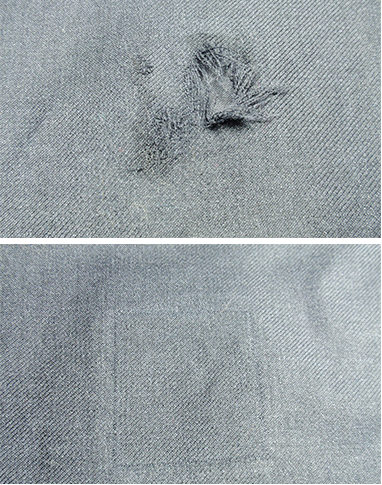
Figure 5
A torn piece of garment before and after mended.
Note. Photo by The Fitting Room on Edward.
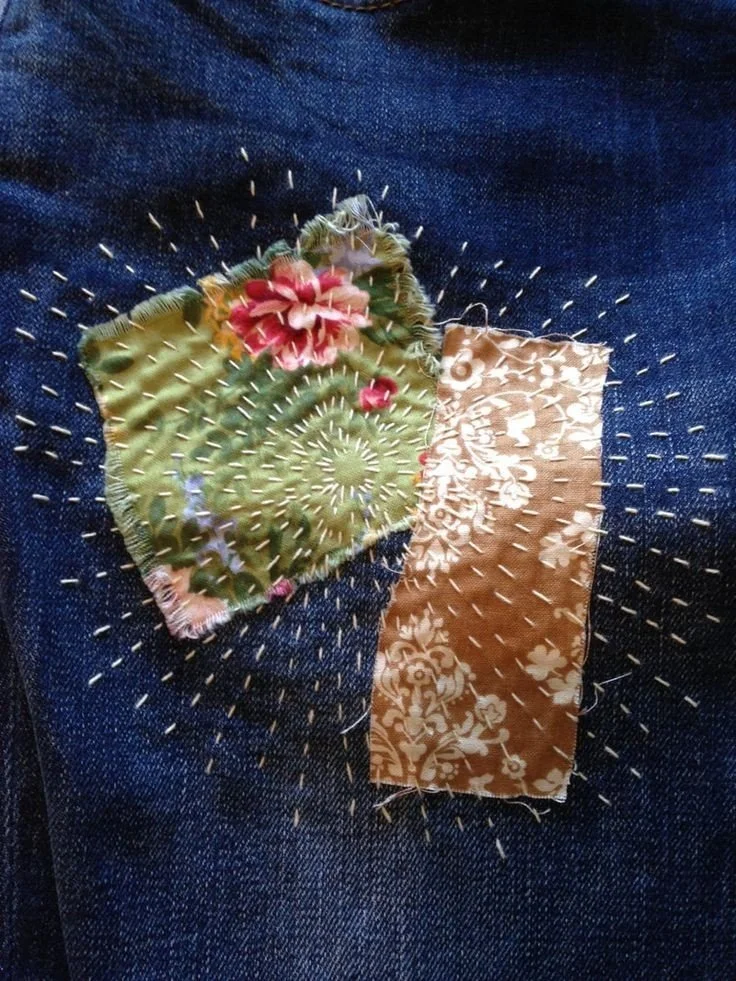
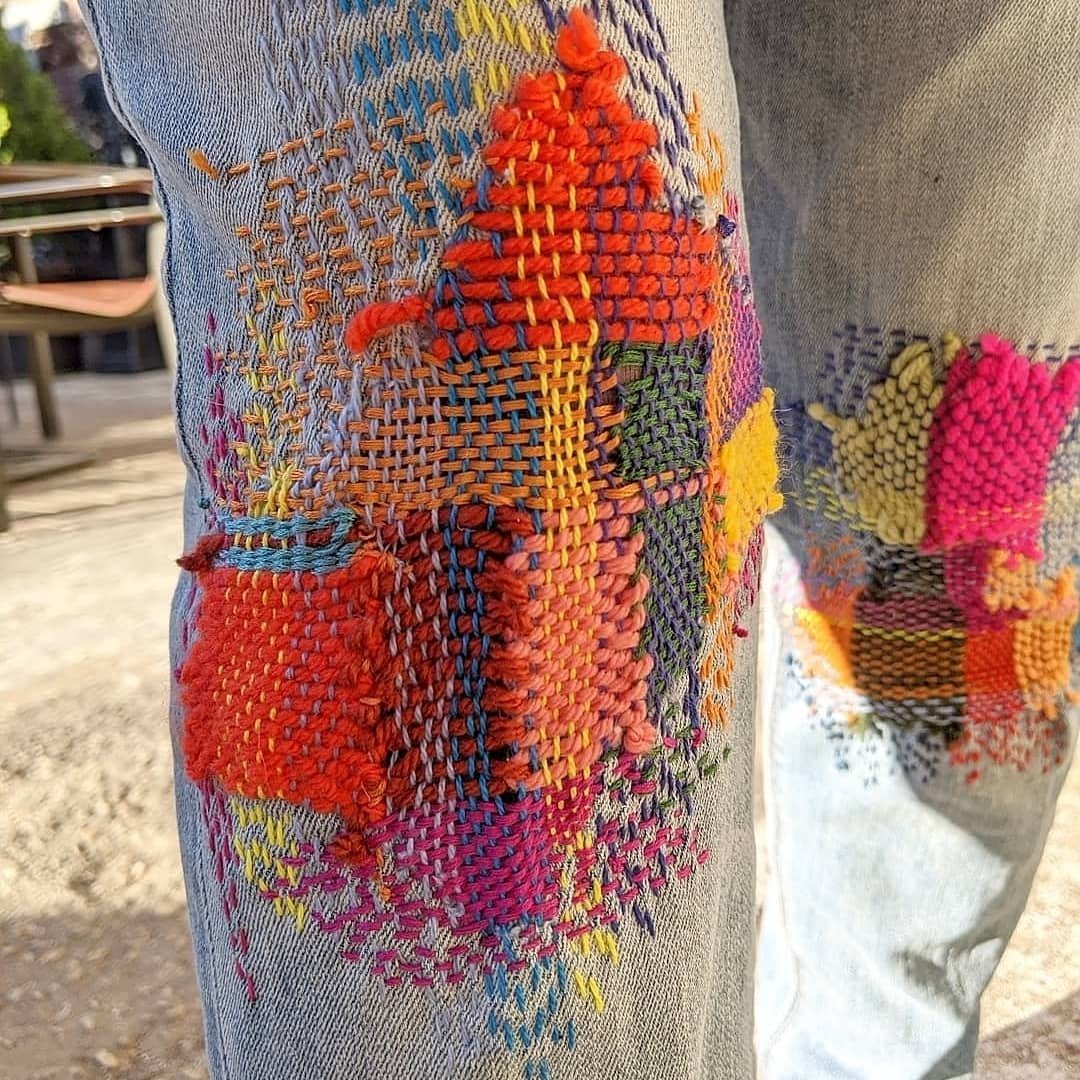
Figures 6 & 7
Visible Mending, inspired by Japanese Sashiko technique.
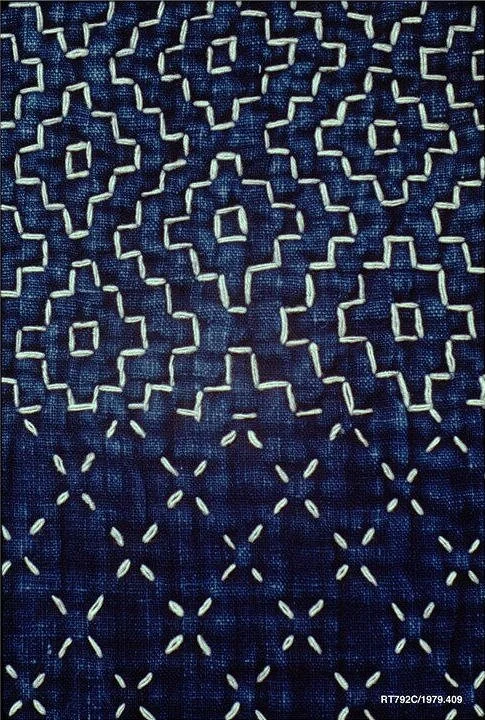
This technique is greatly inspired by the traditional Sashiko or boro mending of Japan and other European traditions of embroidery. It involves the use of bright and colorful stitches, patchwork, or another decorative approach that transforms the broken into a new, aesthetic feature. Visible mending is considered a form of art. It has received attention from the masses, usually the younger generations (Generation Z and millennials), and became a leisurely habit.
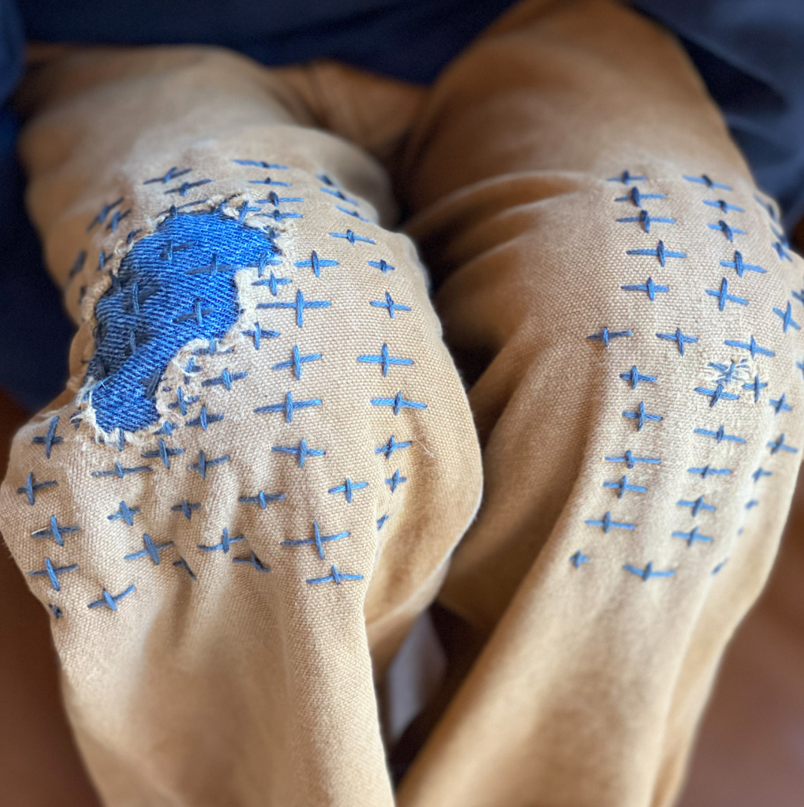
figures 8 & 9
Sashiko, a famous form of decorative (visible) mending using reinforcement stitching (or functional embroidery) from Japan.
Apart from the general artistic expression and decorative features, visible mending also speaks volumes of social movements and activism, which sometimes contain potentially offensive patterns to the public.
With the current positive attitude towards visible mending, this technique fully aligns with the greater values of the slow fashion movement and sustainability, which encourage consumers to prolong the life of their garments rather than discard them. In this sense, the visible mend is much more than a repair; it is also a political statement against the excesses of fast fashion. The presence of the mend has become, for many, a badge of pride testifying to one's concern for ecological problems and responsible consumption. Apart from tackling environmental issues, this also challenges the existing negative connotations associated with mending, normalizing the act of repairing without any classist or sexist implications. The artist mentioned above has been offering personalized mending services, patching, and embroidering vaginal shapes utilizing the natural tears of clothes.
Thaors’s practice not only facilitates the mending movement in Vietnam but also plays a role in transgressing the existing social norms within the country. Public display of nudity of any kind is traditionally considered offensive or subversive, going against the acceptable societal customs (“thuần phong mỹ tục”), especially those of women’s bodies. Therefore, considering the artist’s work in this paper, and in our survey later, provides insights into how the general public views nudity in our society nowadays, and whether there has been progressive cultural changes.
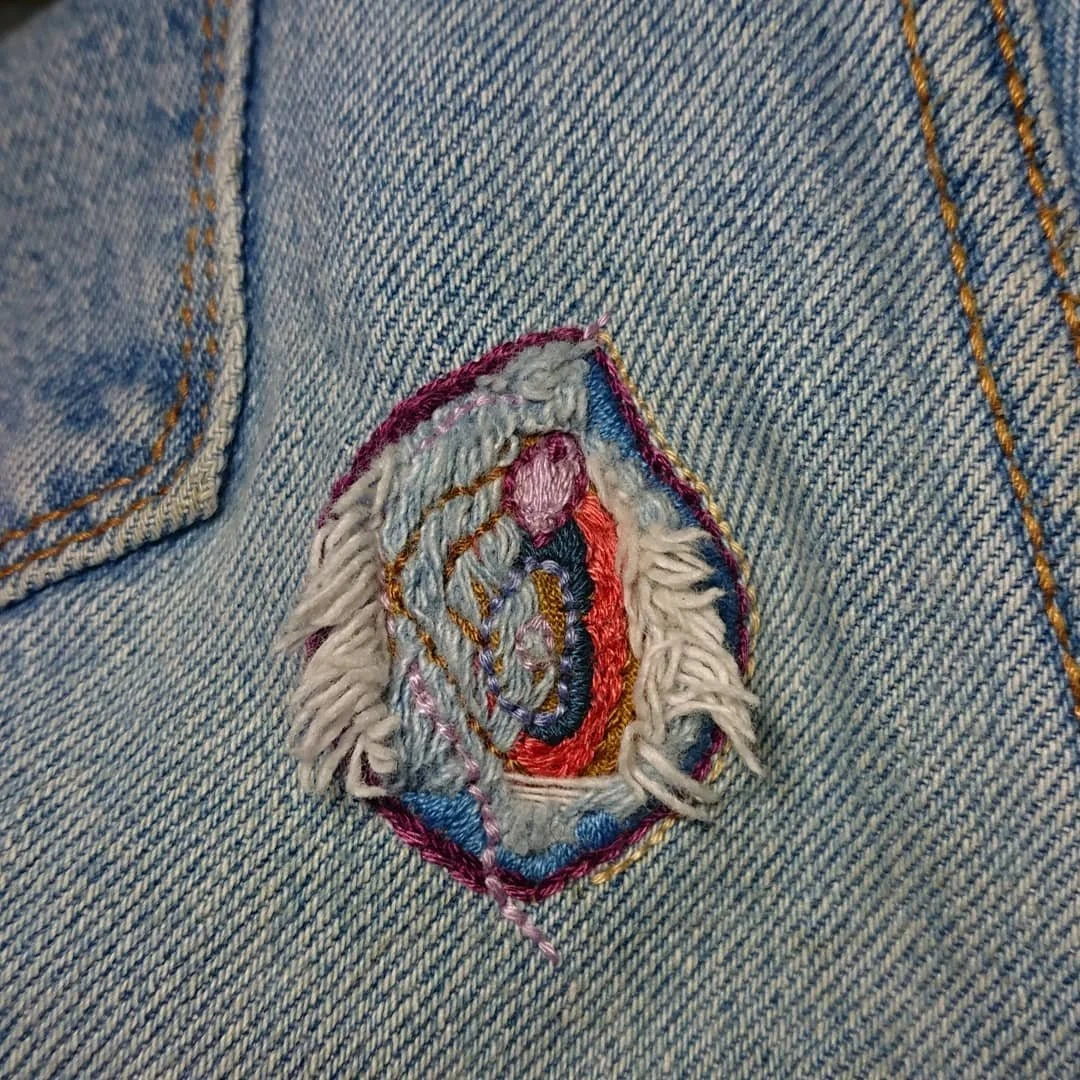
Figure 10
Mended details that resemble the vulva, in protest for gender diversity, feminism, and sexual equality.
Note. Artwork and picture by Thaors from @cailongiday_wtc.
Mending As A Compulsory Subject in Vietnam’s Modern Education
Originated as a necessity skill, mending and sewing is now incorporated into the core curriculum of the K-12 education in Vietnam. This section explores how the practice is delivered through primary education and highlights the significance of Vietnamese education in promoting sustainability and upholding its culture of frugality and resourcefulness.
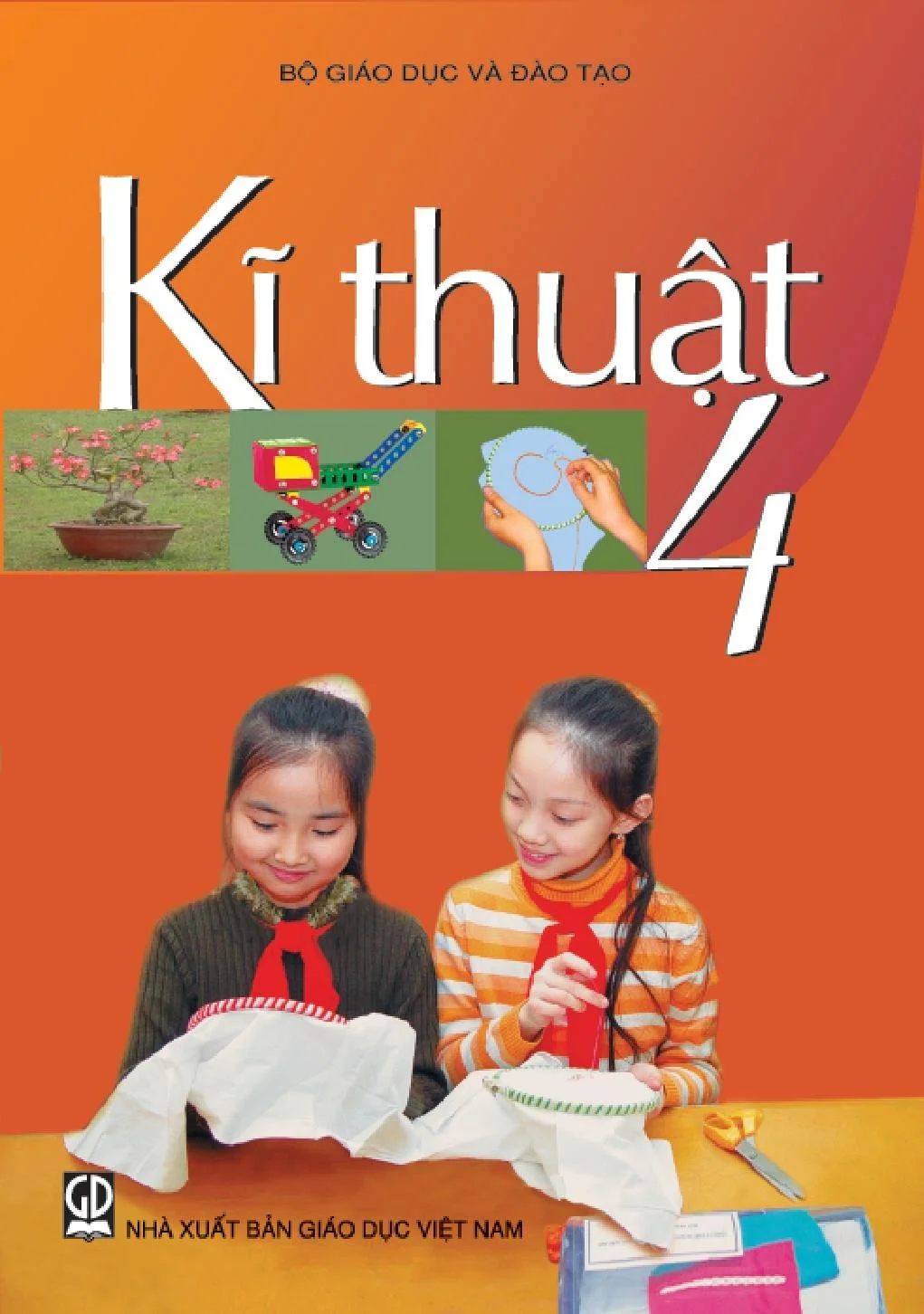
Included in Kĩ-Thuật (Techniques), a subject that ensures the acquisition of basic home economics and trade skills, mending-sewing covers the basics of mending, sewing, and crafting. In grade 4, students are instructed to repair the wear and tear of clothes, sew basic garments such as mini pillow covers, or embroider decorative renditions on the hoop.
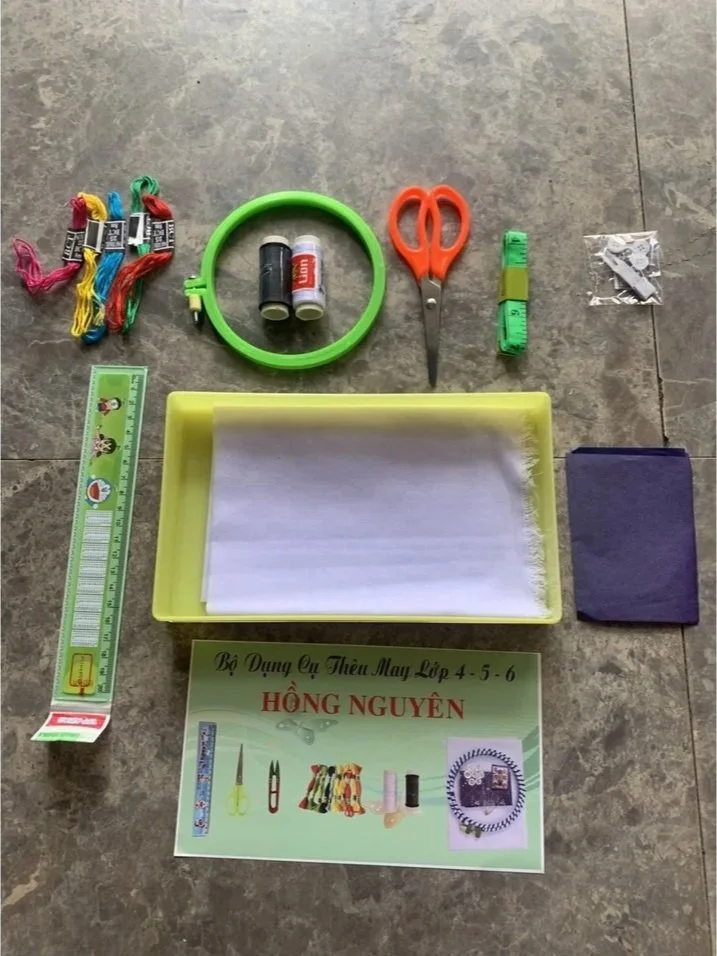
Figures 11, 12 & 13
The Workbook of Techniques
Note.
Figure 11: Cover of Kĩ Thuật, 13th edition, Viet Nam Education Publisher.
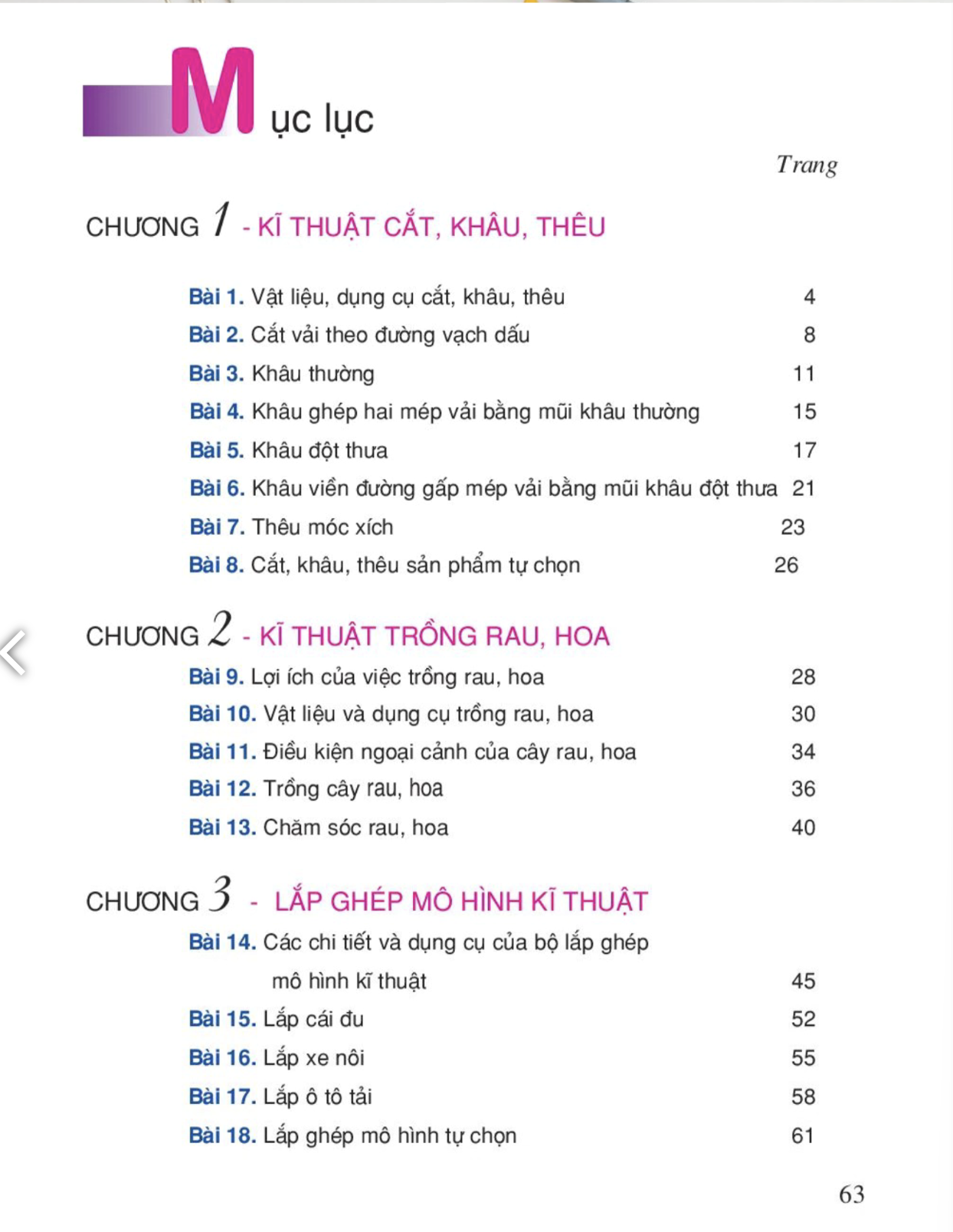
Figure 12: Table of contents
Figure 13: Required tool kit accompanying the book
(Notably, the cover shows two girls sewing garments, underscoring the correlation between femininity and mending practices inherent in Vietnam)
The second figure is the table of contents of Kĩ Thuật, in which mending-sewing covers the first chapter: materials and tools to sew and embroider; how to cut fabric using chalk; basic sewing techniques; and customized final products.
This also reflects the facilitation of traditional values and the emphasis on resourcefulness and thrift in the inclusion of repairing clothes in school curricula.
It creates a cultural context wherein repairing is not viewed as a particularly male or female duty but an important and useful skill to be taught to all individuals, contrasting the stereotypical notion that mending is a woman’s work.
Mending - An Act of Motherly Love: “Many Clothes To Mend” During Wartime/Subsidy Period:
Mending has long transcended its intention for repairing clothes in the historical trajectory of Vietnam; it is laden with deep emotive and symbolic connotations. Mending told of love, care, and devotion in the desperate, strife-ridden context of war and poverty, especially between families and communities. This chapter reflects the images embedded in mending in Vietnamese sayings, fables, and poems, focusing on mending during the Vietnam War and during the subsidy period when mending became a necessity and a manifestation of attachment.
Women were the mothers, wives, or daughters, doing basic mending of the soldiers' clothes, often made of precious materials, as a kind of support for their loved ones in the battlefield. The simple gesture brought tons of emotional meaning with it. Mending a soldier's clothes meant taking care of him, even when he was away, in case he would be ready to face such a situation in the war arena.
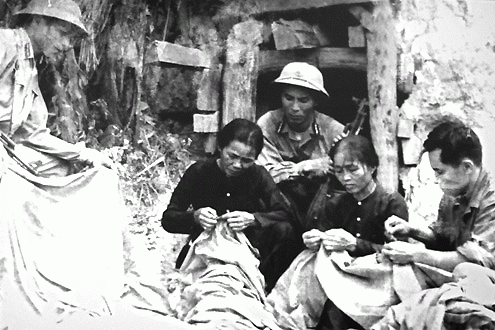
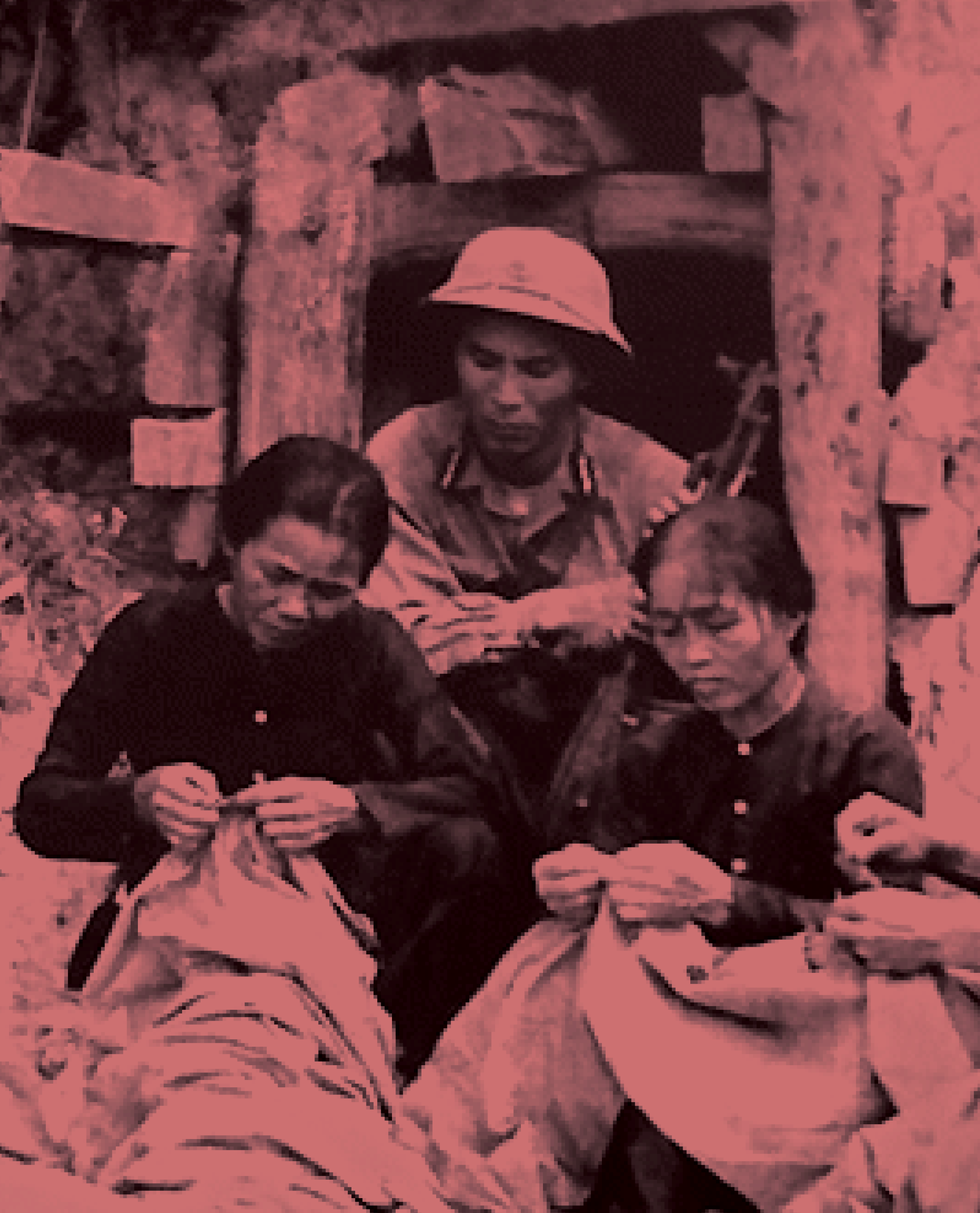
Figure 14
Mother Tran Thi Vien (on the right) and Mother Ngo Thi Diem mended the national flag on the bank of Hien Luong river during the years of the Vietnam War (1967). Image taken from the archives of the Exhibition Hall of “The 17th Parallel and the Aspiration for Reunification” (“Vĩ tuyến 17 và Khát vọng Thống nhất”) in the National Historical Monument Complex of Hien Luong - Ben Hai, Quang Tri province.
This is one of the prime examples of mothers mending the soldiers’ clothes in the war. In the picture are Mother Vien and Mother Diem—two women recognized for their respective efforts to repair the national flag during the Vietnam War, along the banks of the Hien Luong River, now a national symbol of the division of the country. The image of women quietly mending in the roar of war epitomizes the strength and dedication of the people of Vietnam during this turbulent period (Hung, 2024).
In short, mending during wartime had become synonymous with Vietnamese national identity in terms of that spirit of collective resistance to colonization. Women were virtually tied to the war effort through their mending work, for which they served as a metaphor for their continuing ties to the soldiers and their support for the nation's mission. Songs that reminisce the sorrows and beauty of the War, popular on National Television during the Subsidy Period, such as "Tấm Áo Chiến Sĩ Mẹ Vá Năm Xưa" (translated as “The Soldier’s Clothes Our Mothers Mended Before”) by composer Nguyễn Văn Tý, touch narrations of mothers sitting in the night mending torn uniforms and stitching with all familial love and tenderness: “That shirt I have often worn for a long time, to remember the day we returned to Ha Bac to fight the enemy. Our clothes were so torn, that the old mothers had to stay up all night mending clothes…”
According to the musician’s memoirs, one pitch-black night at that location, he witnessed mothers sitting and sewing uniforms for the soldiers. He was told that the mothers and sisters there had sewn a total of 2,500 garments. He recalled: “I listened, deeply moved as I gazed upon the faces of the elderly mothers—most of whom were already in their sixties or seventies—and looked into their dimming eyes. Yet, they patched uniforms by the light of ‘American’ lamps—oil lamps whose flames were permitted to glow no brighter than fireflies, and only on the strict condition that they be shielded so that enemy reconnaissance aircraft overhead could not detect their light in the darkness. Moreover, the mending had to be done in haste to ensure the uniforms reached the battlefield in time. Many soldiers fought bare-chested, their trousers in tatters, yet they never ceased their struggle against the enemy. Witnessing this, the mothers’ hearts ached; thus, their needles and threads flew ceaselessly, day and night alike.” (Ty, 2004)
With the war also came the "Phong Trào Vá Quần Áo Chiến Sĩ" or the "Soldier's Patch Movement" (1965-1972). In this movement, women all over Vietnam voluntarily patched uniforms for soldiers. We view this expression of patriotism as a response to shortages experienced during the war.
Methodology
Given the aforementioned historical and cultural analyses, it is compelling to investigate how much the perception of mending has changed and to what extent it is associated with class and gender to this day. Our research employs a mixed-methods approach, combining quantitative and qualitative elements. The primary research collects data through an online questionnaire and site audit, while the secondary research compares these findings with existing literature. The goal of clear quantitative research is to further understand the differences in perceptions among Vietnamese generations nowadays and to extrapolate possible connections between their upbringing and viewpoints on mending-sewing. This derives from the fact that Generation X was born before and grew up with the war, Generation Y after the war and into the Subsidy period, and Generation Z into a peaceful and relatively thriving economy. Juxtaposing the results of our quantitative study with the latter qualitative one, we aim to discover the possible progression of pre-existing conservative connotations related to mending to more progressive ones. This mixed-method practice offers more nuanced and contextual insights and perspectives on mending practices in Vietnam, with statistics and context analysis both at their best.
Primary Research
Questionnaire Survey
Design:
By implementing a quantitative survey, we composed a multiple-choice, Likert-scale questionnaire, which takes only 3-4 minutes to complete. Likert-scale questions are used to gather the most unfiltered reactions of the sample and avoid ethical impositions that affect their choices. Besides, we attached illustrations (of mending types) for the interviewees for better visualization.
We designed our terminology to prioritize objective responses, minimizing the likelihood of interviewees second-guessing their answers during the survey. For example, we used “Like/Don’t Like” rather than “Good/Bad” or “Good-looking/Ugly” to utilize unbiased results.
We divided the questions into three main categories: demographics, aesthetic preference, and opinions on sewing or mending activities.
Sample
The survey was completed by 300 participants, primarily from urban areas of Vietnam, specifically Class-1 cities like Hanoi and Ho Chi Minh City. The sample is biased towards middle to upper-middle class respondents, reflecting the higher education and income levels typical of these urban centres.
Categories of Questions:
1. Demographics:
We collected data on age, gender, and profession. Age groups were divided into generational cohorts: Gen Z, Millennials, Gen X, and Baby Boomers. Gender options included male, female, gender-fluid/non-binary, and "rather not say," to explore potential gender-based differences in mending practices.
2. Aesthetic Preferences:
Respondents were asked to evaluate three types of mending (least visible, visible/non-offensive, and visible/offensive). We used visual aids to illustrate these mending types and asked respondents to rate their preferences on a Likert scale.
We analyzed people’s views towards mending on an aesthetic note, presenting pictures of three different mending types:
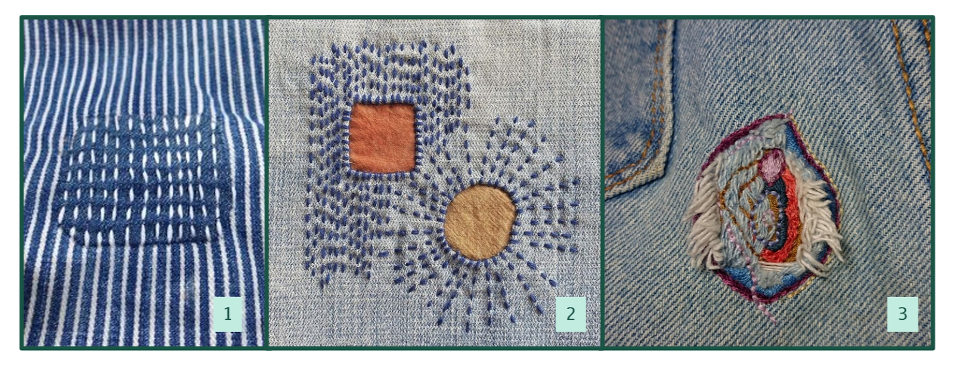
figure 15
Mending types surveyed
Type 1 – Least visible mending: This mending practice blends in with the textile, making it hardly noticeable.
Type 2 – Visible, non-offensive mending: This highlights the decorative aspect of mending, manifesting in geometric pattern – a fairly simple and straightforward option.
Type 3 – Visible, potentially offensive mending: A vagina art mended by a Vietnamese textile artist. People are likely to assume a resemblance towards a sexual organ, which is considered offensive in Vietnamese society.
We used the terms “comfortable/uncomfortable” to evoke their emotions and feelings, thereby quantifying their opinions more objectively (a fashion survey is inherently based on personal taste and aesthetics).
3. Personal Opinions on Mending and Gender:
We explored respondents' perceptions of whether sewing is "women's work" and their own experiences with mending garments.
The authors proposed two following questions:
What is your stance on the opinion: sewing is a woman’s work? (Strongly agree to strongly disagree on scale of 5)
Have you ever had your garments & fabric accessories mended? (Can select multiple options): Never, Yes (by a tailor/seamstress), Yes (by myself), Yes (by family members or friends).
Site Survey
The second phase involved a site audit, where we documented the availability and pricing of mending services in a densely populated urban area of Hanoi. This qualitative data helps contextualize the survey findings, revealing the accessibility and affordability of mending services in Vietnam.
Location: The survey was conducted in Co Nhue 1 Ward, within a 1 km radius of E Hospital market.
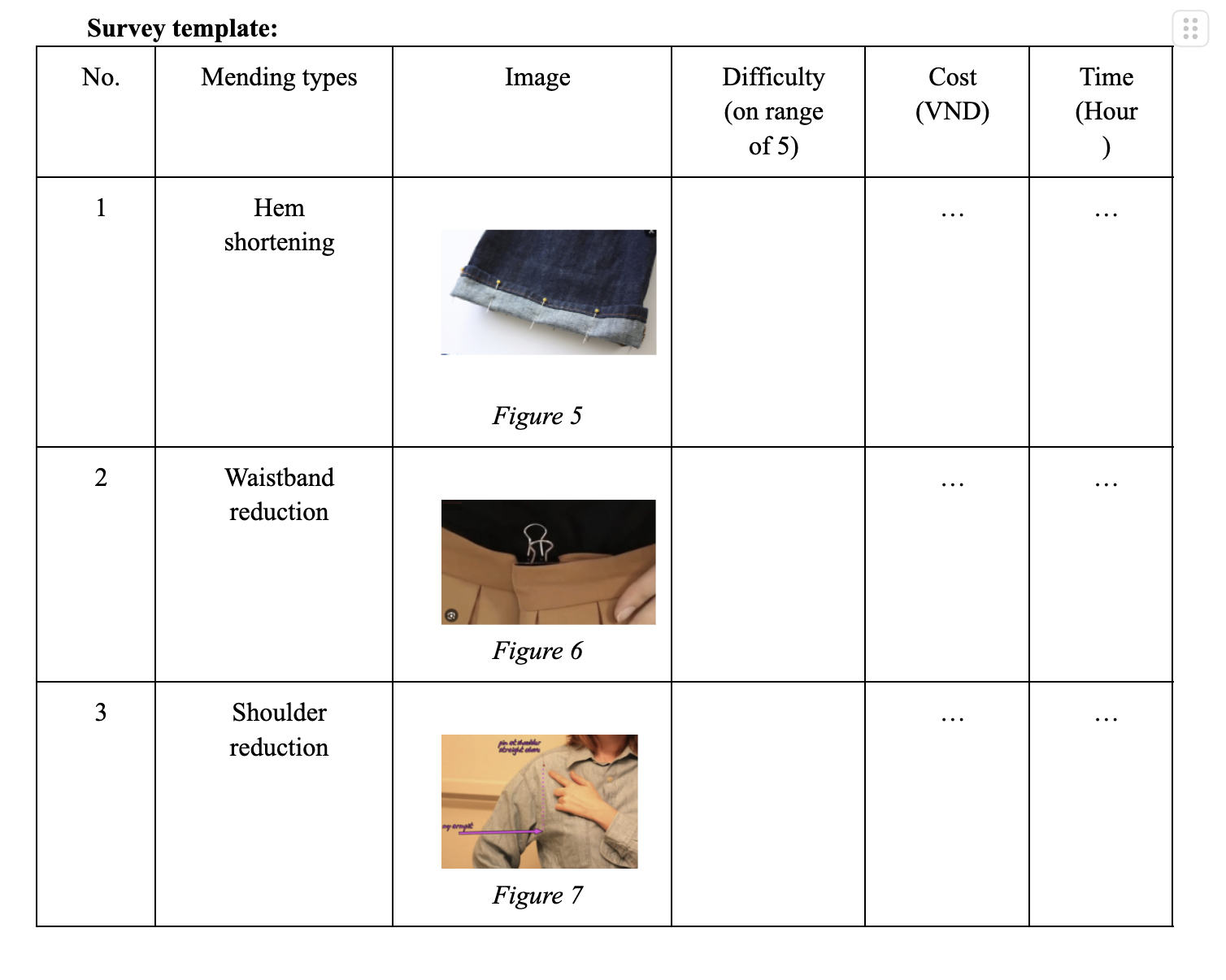
Data Collected: We recorded the number of mending facilities and collected data on pricing and time required for various mending tasks, from basic repairs like hem shortening to more complex alterations such as shoulder reduction.
Survey template:
Secondary Research
In addition to collecting primary data, we conducted a comprehensive review of existing literature on mending practices, gender roles, and the social and economic significance of garment repair. Thus, we draw conclusions combining the existing data from primary and secondary research.
Findings
Questionnaire Survey
A Young Demographic
The demographic analysis from the study reveals a predominantly young audience, with Generation Z constituting 52% of respondents, followed by Millennials (Generation Y) at 29%, Generation X at 8.4%, and Baby Boomers at 9%. Although the majority of participants were younger, the study still had notable representation from older generations, making up approximately 20% of the sample. The gender distribution showed a significant majority of female participants, accounting for 69.4%, while 21.5% were male, and an additional 5.9% identified as gender-fluid; the rest 3.3% would rather not say or identify with any of the above.
Examining the participants' professions, approximately one-third of the respondents were associated with art and design. Regarding attitudes towards mended garments, a general inclination towards positivity was observed, ranging from strong likes to neutral sentiments. Notably, each specific mending pattern elicited distinct responses. For the least visible mending pattern (Type 1), participants generally expressed a neutral stance (33%), with 50% exhibiting a preference or strong liking. The second pattern (Type 2), characterized by high decorative elements, garnered the most positive feedback, with approximately one-third of participants expressing a strong liking. However, the third pattern (Type 3), featuring visible mending with potential offensive elements, generated more diverse reactions, with the highest proportion expressing dislike and strong dislike (28%). It is worth noting that those displaying dislike to strong dislike in Type 3 are mostly millennials, with equal distribution between male and female, proving that cultural stereotypes regarding display of nudity persist in our society to this day.
Aesthetic Preference – High Possibility of Wearing Mended Garments
In general, individuals expressed a high level of comfort with wearing mended garments both indoors and outdoors. Only 4.4% of respondents stated that they would not wear any mended items outside, and 4.7% indicated that they would not wear such items at home.
This reaffirms the earlier observations related to Type 3, which evoked the most varied responses. Half of the participants expressed a willingness to wear this pattern at home, while only 40% were inclined to wear it outside. The hesitance surrounding Type 3 highlights a distinct division in preferences, with a significant proportion of individuals choosing to limit the visibility of mended garments, particularly when being outdoors.
Mending Practice Through the Lens of Gender Equity – A woman’s work
Regarding the perspective of respondents on the gender aspect of sewing and mending, the majority (75%) disagreed with the notion that sewing is exclusively a task for women. However, a notable minority (13 individuals strongly agreed, and 16 agreed) still held the belief that sewing is a woman's responsibility. Interestingly, this viewpoint was prevalent among older age groups, particularly Boomers and Gen X, although Millennials and Gen Z also demonstrated its presence. The respondents included both males and females (11 males, 17 females), with one individual identifying as gender-fluid.
Despite the predominantly female respondents, it is evident that gender segregation in household tasks, such as sewing, persists across all age groups and genders. This unexpected revelation serves as a "black swan" in contrast to the author's initial assumptions, showcasing several outliers. One such outlier is a female Gen Z participant who studies art, engages in self-sewing, and views sewing as strictly women's work. Notably, this participant refrains from choosing any mended garments for both indoor and outdoor environments but actively participates in repairing and upcycling activities. This outlier raises questions about the aesthetic acceptability of visible mending methods, emphasizing that personal preferences may diverge from traditional gender roles. This individual's perspective challenges assumptions and adds nuance to the broader understanding of gender perceptions in the context of sewing and mending.
Garment-Mending as a Common Practice
The survey revealed that an overwhelming majority of respondents (94.3%) have engaged in garment or accessory repair at some point in their lives, with only 5.7% indicating they have never done so. Furthermore, it was found that nearly half of the participants (47%) had sought help from friends or family for repairs, while 42% had utilized the services of professional tailors. Additionally, more than half of the respondents (50.7%) had taken on the task of repairing their items independently. This widespread practice of mending and sewing raises the question: Why is this practice so common and deeply ingrained in urban lifestyles?
One potential explanation could be the facilitation of mending and sewing as compulsory life skills taught at the elementary school level, making it a ubiquitous and essential part of education. This prediction suggests that such skills are imparted to the entire population, fostering the ability to mend and fix garments independently and minimizing barriers to engaging in mending activities.
Another contributing factor could be the well-established infrastructure at the other end of the supply chain, involving numerous garment repair and alteration facilities in Vietnam. The abundance and proximity of these establishments make professional tailoring services easily accessible to the public. Affordable repair costs, comparable to the price of a meal or an egg, make it feasible for individuals to cover these expenses. Additionally, the strong skills of professional tailors satisfies the diverse needs of users, ranging from simple alterations to intricate repairs, further encouraging the prevalence of mending practices in urban settings. Further investigation into coursework and the infrastructure supporting garment repair could provide valuable insights into the widespread acceptance and practice of mending in Vietnamese culture. Our secondary research will shed light on the justification for the popularity of mending practice in Vietnam.
Site Survey
High Availability of Mending Infrastructure
With data available from both Google Maps and our on-site roaming survey, we recorded a total of 13 mending facilities, distributed evenly across the designated area. Citizens are exposed to abundant mending services within just 1 km in their neighborhood.
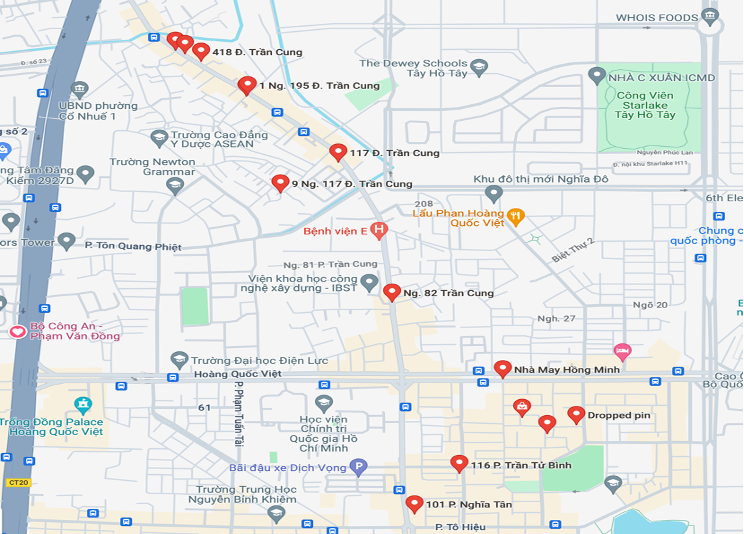
Figure 16
Available mending services recorded in Co Nhue 1 Ward, with a radius of 1km from E Hospital market, following Tran Cung street and a part of Hoang Quoc Viet street.
Affordability and Accessibility of Mending Services
We surveyed a total of 7 mending houses, whose owners are either men or women of varying ages. For the first mending practice (hem shortening), whose difficulty level is 1 (on scale of 5), the average price is 25.000 VND ($1.02) and the time required is 20 minutes (⅓ hour). Little difference is observed with the second mending practice (waistline reduction), with a difficulty level of 3-4, when the average price recorded is 30.000 VND ($1.23), taking 30 minutes (½ hour). What comes as a surprise is the last and hardest practice (shoulder reduction), costing only 40.000 VND ($1.64) and taking an hour to finish.
Comparing to the average price of a meal in Vietnam which is 56.000 VND ($2.29)*, the cost of mending and sewing is relatively lower. Therefore, citizens of any class can afford to have their clothes mended frequently, making mending a service accessible to all.
High-level Craftsmanship of Mending Technicians
All the seamstresses and tailors interviewed are able to handle difficult mending tasks, such as the aforementioned technique of shoulder reduction (marked as hardest) within just a relatively short period of time. The tailors’ skilled ability to mend difficult garments encourage citizens, especially educated ones from middle to upper-middle class, to have their clothes fixed instead of throwing them away. This effectively extends the life cycle of clothes.
Conclusion
Our research has demonstrated that Vietnamese citizens display a highly positive attitude and comfort towards mending practices, as well as wearing them at home or outside.
On the one hand, this is explained by the abundant available mending services and infrastructure that offer convenience, affordability, and high-level craftsmanship of technicians, which leads to consumers’ satisfaction with mended garments. We can conclude that Vietnamese citizens resort to having their clothes fixed instead of throwing them away, thereby extending the life cycle of products. Historically, on the other hand, mending was taught and passed down by generations as a woman’s mandatory skill, and Vietnamese women practice mending as a way of caregiving and showing affection. In modern times, mending is popularized to every citizen in the form of compulsory coursework in primary school in our K-12 education, offering a foundation for everyone to mend garments on their own.
Mending and patching are a medal of love – it lies in each Vietnamese person’s subconscious. While in the past, mending resembles hardship, labour, and the lower class, it manifests as a more positive connotation these days as a way of showing affection: familial love, romantic love, friendly love. One shows either love to others by mending their clothes, or appreciation to the products by mending one’s own.
Vietnamese people approach fashion and clothing with a grateful attitude – to always put efforts into extending the life cycle of products through the form of mending and trading clothes. Therefore, initiatives must be implemented to encourage the practice of extending life cycles of products coming from end-users, apart from maintaining and developing available facilities. Education also plays a significant role—a prerequisite towards fostering ethical fashion in Vietnam. Putting an emphasis on education in the future is imperative to keep the practice relevant while popularizing the idea of a circular economy to every citizen.
References
Bailey, K., Basu, A., & Sharma, S. (2022). The environmental impacts of fast fashion on water quality: A systematic review. Retrieved from https://www.mdpi.com/2073-4441/14/7/1073
Boone, T. (2009). Sustainable Fashion and Textiles: Design Journeys by Kate Fletcher (Earthscan, 2008). Fashion Practice, 1(2), 271–274. https://doi.org/10.2752/175693809X469229
Claudio, L. (2020). Waste Couture: Environmental Impact of the Clothing Industry. Environmental Health Perspectives, 115(9), 448–454. https://doi.org/10.1289/ehp.115-a449
Jacometti, V. (2019). Circular Economy and Waste in the Fashion Industry. Laws, 8(4), 27. MDPI. https://www.mdpi.com/2075-471X/8/4/27
Koszewska, M. (2018). Circular Economy — Challenges for the Textile and Clothing Industry. Autex Research Journal, 18(4), 337-347. https://doi.org/10.1515/aut-2018-0023
Lâm, Nguyễn Hoàng. “Nhớ Những Người Mẹ Vá Cờ Tổ Quốc Bên Cầu Hiền Lương.” Luật Sư Việt Nam, 14 Oct. 2024, lsvn.vn/nho-nhung-nguoi-me-va-co-to-quoc-ben-cau-hien-luong-1713454327-a142900.html
Sánchez De Jaegher, C. Atacama Desert’s Solastalgia: Color and Water for Dumping. Biosemiotics 17, 67–92 (2024). https://doi.org/10.1007/s12304-023-09551-w
Author Bios

Thu Ngoc-Ha Le is an award-winning Vietnamese product-system designer/researcher, global ESG expert, and STEaMh(*) educator. Thu uses in-depth logical analysis & creative thinking to offer innovative design solutions. An observant, vigorous intellect with unhindered imagination, she has the talent for rendering the abstract visible, with taste and nuances. Thu is the co-founder and Creative Director of XAVAN Inc. She currently runs an independent product-system fabrication laboratory in Hanoi, VN.
(*) science, technology, engineering, ARTS, mathematics, HUMANITIES.

Hailing from Hanoi, Vietnam, Hieu Minh Le is a first-year undergraduate student under the Fiber Science and Apparel Design program at Cornell University as a Levitan Scholar. Hieu’s main practice and studies revolve around sustainable fashion materials and design techniques, with a strong focus on modern applications of both traditional and novel Vietnamese natural fibers and textiles derived from agricultural waste.

"Silver Thread Golden Needle" by A. G. Cook
Article Citation
Le, Hieu Minh, and Thu Ngoc-Ha Le. “Mending – A Labour of Love: An Analysis of Urban Vietnamese End-users’ General Perception & Practice on Sewing-Mending.” Unravelling Fashion Narratives, special issue of Fashion Studies, vol. 5, no. 2, 2026, pp. 1-27. https://doi.org/10.38055/UFN050204
Copyright © 2026 Fashion Studies - All Rights Reserved
Creative Commons Attribution-NonCommercial-NoDerivatives 4.0 International (CC BY-NC-ND 4.0) license (see: https://creativecommons.org/licenses/by-nc-nd/4.0/)