
Sway with Emotion, Persuade with Logic: Decolonizing Creative Research Methodology with Autoethnography in Fashion Curation
By Jonathan Lee
DOI: 10.38055/UFN050205
MLA: Lee, Jonathan. “Sway with Emotion, Persuade with Logic: Decolonizing Creative Research Methodology with Autoethnography in Fashion Curation.” Unravelling Fashion Narratives, special issue of Fashion Studies, vol. 5, no. 2, 2026, pp. 1-26. https://doi.org/10.38055/UFN050205
APA: Lee, J. (2026). Sway with Emotion, Persuade with Logic: Decolonizing Creative Research Methodology with Autoethnography in Fashion Curation. Unravelling Fashion Narratives, special issue of Fashion Studies, 5(2), 1-26. https://doi.org/10.38055/UFN050205
Chicago: Lee, Jonathan. “Sway with Emotion, Persuade with Logic: Decolonizing Creative Research Methodology with Autoethnography in Fashion Curation.” Unravelling Fashion Narratives, special issue of Fashion Studies 5, no. 2 (2026): 1-26. https://doi.org/10.38055/UFN050205
Volume 5, Issue 2, Article 5
Keywords
Hong Kong
Identity
Fashion Exhibition
Confucianism
Curatorial Strategy
In-betweenness
Abstract
This study offers a methodological exploration of integrating Chinese philosophy into arts-based inquiry through fashion curation and exhibition. In-betweenness and a heterogeneous sense of belonging have long been recurring themes of despair among postcolonial Hongkongers (from 1997 to the present). In an attempt to suppress divergent expressions of Hong Kong identity, the Hong Kong Special Administrative Region government enacted the National Security Law in 2020 to prosecute those who do not align with the state. Nevertheless, the unresolved in-betweenness of Hong Kong identity persists. In response, I curated the exhibition The Postcolonial Hong Kong in the 2020s: A Prologue or an Epilogue? to explore postcolonial Hong Kong identity in the post-NSL era. This article examines decolonial autoethnography as a curatorial methodology, employing my perspective as a distant outsider within the community. It advances a novel curatorial framework—the Emotion-Logic Praxis—which integrates Chinese and Confucian-informed rhetorical philosophy with autoethnography to form the foundation of a creative research method. The Emotion-Logic Praxis seeks to disrupt traditional binary thinking about truth. Rather than pursuing agreement with the exhibition narratives, it foregrounds the researcher’s biases and reflexivity by first “swaying with emotion” and then “persuading with logic,” enacted through three curatorial strategies: reading, sensing, and oral storytelling. This methodology functions as a curatorial practice that epistemologically validates one’s positionality and worldview while fostering knowledge plurality in the exploration of deeply personal and subjective topics, such as identity and belonging.
Introduction
In-betweenness and a heterogeneous sense of belonging have been common themes of despair among postcolonial Hongkongers. Without a commonly upheld sense of shared identity within the community, some identify as nationally Chinese, while others see themselves as nationally Hongkongers, or even as British. The phenomenon thus sparks my interest in understanding the essence of Hong Kong culture and the core of being a Hongkonger. In July 1997, Hong Kong’s sovereignty was “handed back” to the People’s Republic of China from Britain. It marked a destiny-changing event in history as the city transitioned from a British colony in the Far East to a Special Administrative Region (SAR) on the Southern border of China. In 1984, Britain and China signed the Sino-British Joint Declaration to address the details of handover in 1997. During the conference, both nations agreed on the principle of “One Country, Two Systems,” maintaining Hong Kong’s status as a liberal, capitalist, and free market economy and governmental body for 50 years unchanged (Brook-Holland). As an SAR, Hong Kong was given a high degree of autonomy to have a self-running government that is separated from China’s legal, economic, and judicial systems. To some locals, the reunion of the two predominantly Han Chinese societies is seen as a celebration of Chinese reunification, but to some others, it is seen as the dawn of an age of terror due to the mistrust on China’s political structure. Such divergence in the sense of belonging during the sovereignty transition has caused great stress among Hongkongers, becoming the root of social disorder in the city.
This research piece is part of my MA thesis project in fashion studies. Taking autoethnography as a creative research method, I approach the concepts of identity and sense of belonging in Hong Kong through fashion curation and exhibition. Butz and Besio define autoethnography as a format of self-narrative research that “places the self within a social context” (1660). Using qualitative data collected during my research, I employed arts-based inquiry to carefully examine my positionality as a Hong Kong-Canadian. In March 2024, I successfully executed my curatorial project and curated a bilingual exhibition titled 港原味。港完未? (Gong Yuen Mei. Gong Yuen Mei?) The Postcolonial Hong Kong in the 2020s: A Prologue or an Epilogue? at my university campus, Toronto Metropolitan University, Canada (Figure 1). Henceforth, this article situates these sociopolitical struggles Hongkongers face during the postcolonial era.
This article explores the methodological implementation in the exhibition to create an immersive cultural experience, fostering cultural harmony and exploring my in-betweenness as a Hong Kong-Canadian.
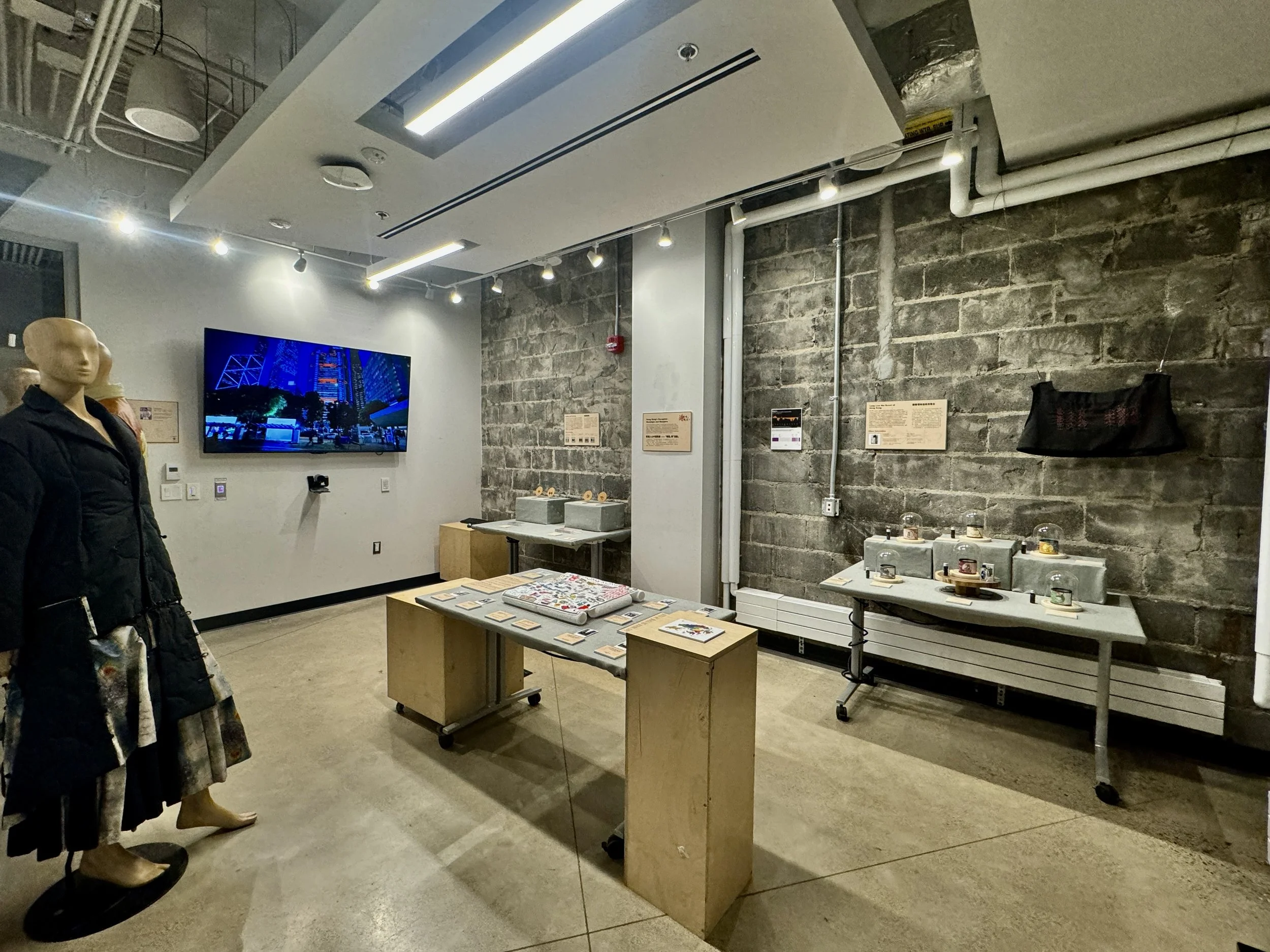
Figure 1
Jonathan Lee. Gallery Space of Exhibition: The Postcolonial Hong Kong in the 2020s: A Prologue or an Epilogue? 3 March 2024. Toronto Metropolitan University, Toronto. Author’s personal collection.
The Postcolonial Hong Kong in the 2020s: A Prologue or an Epilogue?
Due to sociopolitical and cultural differences between Hongkongers and Mainland Chinese, social unrest in Hong Kong was exacerbated. This led to several movements breaking out in the postcolonial era to resist China’s growing influence. One of the most recent and largest protests in postcolonial history is the 2019 Anti-Extradition Bill protest. The event was first triggered by the government-initiated amendment to the extradition bill due to a murder case involving a Hong Kong fugitive in Taiwan. Eventually, the mistrust among Hong Kong citizens regarding the legal changes prompted a quarter of the city’s population to take to the streets in solidarity. The almost year-long protest broke out as a call for maintaining Hong Kong’s “longstanding judicial independence and civil liberties” (Wang 3). Heightened resentment and tension among citizens eventually escalated the event into a massive multilateral opposition between police and civilians, government and citizens, and families and friends.
During the protest, Hongkongers were more divided than ever before. The citizens were split into two camps, the localists and the patriots. The localists were pro-democracy, whereas the patriots were pro-Chinese unification. As a result, the protest was forcefully suppressed by the SAR government. The event alerted China’s suppression of Hongkongers’ freedom of speech and expression, thus leading to the imposition of the infamous National Security Law (NSL) in June 2020. The addition of the NSL signified an abruption of Hong Kong’s judicial autonomy, as it was enacted directly by the Chinese Central Government. Any attempts or intention to secede from China, whether physical or verbal, were considered a violation. Hongkongers lost the freedom to express their national identity as they could now face prosecution for embracing the Hong Kong identity openly. China’s betrayal of the “One Country, Two Systems” principle disappointed hundreds of thousands of Hongkongers. Since then, Hong Kong has entered a depressing era in which people feel hopeless and helpless about their future, as the freedom they were once guaranteed has been stripped away completely. While Hong Kong was shut out in the process of sovereignty handover, its fate was dictated as a bargaining chip on the diplomatic table. Neither Britain nor China addressed Hong Kong’s distinctive identity, developed over its 150 years of colonial history, and the in-betweenness of Hong Kong identity persists. As part of the community, I witnessed many social movements in the city growing up and questioned my identity as a Hongkonger. This fashion exhibition has become an opportunity for me to explore this complex yet under-discussed topic.
The monumental curatorial project 港原味。港完未? The Postcolonial Hong Kong in the 2020s: A Prologue or an Epilogue introduces Hong Kong culture to the international audience.
The title of the exhibition is written bilingually in Cantonese and English. The Cantonese title “港原味。港完未?” takes two homophonic clauses to address the central theme of the exhibition: whether the authentic Hong Kong culture is approaching diminishment in the 2020s. In the homophonic title, the first clause “港原味,” meaning “the original taste of Hong Kong” as a simple declarative statement, and the second clause “港完未,” meaning “is Hong Kong finished” as an interrogative statement, both feature a Cantonese pun. Cantonese puns or wordplay (雙關語) play a tremendous cultural part in Hong Kong media and are considered a culturally specific tactic used in media communication. Puns can easily resonate with the local audience and provoke humour as “the nuances in language can only be appreciated within a certain context and community” (Kang). When engaging in political affairs, puns and wordplay can also serve a satirical and solidarity purpose. Jones and Chau describe “wordplay” as a tactic to “[mock] or [ridicule] the linguistic practices of political adversaries or [engage] in various forms of language play” (145). In Hong Kong’s postcolonial era, political puns and wordplay can be found on various social media platforms and in popular culture. Hence, I used puns in the exhibition title, intending to form solidarity among the Hong Kong and Cantonese communities, and to address political topics through humour and satire.
At the exhibition, considering most visitors were not familiar with Hong Kong’s sociopolitical affairs and culture, a wide selection of displays was included to provide context about Hong Kong. The exhibition began with an introduction panel to provide a summarized historical development of Hong Kong’s sociopolitical environment.
For instance, I explicitly avoided the accusative terms used by the SAR government, such as “riot” and “uprising,” to impose a derogatory narrative on the democratic Hongkongers. The decision subsequently complemented my autoethnographic methodologies in creating a problematizing narrative that centred my point of view on Hong Kong as a cultural-political entity.
To create a sense of geographical familiarity for visitors, the exhibition also included a display dedicated to introducing different areas of Hong Kong with maps and street photography (Figure 2). While the display was placed in the centre of the exhibition, it foregrounded the theme of Hong Kong before the cultural products were seen. The display showcased a white cotton handkerchief with a printed Hong Kong map designed by Suzuki Kumiko, a Japanese graphic designer whose work is inspired by Hong Kong culture. The printed map featured Kowloon and Hong Kong Island—the most bustling areas of Hong Kong—alongside illustrations that relate to local culture, such as food, architecture, and objects and symbols.
Next to the handkerchief, it was accompanied by my Polaroid photography collection, titled The Fashion Neighbourhoods, which I took during my research trip to Hong Kong in January 2024. Echoing the areas shown on the handkerchief, the images revealed the five most popular neighbourhoods in Hong Kong, including Sham Shui Po, Mongkok, Tsim Sha Tsui, Central, and Causeway Bay. I explicitly focused on the distinctive styles and fashion found in these areas due to the different socioeconomic statuses, demographics, and social classes of the residents and pedestrians. Although I could not display any person in my photographs to show the style found in these areas due to research ethics reasons, I bridged the visual gaps by adding textual descriptions to convey the fashion phenomenon. As such, the combination of visual and textual strategies formed visitors’ imagination by situating them in these neighbourhoods. This approach also guided visitors to visualize the imagery of Hong Kong that I aimed to portray through an autoethnographic lens, thereby creating a personal narrative rooted in the locality of place.
As a result, I conducted semi-structured interviews with four selected local designers in Hong Kong—Vincent Li, Minnie Lam, Rex Ko, and Oscar Yuen—to obtain the most accurate information about the local fashion system and culture (Figure 3). Though they all reside in Hong Kong, the four designers each embody distinct ways of curating postcolonial identities of Hong Kong. Vincent Li is an Australian-trained Shanghainese genderless avant-garde designer who grew up consuming Hong Kong media during its golden era in the 1980s and ‘90s, representing the recent influx of new immigrants from Mainland China. Minnie Lam is a self-proclaimed “ordinary” locally trained womenswear designer who was born and grew up in the postcolonial era, struggling to position her cultural identity between Western and Chinese influences in Hong Kong. Rex Ko is a Japanese-trained menswear designer who has lived a substantial time in both colonial and postcolonial Hong Kong, witnessing all sociopolitical changes. Oscar Yuen represents the new generation of entrepreneurs who spent most of their adolescence and adulthood in the postcolonial era, witnessing the unfolding of a new chapter in Hong Kong. Their practices range from the romanticized portrayal of Hong Kong culture in avant-garde designs (Li), to the Western-facing womenswear that is grounded in sustainable practices and craftsmanship (Lam), to the re-imagined Japanese-vintage menswear designs that connect the local Hong Kong community (Ko), to the reenactment of nostalgic scents found in Hong Kong through candle making (Yuen). Even though their artistic pursuits differ from one another, all four designers share a common goal of preserving and promoting Hong Kong culture in their own means and through their beliefs.
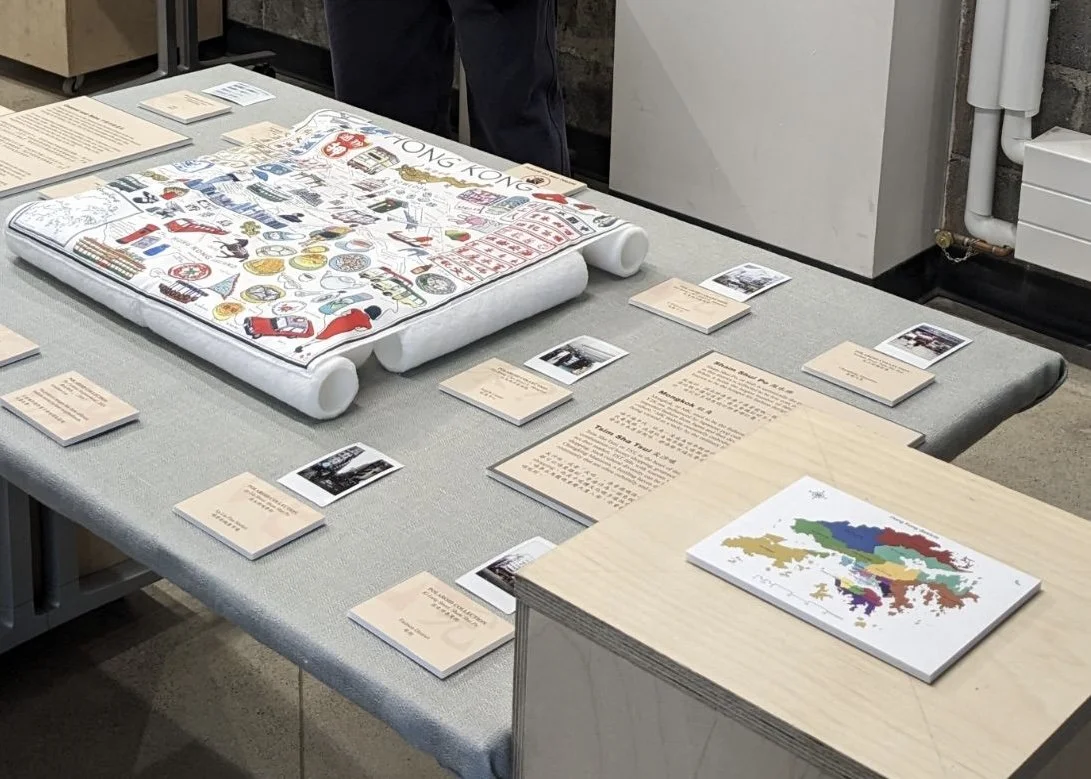
figure 2
Jonathan Lee. Curated Pieces at “How Much Do You Know about Hong Kong?”. 13 March 2024. Toronto Metropolitan University, Toronto. Author’s personal collection.
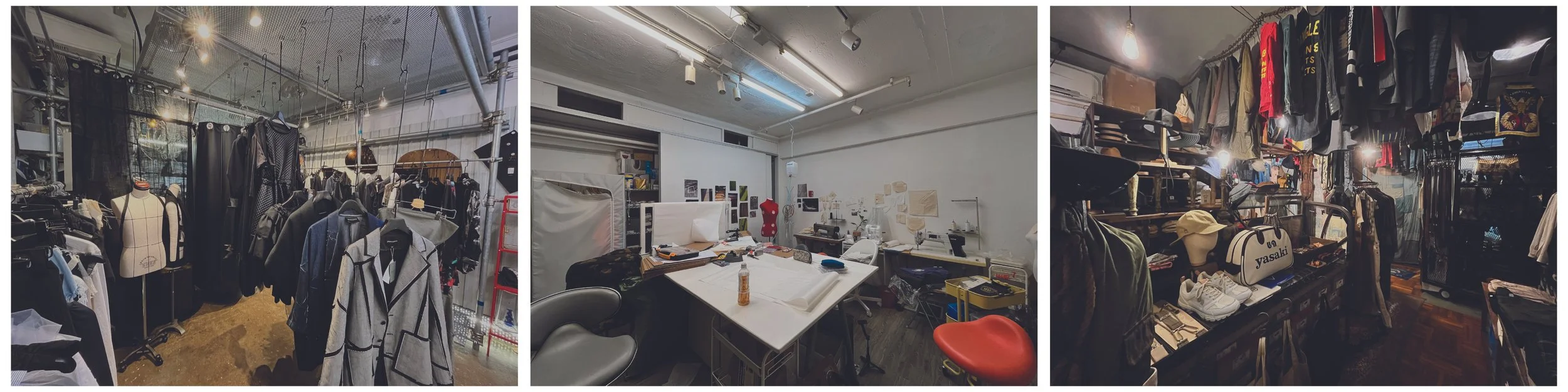
Figure 3
Jonathan Lee. [Left to Right] Retail Store and Studio Front of Vincent Li Studio, Lam Wing Sum, and Luddite 1811. 23 January 2024. Central, Hong Kong. Author’s Personal Collection.
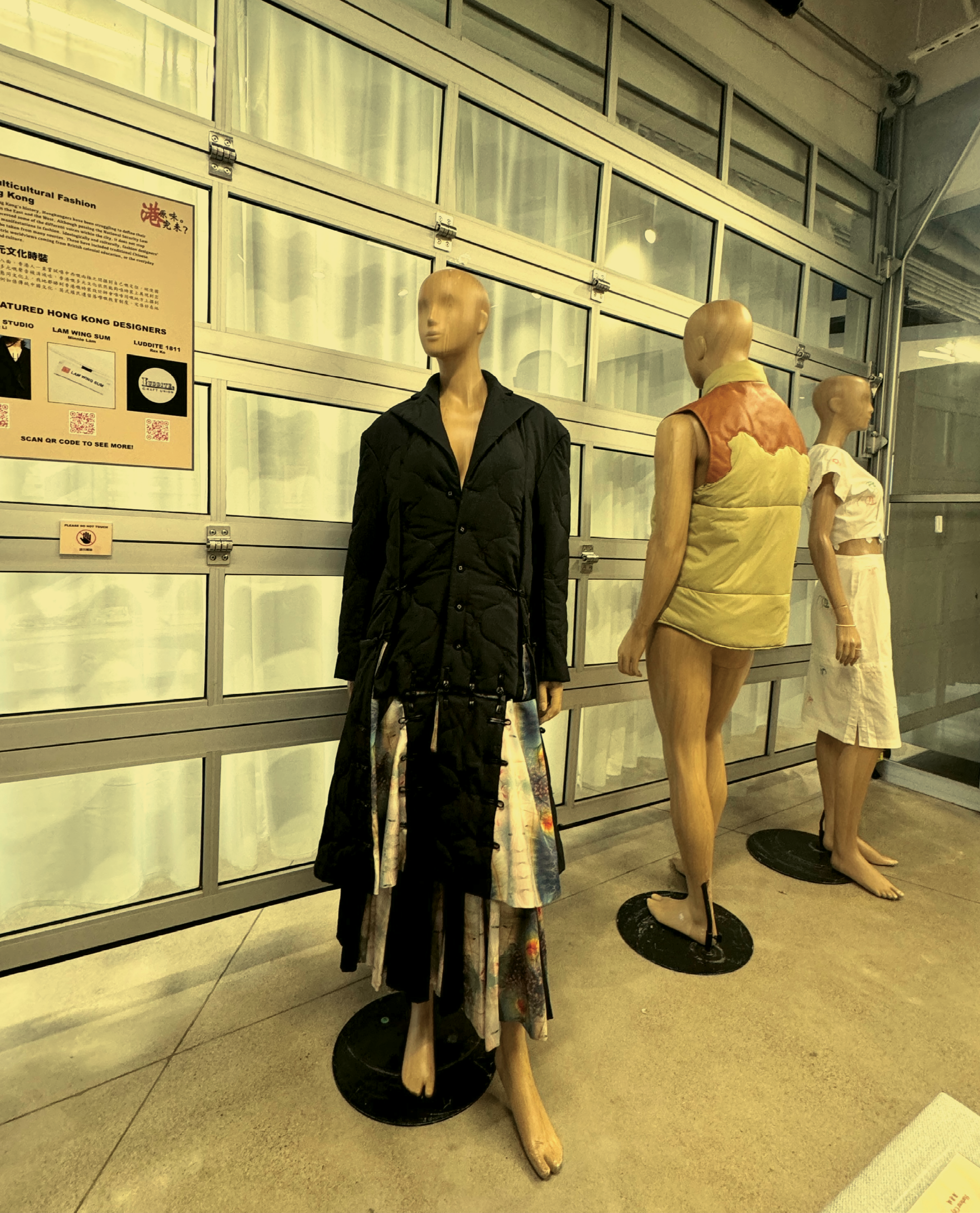
The main narrative of the exhibition was divided into two parts: (1) Multicultural Hong Kong Fashion, and (2) Nostalgia and Diaspora. The display of the three curated outfits was set to validate the heterogeneous identity of belongings among Hongkongers. Conversely, the second section in the exhibition was set to materialize the concurrent characteristics of Hong Kong culture in the 2020s through different material cultural items. Across from the centre display at the exhibition, three mannequins displayed the work of Vincent Li Studio, Luddite 1811, and Lam Wing Sum. The exhibits start with Vincent Li Studio’s “Ordinary Origami” Ensemble, Luddite 1811’s “Lion 1898 Rock” Puffer Vest, and Lam Wing Sum’s “Scarcity Principle” daywear dress (Figure 4, from left to right).
Living in a culturally and racially homogenous society, Hongkongers long for a sense of belonging, whether to Britain, to China, or to Hong Kong. Rather than criticizing the identity divergence within the community, I intended to understand the multi-layered Hong Kong identity through fashion curation. Ideologically and culturally, fashion can act as a medium for people to express their beliefs and values. As such, the three outfits presented by the Hong Kong designers presented the dilemma in identity and sense of belonging that Hongkongers are facing.
At the second section of the exhibition, I constructed a narrative with two intangible concepts: currency and scents (Figure 5). Interestingly, the autoethnographic interpretation of these objects subsequently leads to the theorization of nostalgia and diaspora representation in Hong Kong culture. Since the forceful repression of the 2019 protest by the SAR government, Hong Kong has been undergoing a drastic change sociopolitically and economically in the new decade. Whether through media or lived experience, I have observed that the city is shrouded in an overall suppressive and depressing atmosphere due to the enactment of the National Security Law in 2020.
The display Fashion and Currency featured two handcrafted accessories made locally by Hong Kong designers. These pieces are repurposed from historical Hong Kong dollar coins that were circulated during the colonial period. Although the shapes and sizes are the same as those currently in circulation, these coins have been banned from use due to the information of the colonial government. A prominent example is the head figure of the late Queen Elizabeth II, who is seen as the staple of modern British colonialism. On the other display, The Scent of Hong Kong, I selected six candle fragrances created by one of the collaborators, The Wax Can. Every candle created by the brand is thoughtfully designed and authentically represents the Hong Kong community. The designer, Oscar, was inspired by multiple sources in local culture that resonate with Hongkongers, recreating the scents based on his imagination or impression of his memories. For instance, the candle fragrance “Grandma’s Wardrobe,” which mimics the setting of a Hong Kong grandmother’s bedroom filled with the scents of tiger balm, is a self-evident and successful example of cultural preservation. Eventually, the authentic candle names brought everyone in the exhibition together, forming a community.
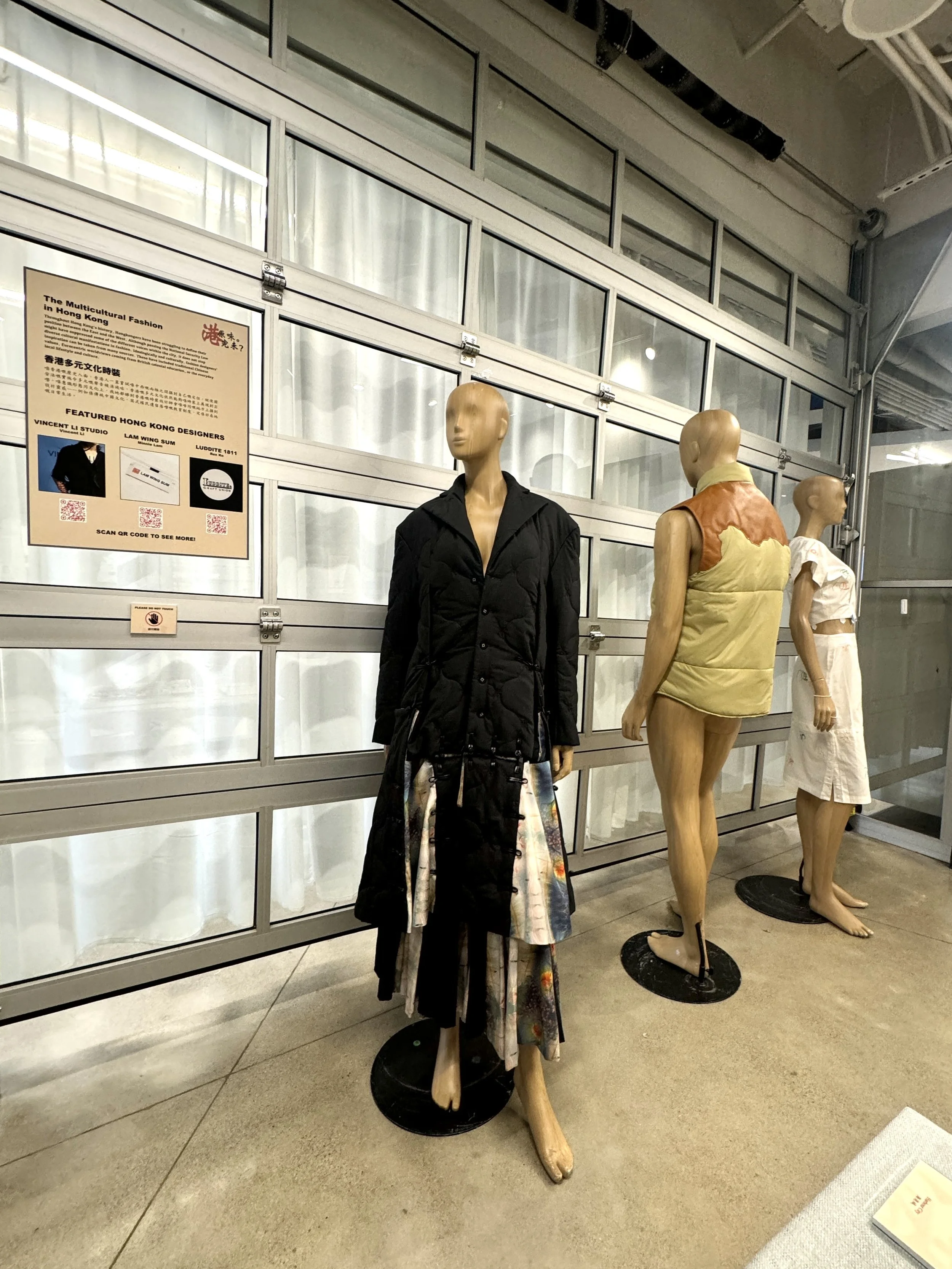
figure 4
Jonathan Lee. Curated fashion pieces from research participants at the exhibition. 20 March 2024. Toronto Metropolitan University, Toronto. Author’s personal collection.
At the second section of the exhibition, I constructed a narrative with two intangible concepts: currency and scents (Figure 5). Interestingly, the autoethnographic interpretation of these objects subsequently leads to the theorization of nostalgia and diaspora representation in Hong Kong culture. Since the forceful repression of the 2019 protest by the SAR government, Hong Kong has been undergoing a drastic change sociopolitically and economically in the new decade. Whether through media or lived experience, I have observed that the city is shrouded in an overall suppressive and depressing atmosphere due to the enactment of the National Security Law in 2020.
The display Fashion and Currency featured two handcrafted accessories made locally by Hong Kong designers. These pieces are repurposed from historical Hong Kong dollar coins that were circulated during the colonial period. Although the shapes and sizes are the same as those currently in circulation, these coins have been banned from use due to the information of the colonial government. A prominent example is the head figure of the late Queen Elizabeth II, who is seen as the staple of modern British colonialism. On the other display, The Scent of Hong Kong, I selected six candle fragrances created by one of the collaborators, The Wax Can. Every candle created by the brand is thoughtfully designed and authentically represents the Hong Kong community. The designer, Oscar, was inspired by multiple sources in local culture that resonate with Hongkongers, recreating the scents based on his imagination or impression of his memories. For instance, the candle fragrance “Grandma’s Wardrobe,” which mimics the setting of a Hong Kong grandmother’s bedroom filled with the scents of tiger balm, is a self-evident and successful example of cultural preservation. Eventually, the authentic candle names brought everyone in the exhibition together, forming a community.
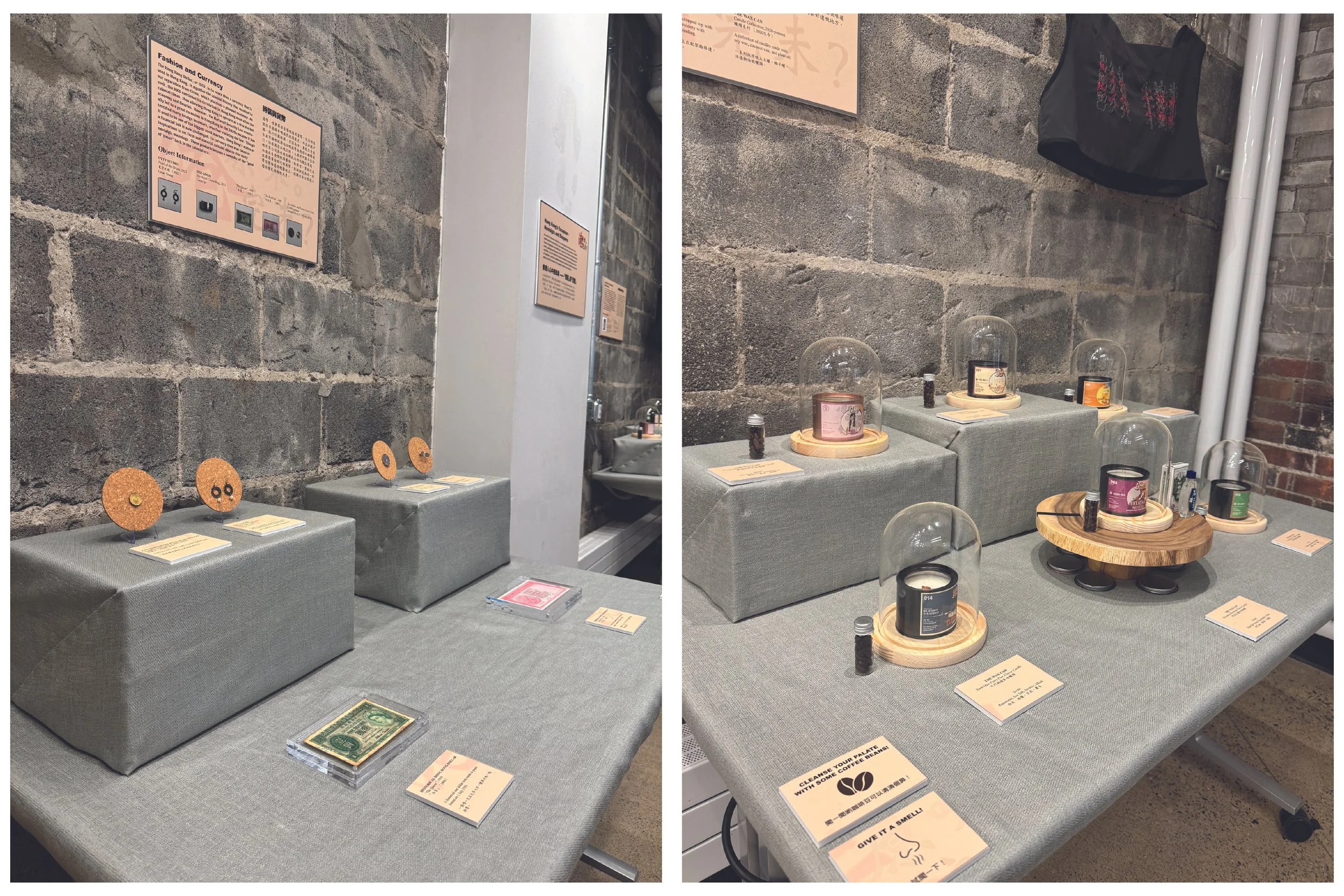
figure 5
Jonathan Lee. Curated Pieces at “Fashion and Currency” (Left) and “Long Live the Scents of Hong Kong” (Right). 20 March 2024. Toronto Metropolitan University, Toronto. Author’s personal collection.
Sway with Emotion, Persuade with Logic
This exhibition represented a miniature version of my vision of Hong Kong as a cultural entity—a lens from a distant insider who grew up in the city yet culturally felt disconnected.
In Christopher Poulos’s Essentials of Autoethnography, he concludes that autoethnography “uses [a] researcher’s personal experience to describe and critique cultural beliefs, practices, and experience,” and “acknowledges and values a researcher’s relationship with others” (2). I am a Canadian-born Hongkonger who spent most of my childhood in Hong Kong but my adulthood in Canada. Although I grew up in a predominantly Han-Chinese cultural environment, my lived experiences in both places and my longing for a Canadian urban lifestyle have shaped my sense of identity, setting me apart from many other similar-aged Hongkongers.
Many scholars have acknowledged the academic value of reflexivity in qualitative research; personal narration thus becomes a significant tool to interrogate our culture (Jansen 817; Matua 95; Kapinga et al. 104). Henceforth, I carefully selected each exhibit from a wide range of creators and artists and explicitly sourced them locally in Hong Kong. These objects, from garments and accessories to candles and photobooks, materialize my vision of Hong Kong culture and create an alternative space that invites international audiences to learn about the city. Semiotics and symbolism found in these objects also entail the cultural identity of Hongkongers through a personal lens.
Referencing Jansen’s fashion decoloniality framework, her advocacy of allowing more diverse voices to take up space in fashion studies and qualitative research inspires me to push decolonization further in my curatorial methodology. Grounded in the classical Chinese rhetoric “sway with emotion, persuade with logic” (動之以情,說之以理), I foregrounded a pioneering curatorial methodology, the Emotion-Logic Praxis, in this curatorial project as a response to my cultural roots. Derived from the Northern Expedition Memorial (出師表) written in 227AD during the Three Kingdoms Period in China, the proverb is heavily referenced in Chinese literature and has become a widely applied philosophical rhetoric. It embeds the traditional Chinese-Confucian philosophy that communication is not purely about logic or emotions, but a balance between both. It entails the key to successful communication being a two-step process, which starts with softening one’s heart before entering the hard, cold arguments.
Inspired by the proverb, I advance the Emotion-Logic Praxis as an application of curatorial strategy to provoke exhibition visitors’ emotion before engaging the oft-heavy and overbearing discussion surrounding Hong Kong identity. From the construction of exhibition narrative to curatorial strategies, the praxis juxtaposes autoethnographic implementation with decolonization. Chawla and Atay’s proposition of decolonial autoethnography explains that autoethnographic narrative can resist Eurocentrism in scholarship and help us understand “the dialectic relationship between the coloniser and the colonised” (5). Through a close examination of the relationship between the self and culture—where the truth resides within the self—decolonial autoethnography, as a framework, focuses on “experiences of in-betweenness, nostalgia, homelessness, [and] lack of belonging” (5), all of which are subjective and personal.
This exhibition narrated a storyline that resonated with Hongkongers yet also stayed true to my subjective lens. With advocacy in mind, I created this exhibition hoping to tell stories of Hong Kong by the Hongkongers (香港人講香港故事). This meant presenting authentic stories from locals, which might sometimes challenge the authoritative narratives coming from the government.
However, within the discourse of Hong Kong-related political affairs and sense of identity, a broad spectrum of voices can be heard between the so-called “blue-yellow” camps since the 2019 Anti-Extradition Bill protest. The colour-coded identities came from the semiotics of yellow umbrellas during the 2014 Umbrella Revolution and the blue uniforms of the police forces. Ordinary Hongkongers were often categorized as blue or yellow within the broad political spectrum. In contrast, blue “[supports] the police and [emphasizes] Chinese identity,” and yellow “[supports] the protesters and [advocates] prioritising Hong Kong” (Zhang and Gu 133). As a distant insider in Hong Kong myself, I could never fully relate to either camp due to my personal political beliefs. That said, when considering the visitors to this exhibition, it was crucial to acknowledge the limitations in granting recognition to everyone within the spectrum.
Chawla and Atay’s framework informs the notion that decolonial autoethnography is a constructive practice that engages the researcher’s story and, in doing so, validates it. Decolonial practice in fashion curation inspires me to disrupt the traditional binary thinking of truths—instead of seeking agreement to the exhibition narratives, it acknowledges my research biases and reflexivity through first “swaying with emotion,” then “persuading with logic.” Therefore, I designed and implemented the Emotion-Logic Praxis in this project to put decolonial work into practice with the three strategies: reading, sensing, and oral storytelling (Figure 6).
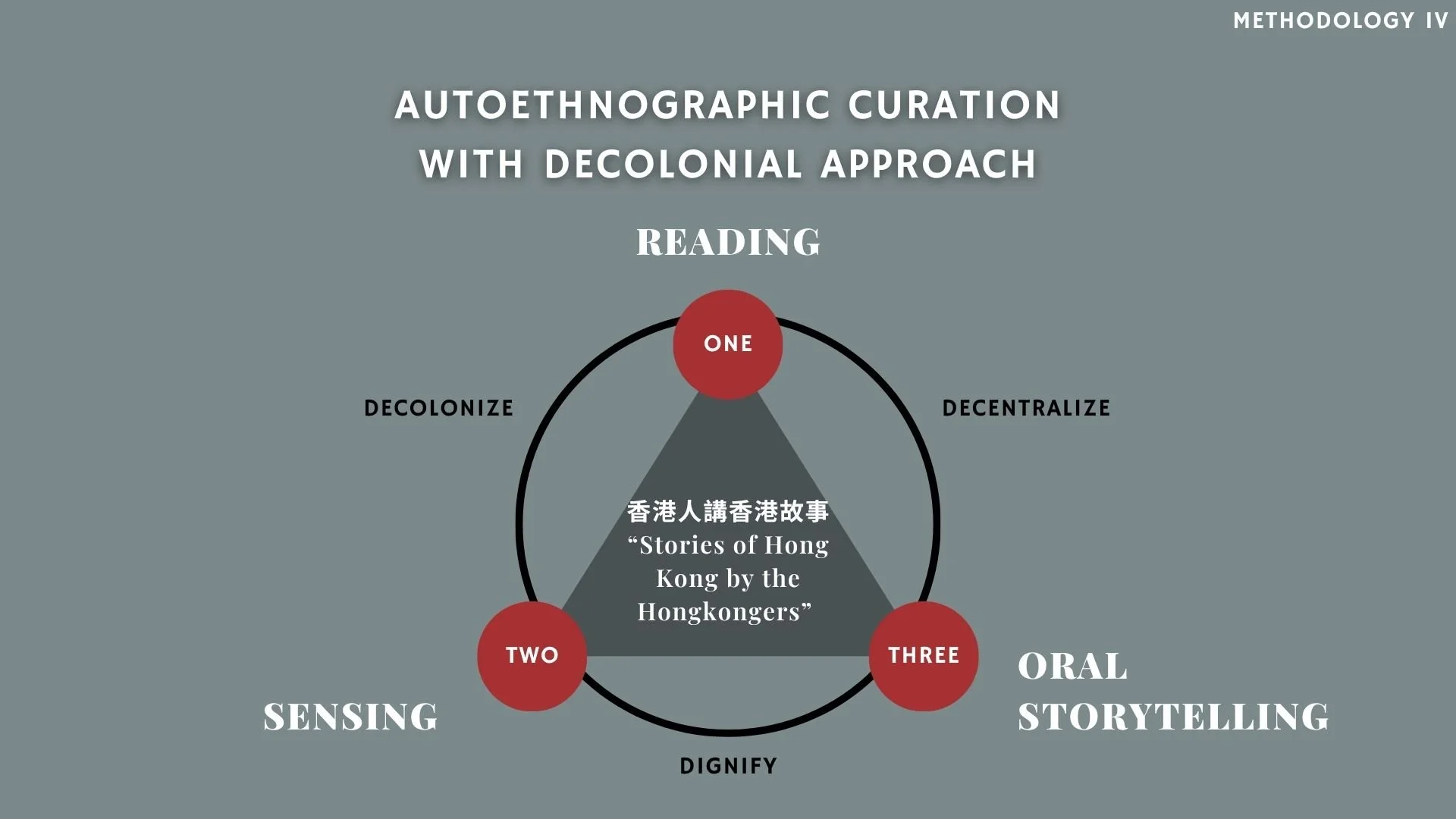
Figure 6
Jonathan Lee. Illustrated Graph for the Implementation of Autoethnographic Curatorial Strategies. 26 April 2024. Toronto Metropolitan University, Toronto. Major Research Project Presentation, slide 11.
1. Strategy One: Reading
This exhibition was curated in both English and Cantonese and designed to educate visitors about the linguistic differences between Cantonese and Mandarin. Cantonese, the prominent language spoken by Hongkongers as their mother tongue, was never officially standardized or became the lingua franca in Hong Kong, even during colonial times. Instead, in 1972, the colonial government designated the “Chinese language” as the lingua franca alongside English. This rule was followed by the later-constitutionalized Basic Law in Hong Kong after the 1997 handover (Shum et al. 251). Nonetheless, as Hong Kong entered the postcolonial era, the SAR Government had been actively promoting Mandarin as the language for Chinese education since the handover in 1997, with the language policy of “biliteracy and trilingualism” (兩文三語) (Tam and Tsang 429). The policy was implemented to respond to China’s rising on the international stage, and Mandarin has become a more advantageous language than Cantonese globally.
In recent years, the SAR government has faced more direct control and pressure from the Chinese government to promote Mandarin over Cantonese. This leads to the demonization of Cantonese by the officials who urge all schools to teach Chinese education in Mandarin more aggressively (Bielicki). However, Cantonese plays a significant part in our identity, as it is the language we speak in our daily life. Even though Cantonese is worth far more as a spoken language (Shum et al. 253; Groves 548), it was never justified legally to become an official language.
Furthermore, in Hong Kong’s Chinese language system, Hongkongers speak in Cantonese, which is seen as a verbal language (口語); yet, a different writing system, called Hong Kong written Chinese or written language (書面語), is widely taught in school. This bifurcated system is designed to foster effective communication among all Sinitic communities, as Cantonese and Mandarin are not mutually intelligible. Based on the idea of the “functionality” of a language, it is a common perception among Hong Kong locals that written Chinese (書面語) is seen as more “functional” than verbal Cantonese, as both Cantonese and Mandarin speakers can understand it (Tam and Tsang 430). This leads to the common but false cultural perception that the verbal Cantonese is “vulgar” and the written form is “sophisticated.” With the exhibition texts written in verbal Cantonese, I stay true to my culture as “I write as I talk” (我手寫我口).
2. Strategy Two: Sensing
To enhance the overall experience while mobilizing within the space, I incorporated sensual elements to simulate the “Hong Kong experience.” In modern-day anthropological research, sensory ethnography has become an effective way to understand culture and lived experiences by decentralizing the privileges inherent in the Eurocentric worldview (Howes 1-2; Calvey 346-7; Pink 1). The flexibility and hybridity in multisensory research allows researchers to have subjective opinions in their reflexive inquiry, thus making space for marginalized communities to reiterate and re-illustrate their experiences. Inspired by this theoretical approach, I applied sensory engagement as part of the curatorial approaches to interrogate Hong Kong identity in this exhibition. In David Howes’ theory of synaesthesia in material culture studies, he raises the significance of synaesthesia, meaning the “sound and senses” coming from material cultural objects (162). Taking advantage of the multi-sensory signals from the “products of fashion,” an immersive experience from these objects can leave audiences with a longer-lasting memory.
The exhibition’s three-dimensional space allowed me to be creative with how stimulation could be executed. Although most exhibits must not be touched, I tried to incorporate means to enhance the overall touring experience. The experience began as soon as visitors entered the space, where they were welcomed by the sound of Hong Kong streetscape playing in the background. In van Eyk’s (115) research on sound art curation, sonic installation is a useful medium to manipulate the spatial and temporal limitations within the gallery space.
As visitors continued to travel through the gallery space with the background sound, the exhibits could provoke visual, if not olfactory, excitement coming from the garments and candles. Visitors were welcomed by the portrayal of Hong Kong culture as an orchestrated ensemble of immersive experiences with “sound and senses.” Although the exhibition is physically located far from Hong Kong, the immersive experience reinforced the visitors’ attachment and understanding of the culture.
3. Strategy Three: Oral Storytelling
While setting up the exhibition, I quickly noticed some curatorial limitations. Since the campus buildings are in the heart of Downtown Toronto and are often not equipped with on-site security guards, the exhibition space was locked regularly to restrict access. Such a safety protocol was implemented at first to protect all loaned exhibits and the university’s equipment. Therefore, during opening hours, the exhibition was scheduled by appointment only with my attendance. However, the safety protocol later inspired me to offer exhibition tours to visitors, as a methodological means to decolonize the museum space and engage visitors personally. Although the traditional curatorial strategies of texts and senses were sufficient alone for information transmission within the exhibition, there were many meaningful messages and stories behind the scenes that were left to be addressed due to curatorial limitations, such as exhibition text word count. For an elevated touring experience, I took on a key role and acted as the third ring in the communication process, offering private exhibition tours to visitors as an alternative experience.
During the tour, visitors learned about the stories behind the exhibits and the collaborating designers. As part of an autoethnographic contribution, my tour also offered a unique experience to the visitors, as to what Hong Kong is through my narrative. The engagement eventually welcomed the visitors by including them as part of the community, even though not all visitors were from or familiar with the community. As the curator, I also learned that many underrepresented communities share similar experiences during our dialogue. My mandatory attendance at the gallery space thus served as an opportunity for community engagement.
As a result, the curator’s tour addressed the shortcomings of reading and sensing strategies by fostering interpersonal engagement with visitors. Such interaction also sparked my autoethnographic reflection and provided valuable insights and perspectives for my research.
Discussion
This exhibition was carefully designed utilizing a mix of linguistic, experiential, and communicative strategies to achieve the goals of decolonization in curatorial practices. I argue that my proposed framework, the Emotion-Logic Praxis, is a successful form of research approach in arts-based inquiry. Butler-Kisber (12) explains that arts-based inquiry is a form of doing through artmaking to understand the ontological reality and the subjective perspective of the researcher. Through the art of curation, the curatorial strategies implemented have allowed me to understand the meaning of Hong Kong culture and how I relate to it as a distant insider. The reading strategy allowed me to connect with my culture when writing in Cantonese. By applying a verbal, unofficial language onto a professional written format as exhibition texts, I felt embraced by my culture from a linguistic point of view. The sensing strategy allowed me to immerse myself wholeheartedly in the collection with touch, scents, and visuals. I engaged with each object from the beginning to the end of the curation process, which involved connecting with the designers, sourcing the objects, and designing the exhibition layout and display. The oral storytelling strategy allowed me to connect with the diaspora and exchange stories with visitors beyond the community. Each encounter became a small addition to the exhibition’s emotive quality. Through the Emotion-Logic Praxis, I learned that it helps with unpacking my in-betweenness as a Hong Kong-Canadian.
Holmes suggests curatorial endeavour is always a commendable means to generate novel knowledge as “it is a communicative act that focuses a researcher to consider the media as a means of effectively transmitting ideas, arguments, and propositions” (322-3). Thus, the application of autoethnography helped with promoting knowledge plurality and diversifying voices that differ from the ontological reality, with an integration of my personal and professional lived experience as a third-cultural individual. As such, not only does the Emotion-Logic Praxis respond to and align well with Chawla and Atay’s decolonial autoethnography framework, but it also adds new values and layers to existing methodologies. Poulos (35-6) suggests that autoethnography is a form of provocative storytelling, where the stories should “engage the heart and the mind” of the researcher. Instead of approaching this project in a traditional format of focused writing, the presentation of texts and labels combined with sensory engagement at the exhibition was designed to provoke strong emotions and leave a deep impression on visitors. In particular, the reading and sensing strategies essentially represented the balance between emotions and logic. While texts were presented to convey a story, sensory experiences were inserted throughout to break the cultural barriers of visitors. The exhibition narrative was then strengthened and solidified by interactive oral storytelling and community engagement, in which both emotion and logic were conveyed to the audience through my interpretation of stories. This framework tackles the challenge of communication, as conflicts can arise in cultural spaces due to ideological differences.
As de Greef (903) shares in her experience with decolonial curatorial practices, it is often challenging to balance between novel approaches and clichés in inclusive representations. Through the combination of texts, senses, and oral storytelling, I invited visitors to view Hong Kong as a unique cultural entity through a personal and subjective lens. To elaborate, it was a limitation that the narrative may not have resonated with that of fellow locals, diaspora, or the authority, as it only respected my lived experiences. Nonetheless, the direct engagement between visitors and the curator could be mediated through dialogues. Subsequently, the Emotion-Logic Praxis helped disrupt the traditional mono-directional communication flow. Instead, it built an interconnected web of cultural exchange between the curator and visitors, ultimately promoting sociocultural harmony.
Since the exhibition was set up as an independent project, implementing autoethnography justified and allowed room for creativity and freedom in the narrative construction. As mentioned, Hong Kong identity is highly personal and is perceived differently depending on each person’s sociocultural surroundings. Inevitably, the exhibition narrative focused on the representation of Hong Kong culture, which is highly personal and biased, as it was based on my worldview as a unique individual. As such, autoethnography dignifies my voice about Hong Kong identity and sense of belonging. Localizing Hong Kong stories also decentralizes and de-marginalizes the authoritative worldview imposed by the Chinese and SAR government by providing Hong Kong designers with a platform to express themselves authentically. Not only does it connect with locals and the diaspora, but it also shows international audiences what Hong Kong culture is. Through this exhibition, the implementation of the Emotion-Logic Praxis served as a pioneering curatorial practice that epistemologically validates one’s positionality and worldview. In the discussion of decolonial praxis, this methodological framework can inspire narrative plurality in exhibition curation. As global sociopolitical affairs become exponentially complex, oppositions are more visible than ever before.
The praxis touches audiences’ hearts and minds by immersing them in the environment before delivering the hard and cold messages. Consequently, it can achieve successful communication and cultural exchange without the risk of hostile enmity between different beliefs.
Conclusion
With a focus on the curatorial methodology in this article, I reflected deeply on how arts-based inquiry and autoethnography bring novel perspectives for the curator. In the curation process, I implemented the Emotion-Logic Praxis to achieve an autoethnographic narrative that told a story about Hong Kong. Alongside the traditional textual presentation, I created an immersive, multisensory exhibition experience that synchronized my subjective worldview with the visitors’. Moreover, my mandatory attendance at the exhibition inspired me to engage with the visitors through exhibition tours and dialogue, thus achieving successful curatorial communication from the heart and mind. In the discussion of exhibition-making, as the curator, I had the opportunity to un-learn and re-learn my in-betweenness through autoethnography. Subsequently, I found the meaning of Hong Kong culture through its linguistic, sensory, and diasporic presentations. Rather than staying in the traditional binary thinking of the East-West spectrum, I broke free from it to find a comfortable space to celebrate the mixture of East-West-local culture in Hong Kong. Rather than quickly defining my leniency towards my traditional Chinese or modernized Western values, I found new possibilities in defining my identity in a more subjective and personal manner.
When constructing the exhibition narrative, I intended to explore the primary theme: whether the authentic Hong Kong culture is disappearing due to the recent “Mainlandization” phenomenon. Yet, at the end of the exhibition, I never concluded what Hong Kong culture is, or even whether Hong Kong culture is dying. With art-based inquiry, I prioritized the process of making over the results. My focus was on how emotions were delivered to the visitors. All in all, identity is a subjective concept that could not be enforced on the visitors. Through the exhibition, my sole goal was to invite visitors to experience Hong Kong through my subjective and personal lens. As such, there were encounters with visitors who misunderstood or disagreed with my narratives. They questioned whether Hong Kong is part of China or whether it is safe to bring up such sensitive topics. One even commented on my decision to compose wall texts in Cantonese as exclusive. Nonetheless, my exhibition was not to stir up an argument or political debate, but to show the possibility of having a multi-layered identity, and that I stay true to my reality.
Fortunately, in many of the dialogues with the visitors, I heard plenty resonate with the exhibition narratives. While the exhibition was heavily curated with Hong Kong elements, many of the Hong Kong diaspora expressed gratitude for the exhibits, which brought back fond memories. Through the soundscape of Hong Kong and the candle display, they found a sense of comfort and a nostalgic feeling while touring. Furthermore, since Canada is a settler culture, many experience and relate to the struggle of in-betweenness, diaspora, and the feeling of nostalgia. In one encounter, an Iranian visitor told me that even though she knew nothing about Hong Kong before coming to the exhibition, she shared the pain due to the feminist movement occurring at the time. She mentioned her longing for freedom in Iran in the past and her struggle as an immigrant in Canada. All these dialogues show that the Emotion-Logic Praxis connects people together and brings solidarity within and beyond communities.
Beyond this case study, the proposed methodological framework can be implemented as a foundational strategy in other exhibitions. Since the interpretation of art and culture can be subjective and personal, autoethnography provides a creative space for curators to convey their stories freely. By foregrounding the Emotion-Logic Praxis as a decolonial endeavour in curatorial methodology, this article contributes to an innovative research method. It offers personal storytelling as a model of practice-as-research that foregrounds decolonial reflexivity and cultural specificity. As such, the Emotion-Logic Praxis has become the soul of this project, where texts, senses, and community engagement are not only a creative output but lived cultural testimony.
Works Cited
Bielicki, Kevin T. “Hong Kong Identity and the Rise of Mandarin.” The Diplomat, 14 February 2019, https://thediplomat.com/2019/02/hong-kong-identity-and-the-rise-of-mandarin/. Accessed 21 March 2024.
Brook-Holland, Louisa. “Hong Kong: The Joint Declaration.” House of Commons Library, 5 July 2019, https://researchbriefings.files.parliament.uk/documents/CBP-8616/CBP-8616.pdf. Accessed 31 March 2024.
Butler-Kisber, Lynn. Qualitative Inquiry: Thematic, Narrative and Arts-based Perspective. Sage, 2018.
Butz, David, and Kathryn Besio. “Autoethnography.” Geography Compass, vol. 3, no. 5, 2009, pp. 1660–74.
Calvey, David. “Sensory Ethnography: A Creative Turn.” Journal of Organizational Ethnography, vol. 10, no. 3, 2021, pp. 346-57.
Chawla, Devika, and Ahmet Atay. “Introduction: Decolonizing Autoethnography.” Cultural Studies, Cultural Methodologies, vol. 18, no. 1, 2018, pp. 3-8.
De Greef, Erica. “Curating Fashion as Decolonial Practice: Ndwalane’s Mblaselo and a Politics of Remembering.” Fashion Theory, vol. 24, no. 6, 2020, pp. 901–20.
Dong, Joy. “Why Mainland Chinese Flock to Hong Kong’s New Global Visa.” New York Times, 20 May 2024, https://www.nytimes.com/2024/03/20/business/hong-kong-top-talent-visa.html. Accessed 12 August 2024.
Groves, Julie May. “Language or Dialect, Topolect or Regiolect? A Comparative Study of Language Attitudes Towards the Status of Cantonese in Hong Kong.” Journal of Multilingual and Multicultural Development, vol. 31, no. 6, 2010, pp. 531-51.
Holmes, Kate. “Exhibition Curation as Practice-as-research Performance Historiography: An Incomplete Story of Audience Experience.” Studies in Theatre and Performance, vol. 44, no. 2, 2024, pp. 306-26.
Howes, David. “Introduction to Multisensory Ethnography.” The Senses and Society, [online first], 2025, pp. 1-10.
Howes, David. “Scent, Sound and Synaesthesia: Intersensoriality and Material Culture Theory.” Handbook of Material Culture, edited by Christopher Tilley, Webb Keane, Susanne Kuechler-Fogden, Mike Rowlands, and Patricia Spyer. Sage Publications, 2006, pp. 161–72.
Jansen, M. Angela. “Fashion and Phantasmagoria of Modernity: An Introduction to Decolonial Fashion Discourse.” Fashion Theory, vol. 24, no. 6, 2020, pp. 815-36.
Jones, Rodney H., and Dennis Chau. “Metalinguistic Tactics in the Hong Kong Protest Movement.” Journal of Language and Politics, vol. 21, no. 1, 2022, pp. 143-72.
Kang, Soon Chen. “Wordplay Welcome in HK, but Poor Efforts will be Pun-ished.” Campaign Asia, 13 January 2017, https://www.campaignasia.com/article/wordplay-welcome-in-hk-but-poor-efforts-will-be-pun-ished/432944. Accessed 12 August 2024.
Kapinga, Laura, et al. “Reflexivity through Positionality Meetings: Religion, Muslims, and ‘Non-Religious’ Researchers.” International Journal of Social Research Methodology, vol. 25, no. 1, 2022, pp. 103-17.
Ko, Rex. Interview. Conducted by Jonathan Lee, 1 February 2024.
Kraicer, Shelly. “Hong Kong Cinema: An Introduction.” Film Frasor, 12 October 2021, https://www.filmfrasor.no/en/news/hong-kong-cinema-an-introduction. Accessed 24 September 2024.
Lam, Minnie. Interview. Conducted by Jonathan Lee, 19 September 2023.
Li, Vincent. Interview. Conducted by Jonathan Lee, 17 September 2023.
Ling, Wessie. “Beneath the Co-curated Chinese Fashion: Trans-local and Transcultural Exchange between China and Hong Kong.” Fashion in Multiple Chinas: Chinese Styles in the Transglobal Landscape, edited by Wessie Ling and Simona Segre Reinach, I.B. Tauris, 2018, pp. 123-49.
Ma, Zhao. “Revisiting Popular Culture in China’s Early Reform Era, 1978-1989: A Historical Review.” Inter-Asia Cultural Studies, vol. 23, no. 2, 2022, pp. 175-84.
Matua, Eddah M. “How I Came to Know: Moving through Spaces of Post/Colonial Encounters.” Globalizing Intercultural Communication: A Reader, edited by Kathryn Sorrells and Sachi Sekimoto. Sage Publications, 2015, pp. 95-101.
Pink, Sarah. Doing Sensory Ethnography. Sage, 2009.
Poulos, Christopher N. Essentials of Autoethnography. American Psychological Association, 2021.
“Press Release LCQ13: General Employment Policy and Admission Scheme for Mainland Talents and Professionals.” The Government of the Hong Kong Special Administrative Region, 7 May 2025, https://www.info.gov.hk/gia/general/202505/07/P2025050700306.htm. Accessed 21 September 2025.
Shum, Priscilla Lok-chee, et al. “The Effect of Large-scale Social Movements on Language Attitudes: Cantonese and Mandarin in Hong Kong.” Journal of Language and Social Psychology, vol. 42, no. 3, 2023, pp. 249–74.
Tam, Hugo Wing-Yu, and Samuel C. S. Tsang. “Towards a Reconceptualization of the Cantonese Lexicon in Contemporary Hong Kong: Classificatory Possibilities and their Implications for the Local Chinese-as-an-additional-language Curriculum.” International Journal of Bilingual Education and Bilingualism, vol. 26, no. 4, 2023, pp. 428-56.
Van Eyk, Jason. “From Control to the Non-cochlear – Evolving Strategies for Sound Art Curation.” Interference Journal, no. 6, 2018, pp. 110-28.
Wang, T.Y.. “Hong Kong and the 2019 Anti-Extradition Bill Movement.” Journal of Asian and African Studies, vol. 58, no. 1, 2022, pp. 3-7.
Ying, Wang. Moving Between Cultures Through Arts-based Inquiry: Re-membering Identity. Springer, 2023.
Yuen, Oscar. Interview. Conducted by Jonathan Lee, 1 February 2024.
Zhang, Zhouni, and Peiwei Gu. “Returned but Separated: Political Stance, Identity, and the Yellow-blue Divide in the Hong Kong SAR China.” Chinese Sociological Review, vol. 54, no. 2, 2022, pp. 131-54.
Author Bio
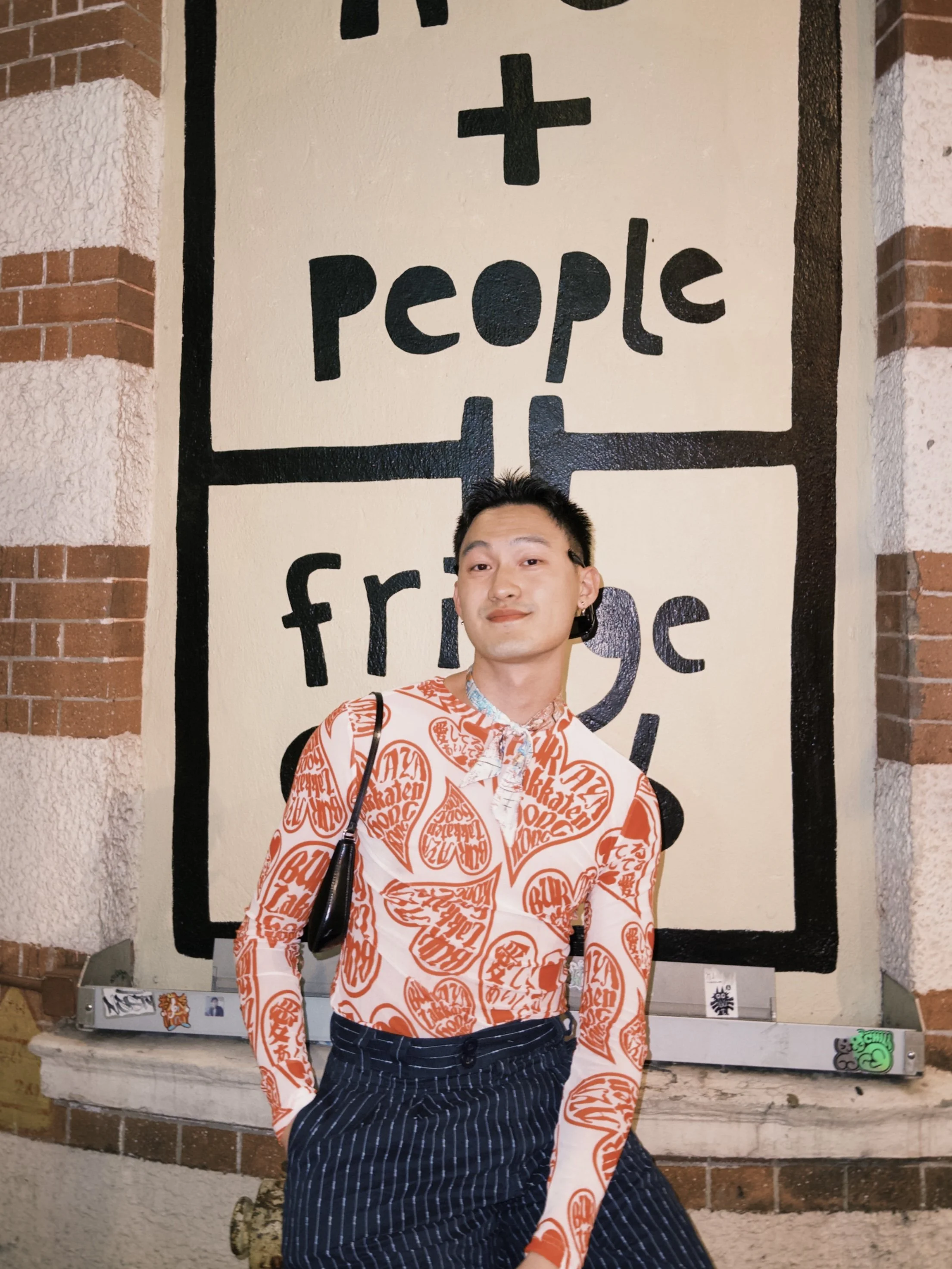
Jonathan Lee (He/Him) is a Toronto-based fashion historian specializing in East Asian Fashion and Decolonial Discourses. As a Hong Kong-Canadian, Jonathan’s upbringing and lived experience in these two places have led to his profound interests in the topic of identity, in-betweenness, and multiculturalism. Jonathan is a recent graduate from the MA Fashion program at Toronto Metropolitan University, Toronto. He also holds a BDes in Fashion Design from the same university. His educational background includes a thorough understanding of fashion from both a theoretical and creative lens.

"Swan Lake" by Joyce Cheung
Article Citation
Lee, Jonathan. “Sway with Emotion, Persuade with Logic: Decolonizing Creative Research Methodology with Autoethnography in Fashion Curation.” Unravelling Fashion Narratives, special issue of Fashion Studies, vol. 5, no. 2, 2026, pp. 1-26. https://doi.org/10.38055/UFN050205
Copyright © 2026 Fashion Studies - All Rights Reserved
Creative Commons Attribution-NonCommercial-NoDerivatives 4.0 International (CC BY-NC-ND 4.0) license (see: https://creativecommons.org/licenses/by-nc-nd/4.0/)